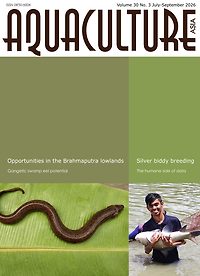
Successful spawning and rearing of silver biddy, Gerres oyena in Abu Al Abyad Island, Abu Dhabi, United Arab Emirates
24 September 2026 | John Antony F., Balamurgan Vadivel, Eiman M. Alrashdi, Rauda S. Alderei, Krishnakumar Menon, Vetrivel Vedhagiri, Pandithrai Jayaraman and Omer M. Yousif | .pdf | 2.29 MB
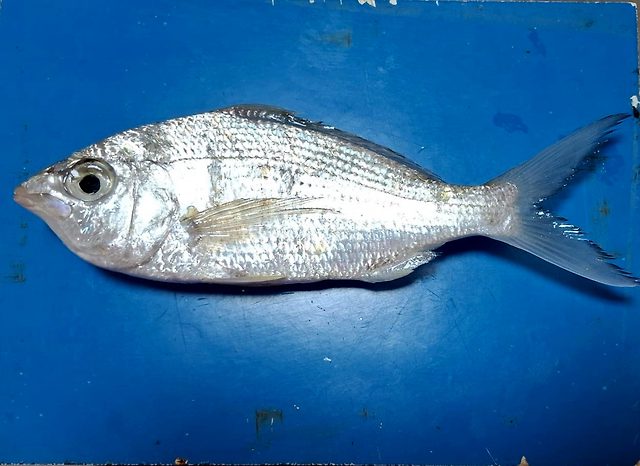
This article reports the first successful spawning and rearing of silver biddy, Gerres oyena, at the Aquaculture and Marine Studies Center (AMSC), Abu Dhabi, United Arab Emirates. Silver biddy are found from East Africa and the Red Sea through the Arabian Gulf, southern Asia and the western Pacific. In UAE waters it lives on sand and mud bottoms, near coral reefs, in seagrass meadows and in mangrove swamps, where it feeds mainly on small bottom-dwelling invertebrates such as polychaetes. Although it is not caught in large quantities, it has commercial value, and the Environmental Agency Abu Dhabi has introduced management measures in response to declining stocks. Little research exists in the UAE on its age, growth and reproduction.
The AMSC trials aimed to develop methods for producing fingerlings. Staff collected 230 females and 120 males from waters around the island and held them in indoor quarantine tanks, where they received a formalin treatment and a supplemented diet of soaked pellets, vitamins, fish oil and β-glucan stuffed inside squid, alternating with fresh sardines. The fish adapted quickly to captivity. After quarantine, the brood stock moved to sea cages before spawning.
Staff checked female maturity by ovarian biopsy and selected females with oocytes of about 400 µm for hormone induction with HCG. Spawning took place in batches from late April to the end of May 2025, producing 2.9 million fertilised eggs. The eggs hatched after about 24 hours at 28°C, with a hatching rate of 76.9%.
Larval rearing used green water, probiotics, rotifers from two days after hatching, Artemia from day 18 and artificial feed from day 25. Staff harvested 423,000 fry between 30 and 44 days after hatching, a survival rate of about 19%. In the nursery, fry received a high-protein formulated feed with heavy daily water exchange. By 100 days after hatching, juveniles averaged 1.8 g, and nursery survival was 80%.
The spawning peak in April and May matches reports from the Gulf of Suez in the Red Sea. The authors identify larval weaning, health management and genetic diversity in brood stock as priorities for further research. The work provides a basis for hatchery production, regional aquaculture development and the Centre's stock enhancement programmes.
1790225910_spawning-silver-biddy-gerres-oyena.pdf
Creative Commons Attribution.