5 October 2026Sourindam Paul, Suman Kumari and Basanta Kumar Das | 112 Downloads | .pdf | 5.32 MB
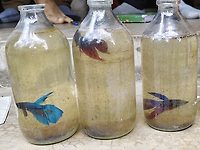
Ornamental fish can sell for up to 100 times the price of food fish, yet farming them needs little land, money or labour. This makes the sector well suited to landless households, small-scale farmers and women in developing countries. In West Bengal, India, families breed species such as Betta splendens in reused glass bottles and raise exotic species in backyard cement cisterns. ICAR-CIFRI research programmes also help Scheduled Caste and Scheduled Tribe women run their own farms
This article explores how ornamental fish culture supports the Sustainable Development Goals, from reducing poverty and promoting gender equality to protecting aquatic life. With around 95% of Indian ornamental fish exports still collected from the wild, captive breeding offers a way to ease pressure on wild stocks. The article also looks at water-saving technologies, certification, and the barriers small producers face, including poor market access, weak logistics and climate change.
Over the past century, a generation of Indian scientists, educators and administrators laid the foundations of the country's modern fisheries and aquaculture sectors. This tribute remembers 65 of them, all of whom have since passed away. Their work covered inland and marine fisheries, freshwater and brackishwater aquaculture, fish breeding and hatchery technology, fish health, genetics, nutrition, post-harvest technology and fisheries education. Many led national research institutes, universities and state fisheries departments, while others served with international organisations such as FAO. Their research and leadership helped increase fish production in India and expanded knowledge of fish biology and aquatic ecology. The article brings together, in a single table, the dates of birth and death of each person, along with their main fields of work and the institutions they served. It is offered as a source of inspiration for students and young researchers in fisheries science.
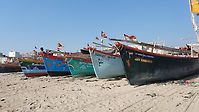
Small-scale fishing communities in Gujarat depend heavily on marine resources, yet many live with uncertain incomes, declining catches and months without earnings during the annual fishing ban. A socio-economic survey of fishing villages around Veraval Harbour found that many artisanal fishers miss out on available assistance because they do not know it exists or how to apply. Awareness of assistance schemes is low, and paperwork, online application systems and language barriers make access harder for families with limited education. Where cooperatives are active, communities are better organised and better informed.
Closing the awareness gap through local-language outreach and closer contact with extension services would help support reach those it is meant for. The survey also shows the responsibilities of field researchers: explaining their role and limits from the start, using the local language and sharing practical information on available support, so that research does not raise expectations it cannot meet.
24 September 2026John Antony F., Balamurgan Vadivel, Eiman M. Alrashdi, Rauda S. Alderei, Krishnakumar Menon, Vetrivel Vedhagiri, Pandithrai Jayaraman and Omer M. Yousif | 141 Downloads | .pdf | 2.29 MB
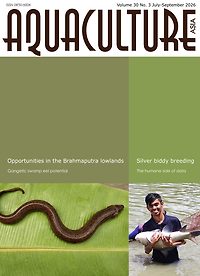
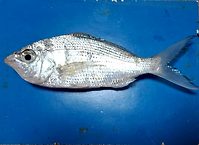
Silver biddy (Gerres oyena), known locally as badah, supports commercial fisheries across the Indo-West Pacific, but wild stocks in the Arabian Gulf are declining. Staff at the Aquaculture and Marine Studies Center on Abu Al Abyad Island, Abu Dhabi, have now spawned and reared the species in captivity. The team conditioned wild-caught brood stock on a supplemented diet, then induced spawning with hormone injections in April 2025. Over six weeks, the fish produced 2.9 million fertilised eggs, with a hatching rate of 76.9%. Larvae were raised on green water, rotifers, Artemia and artificial feed, producing 423,000 fry at a survival rate of about 19%. In the nursery, juveniles reached 1.8 g after 100 days with 80% survival.
This article describes each step, from brood stock care to nursery management, and outlines the further research needed to support hatchery production and stock enhancement of this species in the region.