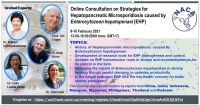
NACA is organising an Online Consultation on Strategies for Hepatopancreatic Microsporidiosis caused by Enterocytozoon hepatopenaei (EHP) from 9-10 February 2021 via Zoom. EHP is an important pathogen affecting shrimp health. The online consultation aims to discuss the current status of EHP in the region, and to present recent innovations and currently recommended strategies of control (including information to give confidence that EHP cannot be spread via chilled or frozen export products prepared and packaged for human consumption). Experiences from selected countries which have reported the presence of the disease will be presented and discussed. Participation is free but registration is required.
Exotic trout fisheries resources and potentialities in Uttarakhand; Scenario of captive production of Clarias magur in India; Strategies to reduce feed cost by improving gut health and nutrient utilisation of fish in aquaculture; Fish pituitary gland collection and supply as a vocation in West Bengal, India; Coral trout Plectropomus leopardus aquaculture research and fingerling production in Indonesia; Smartphone app improving smallholder shrimp farming practices in Bangladesh; NACA Newsletter.
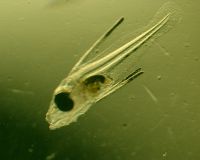
Coral trout Plectropomus leopardus is an emerging exported grouper commodity in Indonesia. The demand for coral trout fingerlings has been increasing and the value of this species is the highest among groupers. However, the rearing of coral trout larvae is notoriously more ‘difficult’ than other groupers. This article describes research on coral trout larval rearing protocols conducted by the Institute for Mariculture Research and Fisheries Extension, which has achieved a survival rate of 12%.
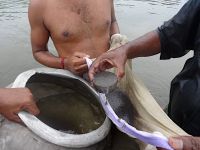
In retail fish markets in Kolkata city proper, suburbs and neighbouring districts, pituitary glands are collected as a profession from the heads of mature fish. The preserved glands are used to induce breeding via hypophysation in carp hatcheries throughout West Bengal, playing an important role in the availability of carp seed to support aquaculture operations. This article describes the livelihoods of pituitary gland collectors and traders in West Bengal, India.
19 January 2021G. Sathishkumar, U. Bhavatharaniya, N. Felix, Amit Ranjan, and E. Prabhu | 2369 Downloads | .pdf | 159.03 KB
Feed is an important input that involves nearly 60% of the total production cost in commercial aquaculture. Hence, nutritionally balanced and cost-effective diets play a large role in deciding the return from an aquaculture venture. Nutritionists are searching for alternative ingredients and approaches to offset the use of fishmeal in aquaculture feeds. This article discusses strategies to reduce feed cost by promoting gut health and nutrient utlilisation, including: Use of probiotics and prebiotics, supplementation with exogenous enzymes, essential nutrients and chemoattractants, and use of other feed additives such as acidifiers to improve digestibility and mycotoxin binders.