A new plan to transform Philippine aquaculture
18 September 2026 |
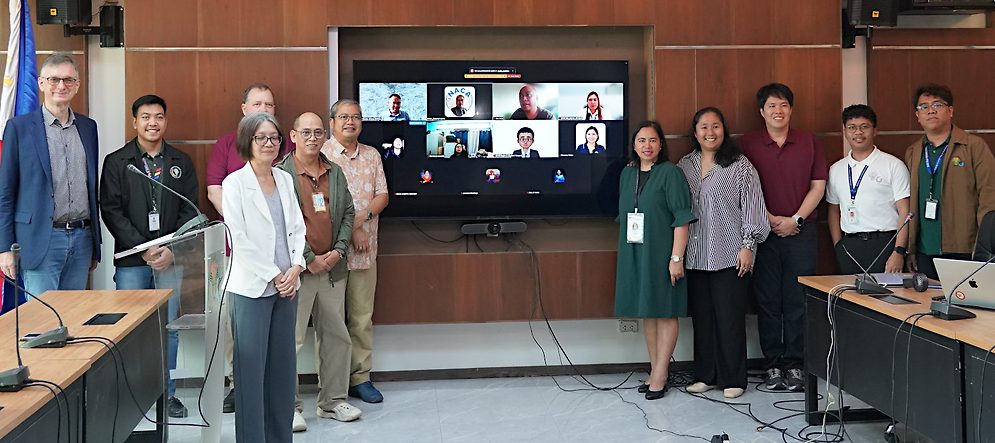
The Philippines is preparing a National Innovation and Investment Plan (NIIP) for aquaculture. The plan sets out how the country can make its aquaculture sector more productive, climate-resilient, competitive and inclusive over the next five years. On 1-2 September 2026, the Bureau of Fisheries and Aquatic Resources (BFAR), NACA and the FAO Regional Office for Asia and the Pacific (FAORAP) met with researchers and industry representatives in Quezon City to review the draft.
The plan's vision is: "By 2030, Philippine aquaculture is technology-driven, climate-resilient, globally competitive, inclusive and sustainable – ensuring food security and improved livelihoods." The plan aims to help farmers get access to appropriate technology that suits their own farms and production systems, from better seed and disease diagnosis and more advanced systems where they make sense.
Transforming aquaculture
The NIIP builds on and extends the BFAR's Aquaculture Development Master Plan 2025–2030, so that the sector can reach targets sooner, or go beyond them, through innovation and by attracting investment.
The draft NIIP accommodates issues raised by stakeholders at a national baseline consultation workshop held in Muñoz, Nueva Ecija, in February 2026. These included climate and environmental losses, disease, variable seed quality, high feed and energy costs, low and unstable farmgate prices, and limited access to credit and insurance.
Five priority commodities
The plan will cover five priority aquaculture commodities for the Philippines: seaweed, milkfish, tilapia, shrimp and shellfish. Each commodity has different needs, so the plan will include specific actions for each where needed. For example, improving seed means different things for tilapia, milkfish and shrimp hatcheries and for seaweed seedlings.
Benefits for industry
The draft plan is in development but the main proposals include:
- Certification and better markets: The Philippines recently approved its Good Aquaculture Practices (GAqP) standard, which has four levels. Level 1 will be compulsory for all farms. Higher levels are voluntary and open the door to supermarkets, premium buyers and, at Level 4, export markets. Participants also discussed rewards for certified farms, such as low-interest loans and eco-labels that help consumers recognise responsibly farmed products.
- Better seed: Participants proposed certification of seed as well as farms, since good-quality seed is the basis of good yields. Hatchery certification already exists for shrimp and tilapia but not yet for milkfish.
- Healthier stock: Proposals include stronger disease diagnosis and surveillance, digital disease reporting, and practical biosecurity guidelines for small-scale farmers. Larger farms with their own laboratories could help smallholders nearby.
- Lower energy costs: The plan proposes that 20 percent of farms adopt renewable energy such as solar power, and that 5 percent become "smart" farms using tools such as automatic feeders and aerators controlled by dissolved-oxygen sensors. In Thailand, trials of solar power on shrimp farms cut energy costs by at least 20 percent, and by up to 50 percent on one intensive farm.
- Digital tools: Proposals include online applications and approval for GAqP certification, traceability from hatchery to market, and simple digital record-keeping for farms. Pilots could start with tilapia and milkfish.
- Stronger links to buyers: FARM ONE, a framework developed by the tilapia sector, aims to link producers more directly to buyers, cut out unnecessary middlemen and secure better prices for farmers who invest in quality. It will be extended to milkfish and shrimp.
- More exports: The plan targets a 10 percent increase in exports of seaweed, milkfish and shrimp, while recognising that the growing domestic market offers large opportunities too.
These proposals will be organised into two main programmes, one on production and one on markets. Digital tools will support both.
Attracting investment
The NIIP will give the Philippines a ready set of investment proposals to present to government budget holders, private investors, development banks and donors when funding opportunities arise.
The Philippines is one of three pilot countries in a broader technical cooperation programme funded by FAO and implemented by NACA, alongside India and Thailand. The three countries will share their progress at a regional workshop in Bangkok in November 2026. The final Philippine plan is due to commence implementation in early 2027.
NACA would like to thank FAO for funding this work through its Technical Cooperation Programme, and BFAR and all participants for their contributions.
Creative Commons Attribution.