The humane side of data: When numbers don't speak for themselves
24 September 2026 | Ritisnata Nayak | .pdf | 2.91 MB
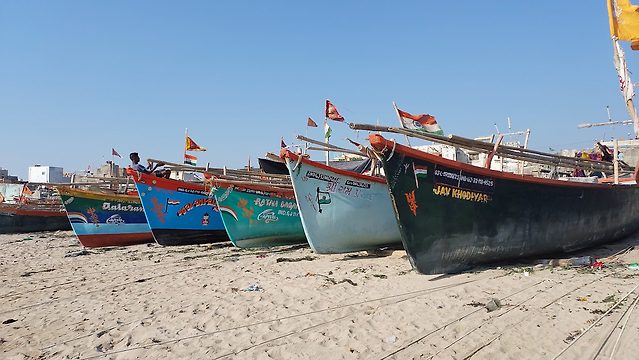
Small-scale and artisanal fishers form the backbone of India's fisheries supply chain, yet many are not reached by the support available to them. A socio-economic survey of fishing villages and landing centres around Veraval Harbour, Gujarat, one of the country's major fisheries hubs, examined their livelihoods and their access to government support.
Households depend heavily on marine resources. Income rises and falls with the daily catch, the seasons and market prices, and it can stop completely during the annual fishing ban. Declining catches and rising operating costs add to the pressure. Many families have little education, limited technical knowledge and few other sources of income, which leaves them vulnerable.
Conditions are not the same everywhere. Villages close to major harbours, processing industries and research institutions, and those with active cooperatives, are better organised and have better access to inputs, finance and markets. Women in these communities play a larger role in fish marketing. More remote villages have basic infrastructure and weaker support.
The central issue is awareness. National schemes such as the Pradhan Mantri Matsya Sampada Yojana (PMMSY) offer subsidies, insurance and welfare support, but many small-scale fishers do not know about them or understand how to apply. Families with limited education also find documentation requirements, online portals and mobile applications difficult to navigate, especially when information is not available in the local language. Limited day-to-day contact with extension services means these gaps often go unaddressed. Support exists, but information about it does not always reach the people it is intended for.
The survey also raises questions of research ethics. Fishers shared their hardships openly and hoped the visit would bring help, creating expectations that an academic survey could not meet. Field researchers need to explain their identity, purpose and limits from the start, use the local language, and include a practical extension element, such as explaining the schemes and services available to the community.
Proposed responses include local-language and mobile-based awareness programmes, women's self-help groups, local help centres for scheme access, and stronger links between fisheries institutions, universities and coastal communities, with fisheries students acting as a bridge between them.
1790234311_the-humane-side-of-data.pdf
Creative Commons Attribution.