NACA member governments are: Australia, Bangladesh, Cambodia, China, Hong Kong SAR, India, Indonesia, I.R. Iran, Kingdom of Saudi Arabia, Korea (DPR), Lao PDR, Malaysia, Maldives, Myanmar, Nepal, Pakistan, Philippines, Sri Lanka, Thailand and Vietnam.
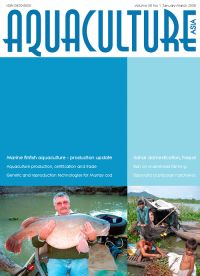
Developing guidelines for sustainable freshwater aquaculture planning in Vietnam. Aquaculture production, certification and trade for small-scale farmers. Backyard hatcheries for crustaceans in Thailand. Alternative carp species for diversification in India. Genetic and reproduction technologies for aquaculture and fisheries management of Murray cod. Status of sahar domestication in Nepal. Comparative advantage analysis of shrimp production in Asia. Strategies to improve the livelihoods of the rural poor, Vietnam, and more.
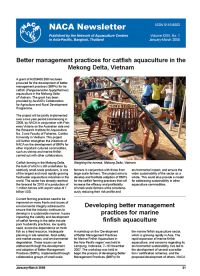
Better management practices for catfish aquaculture in the Mekong Delta, Vietnam. Developing better management practices for marine finfish aquaculture. Workshop on modelling carrying capacity for tropical finfish cage culture: Towards a consensus view. First comprehensive genetic management plan for Asian fish species: Mahseer. NACA and World Fisheries Trust sign agreement on collaboration. Fish Health Master Class. Second Workshop on Application of Molecular Genetic Techniques in Inland Fisheries and Aquaculture Management. Two new species of spiny eels described from Myanmar. Importance of species identification in conservation. Koh Yao Noi mangrove replanting in celebration of 80th birthday of His Majesty the King of Thailand. Responsible movement of live food finfish within ASEAN: Implementation workshop. Consultation on aquaculture certification guidelines. Strengthening regional mechanisms to maximise benefits to small-holder shrimp farmer groups adopting better management practices.
This report, the 38th in the series, contains information about the aquatic animal health status of seventeen states in the Asia-Pacific region. The foreword discusses the OIE/NACA Regional Workshop on Aquatic Animal Health.
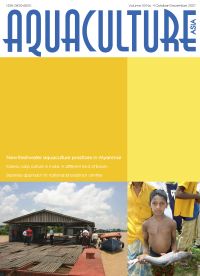
A different form of dumping: The need for a precautionary approach for yet another new species for shrimp farming in Asia. Sustainable livelihoods of pangus farming in Bangladesh. Business approach to national broodstock centres in Vietnam. Freshwater aquaculture in Myanmar. Traditional carp culture in Central Europe. Egg and larval quality in sand bass Psammoperca weigiensis. Effect of protein and lipid level of growth performance of tiger grouper Epinephelus fuscoguttatus.
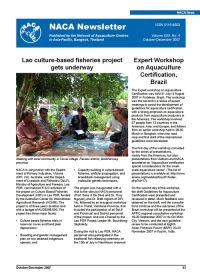
Lao culture-based fisheries project gets underway. Expert Workshop on Aquaculture Certification, Brazil. Strategies for Development of Asian Reservoir and Lake Fisheries Management. EUS identified as cause of fish kills in Africa. NACA seeks shrimp farm specialists for assignments in Indonesia. FDA detains five species of farm-raised seafood from China. 7th Symposium on Diseases in Asian Aquaculture. Aquafeed Horizons Asia 2008. Scientists join fight against frog diseases. Artificial propagation of snow trout Schizothorax zarudnyi by Iranian experts. NACA keynotes three international meetings. Culture, capture conflicts project review, Indonesia. Sign up to the coldwater aquaculture Yahoo! Tech Group. Website publishing and administration training, Vietnam. Aquatic Animal diseases Significant to Asia-Pacific: Identification Field Guide.
19 September 2007 | Sih Yang Sim | 2799 Downloads | .pdf | 2.19 MB
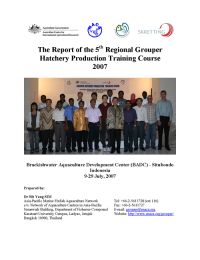
The 5th Regional Grouper Hatchery Training Course was another success with all participants is pleased with the overall training activities and field trips. A total of 17 participants from eight countries attended the training course which was hosted by the Brackishwater Aquaculture Development Centre, Situbondo, Indonesia. Participants were able to involve in the broodstock activities for giant grouper, in additional to the tiger and humpback groupers, and attended field trips to backyard hatcheries and export facilities.
This final report of the project “Strengthening Aquatic Animal Health Capacity and Biosecurity in ASEAN” contains two parts: A. Recommended Minimum Operational Requirements for Implementing National Aquatic Animal Health Strategies within ASEAN and B. ASEAN progress in the implementation of National Aquatic Animal Health Strategies. The report provides guidance for countries in ASEAN to implement key elements of national aquatic animal health strategies, and for monitoring progress of national strategy implementation in ASEAN member countries.
These standard operating procedures were developed to reduce the risk of spread of trans-boundary disease of aquatic animals through the movement of live food fish. The procedures are a set of documents for health certification and quarantine measures to be used by competent authorities in trade among ASEAN member countries. The procedures recognise the existing variation in capacity between ASEAN members and have been designed so that they can be implemented across varying policy and legal frameworks.
This report, the 37th in the series, contains information about the aquatic animal health status of fourteen states in the Asia-Pacific region. The foreword discusses emerging diseases in the region.
18th NACA Governing Council held in Bali, Indonesia. Strengthening aquatic animal health capacity and biosecurity in ASEAN - final workshop. Aquatic animal pathology master class. Vietnamese extension manual on culture-based fisheries. New project: Culture-based fisheries development in Lao PDR. Guidelines on digital publishing: a practical approach for small organizations with limited resources. Workshop on understanding and applying risk analysis in aquaculture. GISFish: Remote sensing and mapping for aquaculture and inland fisheries. Online encyclopeadia to list 1.8 m known species. DELTA 2007. NACA/FAO partnership working to establish guidelines for certification of farmed fish. Asia-Pacific Aquaculture 2007, 5-8 August 2007, Vietnam. Skretting sponsorship & scholarships for the Marine Finfish Aquaculture Network. The eleventh regular session on genetic resources for food and agriculture.
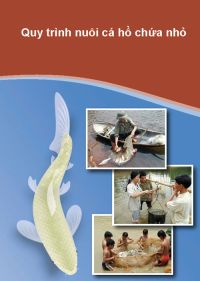
Mục tiêu của cuốn sách nhằm cung cấp những chỉ dẫn cơ bản của CBF, một hình thức nuôi cá hiệu quả, đang được quan tâm nhiều ở các vùng nông thôn miền núi châu.
This is the report of a technical mission to Vietnam from 3 - 9 December 2006, as a part of the project “Strengthening Aquatic Animal Health Capacity and Biosecurity in ASEAN” to assist national authorities in the development and implementation of simple and practical national aquatic animal health management strategies. The objective of the mission was to assist the government to support development of national strategies on aquatic animal health management and develop short and long term plans.
This report, the 36th in the series, contains information about the aquatic animal health status of fifteen states in the Asia-Pacific region. The foreword discusses recent activities in support of aquatic animal health in the region.
30 January 2007 | Sih Yang Sim | 1855 Downloads | .pdf | 3.52 MB
This report describes a training course on grouper hatchery protocols that was held in Indonesia in 2006. A total of 20 participants from 13 countries attended the training course which was hosted by the Brackishwater Aquaculture Development Centre, Situbondo. Participants came from Australia, Hong Kong, Indonesia, India, Malaysia, Maldives, Myanmar, Philippines, Qatar, Saudi Arabia, Singapore, Thailand and Vietnam.
This report, the 35th in the series, contains information about the aquatic animal health status of fifteen states in the Asia-Pacific region. The foreword discusses mechanisms for recognition of emerging diseases in the Asia-Pacific region.
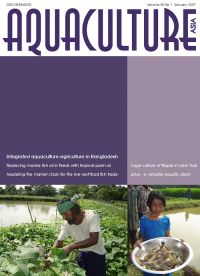
Cage aquaculture of tilapia in Lake Taal, Philippines. Development and adoption of BMPs by farmer groups. Lotus - an aquatic plant of versatile qualities. Integrated aquaculture-agriculture systems in Bangladesh: Potential for sustainable livelihoods and nutrititional security of the rural poor. Spreadsheet model of the market chain for the live reef food fish trade. Regional Grouper Hatchery Production Training Course. Replacing marine fish oil in aquafeeds with tropical palm oil products. NACA Newsletter.
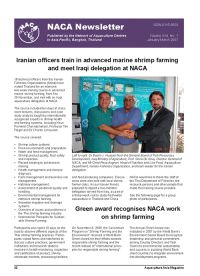
Iranian officers train in advanced marine shrimp farming and meet Iraqi delegation at NACA. Green award recognises NACA work on sustainable shrimp farming. International Principles for Responsible Shrimp Farming now available in Spanish. Building capacity on aquatic animal epidemiology in I.R. Iran. NACA Fisheries Team meets with new Governor of Aceh. Aquaculture Certification: Programme to implement the COFI Sub-Committee on Aquaculture recommendation. Recent Developments in the Aquaculture Feed Industry. Global Advances in the Ecology and Management of Golden Apple Snails. NACA mission to Myanmar. Workshop on Insurance in Aquaculture to be held in Bali, May 2007. Catfish 2007 Vietnam. Tilapia 2007 Kuala Lumpur.
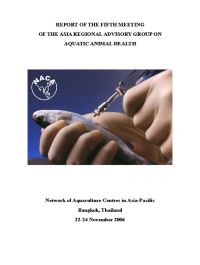
The Asia Regional Advisory Group on Aquatic Animal Health meets annually to discuss regional health issues including emerging disease threats. This report includes a review of regional disease status circa 2006, global and regional disease reporting arrangements, global issues and standards, progress in implementation of the the Regional Technical Guidelines on Health management for the Responsible Movement of Live Aquatic Animals, identification and designation of regional aquatic animal health resources and regional and international cooperation.
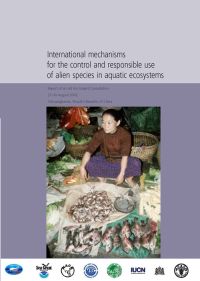
The use of alien species is a proven means to increase production and value from aquatic ecosystems. However, alien species are now recognised as one of the most significant threats to aquatic biodiversity. There are a range of international mechanisms that have been established to assist countries in meeting international obligations and responsibilities. Implementation is often difficult due to lack of awareness and problems with enforcement. Regional coordination of policies is needed for effective national management.
This document provides an analysis of the environmental impacts and risks associated with aquaculture development in Viet Nam and guidance on better environmental management and monitoring for its future development. Part 1 provides a summary of the main findings, and guidelines for future development of the aquaculture sector. Part 2 provides the detailed case study findings. The guidelines presented in Part 1 are based on cases studies of all major aquaculture commodities in Viet Nam.