NACA frequently organises technical workshops and consultations on aspects of aquaculture. The proceedings of such meetings are made available for free download. Audio and video recordings of technical presentations are also available for some meetings (please see the podcast section).
NACA publishes a wide range of aquaculture publications including technical manuals, workshop proceedings, better practice guidelines and several serials including Aquaculture Asia Magazine, the NACA Newsletter and the Quarterly Aquatic Animal Disease Report. To keep up to date with developments you could consider subscribing to our RSS feed.
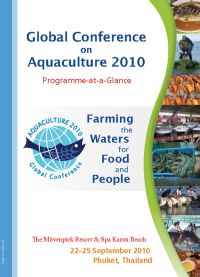
This handbook outlines the objectives, organisation and history behind the Global Conference on Aquaculture 2010. It also contains abstracts of the keynote addresses, plenary lectures, expert panel presentations and posters.
This guide provides short biographies of persons who made presentations at the Global Conference on Aquaculture 2010, to give participants an idea of the expertise that this conference attempted to bring together. The biographies are arranged sequentially in conformity with the conference programme.
28 January 2010 | Sena De Silva and Brian Davy (eds.) | 1559 Downloads | .pdf | 4.14 MB
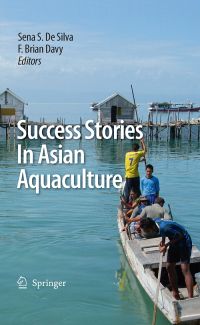
The stories presented in Success Stories in Asian Aquaculture reflect the unique nature of Asian aquaculture, providing first-time insight into how and why it has become so successful. Overall, the book demonstrates how the resiliency, adaptability, and innovation of small-scale aquaculture farmers have been crucial to this success. It is unique in demonstrating how aquaculture can have a lasting positive impact on livelihoods, food security, and sustainable development.
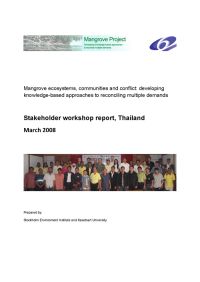
In this report, we summarise the outcome of the first MANGROVE Project stakeholder workshop in Nakhon Si Thammarat in the Gulf of Thailand. The objectives of the workshop, held 6 March 2008, were to review and discuss project problem definition from different stakeholder perspectives, to understand how different stakeholders are affected in different ways, and to understand what kind of solutions are presented and by whom? The workshop was attended by community, local government and NGOs.
This workshop was the fifth in a series of consultations to prepare the international guidelines for aquaculture certification. The workshop had a strong emphasis on aquaculture products from China, and explored opportunities and challenges for implementing the certification guidelines in China towards improving overall aquatic production and trade of aquaculture products. The workshop considered that international guidelines for aquaculture certification would provide a useful basis for development of standards for certification of aquaculture products in China.
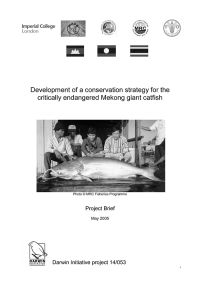
This is a brief of a project to develop an overarching conservation strategy for the Mekong giant catfish integrating supportive breeding with harvest and habitat management. This will involve (1) quantitative assessment of population status based on existing information, (2) quantitative assessment of the likely effectiveness of different conservation measures (3) review and improvement of captive breeding procedures; (4) promotion of appropriate adaptive policies for the further development of the strategy; and (5) definition of an overall conservation strategy.
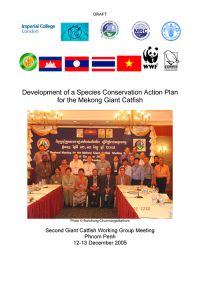
This is the report of the Second Mekong Giant Catfish Working Group Meeting, held in Phnom Penh 12-13 November 2005, under the project Development of a conservation strategy for the critically endangered Mekong giant catfish. The purpose of the workshop was to review existing knowledge on Mekong giant catfish, identify future conservation and research priority activities, and to continue the joint planning process aimed at developing an overarching conservation strategy.
4 April 2008 | Mohammad R. Hasan, Thomas Hecht and Sena S. De Silva (eds.) | 5703 Downloads | .pdf | 7.79 MB
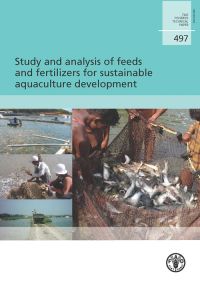
This compendium provides an overview of feed and fertiliser use for sustainable aquaculture development in developing countries. It comprises of a series of review papers from Asian and African countries, three regional reviews, a case study from Asia, a global synthesis and the report of an FAO Expert Workshop on "Use of feeds and fertilisers for sustainable aquaculture development", held in Wuxi, Jiangsu Province, China, on 18-21 March 2006.
IDRC and NACA convened a workshop to identify the main research issues and needs to sustain Asian aquaculture into the first quarter of the 21st century, and also to bring them to the notice of relevant planners, managers and policy makers, and potential donors. The workshop was held in Rayong, Thailand from 4-7 June 2007. This report contains the issues papers drafted in preparation for the meeting and a summary of the discussions.
22 October 2007 | Antoine Teitelbaum | 3709 Downloads | .pdf | 914.46 KB
This report describes a training course on marine finfish hatchery protocols, which was convened at the Karabi Coastal Fisheries Research and Development Center, Thailand at the request of the Secretariat of the Pacific Community. The main goal of the training was to carry out hands-on practical work in finfish hatchery techniques, with an emphasis on grouper. This work involved spawning induction, incubation and larval rearing until day 12.
The workshop was the second in a series of expert meetings to assist the development of guidelines for aquaculture certification. The workshop gave stakeholders in the Americas a unique opportunity to get together with international stakeholders to discuss certification and in particular the development of the draft FAO/NACA guidelines for aquaculture certification. The workshop identified a strong need for an aquaculture certification guideline document to inform and guide stakeholders towards responsible and sustainable aquaculture.
This is the report of a five-day training workshop was to build capacity and awareness of relevant stakeholders in the areas of aquatic epidemiology, risk analysis, surveillance and emergency preparedness. The long term objective was to support implementation of national strategies for better aquatic animal health management with a focus on improved surveillance, reporting, early response, emergency preparedness, risk analysis, certification and quarantine.
19 September 2007 | Sih Yang Sim | 2797 Downloads | .pdf | 2.19 MB
The 5th Regional Grouper Hatchery Training Course was another success with all participants is pleased with the overall training activities and field trips. A total of 17 participants from eight countries attended the training course which was hosted by the Brackishwater Aquaculture Development Centre, Situbondo, Indonesia. Participants were able to involve in the broodstock activities for giant grouper, in additional to the tiger and humpback groupers, and attended field trips to backyard hatcheries and export facilities.
This is the report of the project Application of PCR for improved shrimp health management in the Asian region. The training programme included two training workshops that were designed to provide a good understanding of PCR methodology, laboratory practices and trouble shooting in detection of both DNA and RNA viruses. The workshops were followed by by two rounds of an anonymous PCR inter-calibration or ring testing exercise to allow laboratories to gauge their own performance.
In 2006 the COFI Sub-Committee on Aquaculture noted that many non-governmental certification schemes have resulted in higher costs for producers without delivering significant benefits to small-scale producers. An international round of consultations were commissioned to discuss the development of globally accepted certification guidelines for aquaculture production, which could provide more guidance and serve as a basis for harmonisation and mutual recognition. This is the report of the first consultation workshop, held in Bangkok, March 2007.
30 January 2007 | Sih Yang Sim | 1853 Downloads | .pdf | 3.52 MB
This report describes a training course on grouper hatchery protocols that was held in Indonesia in 2006. A total of 20 participants from 13 countries attended the training course which was hosted by the Brackishwater Aquaculture Development Centre, Situbondo. Participants came from Australia, Hong Kong, Indonesia, India, Malaysia, Maldives, Myanmar, Philippines, Qatar, Saudi Arabia, Singapore, Thailand and Vietnam.
The Marine Products Export Development Authority (MPEDA) and the Network of Aquaculture Centres in Asia-Pacific (NACA) jointly hosted a special session on Better Management Practices (BMPs) at the 3rd INDAQUA 2007, 11-13 January 2007, Chennai, India. The presentations made in the session include i) International principles for responsible shrimp farming; ii) MPEDA-NACA Village demonstration programme, India; Aquaculture rehabilitation and implementation of BMPs in tsunami affected Aceh, Indonesia; and Markets, certification and traceability and small-scale farmers.
The use of alien species is a proven means to increase production and value from aquatic ecosystems. However, alien species are now recognised as one of the most significant threats to aquatic biodiversity. There are a range of international mechanisms that have been established to assist countries in meeting international obligations and responsibilities. Implementation is often difficult due to lack of awareness and problems with enforcement. Regional coordination of policies is needed for effective national management.
20 April 2006 | Gonzales, E., Maung Soe, K., Mukherjee, R., Nguyen, S.H., Suspita, A., Wattoo, J.M. and Bulcock, P. | 3006 Downloads | .pdf | 287.29 KB
This report examines the role mariculture could play in reducing poverty and providing alternative livelihood opportunities for people living in coastal areas. This includes a review of the current status of coastal poverty, coastal livelihoods and vulnerabilities within the Asia-Pacific region and the experiences and examples of sustainable economic development through mariculture. This review then identifies key follow-up actions and recommends strategies for future pro-poor mariculture development.