Emerging Global Issues

The Emerging Global Issues Programme provides policy guidance on key strategic and emerging issues such as climate policy, energy efficiency and alternatives to use of fish meal in aquaculture feeds.

The programme endeavours to bring to public domain the positive aspects of aquaculture as a significant contributor to food security and the livelihoods of rural communities, and actively promotes south-south cooperation.

Key activities

  • Development of projects and policy guidance on emerging issues of regional interest.
  • Contribute to the global dialogue on use of fish meal and oil in animal feeds and resource usage in the reduction industry.
  • Providing a regional platform for members to develop common policies and strategies to address emerging global issues.
  • Facilitating the development of an environmental monitoring system to strengthen fisheries and aquaculture resilience and to improve early warning in the lower Mekong Delta.
  • Evaluating the vulnerabilities of aquaculture systems to climate change.
  • Strengthening adaptive capacities of small-scale resource-poor farmers to the impacts of climate change.
  • Adaptive learning and management in community fish pond and school fish pond projects.
  • Playing a catalytic role in south-south cooperation in aquaculture development.
  • Communication of success stories in aquaculture.

Creative Commons Attribution.

Related

Subject tags

A collection of subject tags relating to technical matters.

In this collection

Knowledge brokering for nature-based solutions in aquaculture and transformation in Asia-Pacific: Support to the Aquaculture Innovation and Investment Hub

This project contributes to NACA's recent work with the FAO on aquaculture transformation. The aim is to create more efficient, inclusive, resilient, and sustainable food systems through innovation, investment, and partnerships. NACA is developing an Aquaculture Innovation and Investment Hub (AIIH) to help realise this vision in the region, providing a facility that will bring together innovators, startups, and investors to accelerate transformation. The project will contribute to developing National Innovation and Investment Plans for Thailand, The Philippines, and Fiji, which will address issues including climate change, disease prevention and management, environmental sustainability, gender equality and social inclusion, and resource utilisation and management. The project is part of a wider AQUADAPT initiative, a four-year partnership running from 2023-2027, funded by Canada's International Development Research Centre.

FAO Guidelines for Sustainable Aquaculture adopted by COFI

FAO's Committee on Fisheries has adopted the Guidelines for Sustainable Aquaculture (GSA), which have been prepared to support efforts at all levels for enhancing the important role of aquaculture towards the eradication of hunger and poverty and to support socioeconomic development, in full respect of the environment, biodiversity and ecosystem functions. The GSA are a major milestone and a collective achievement by FAO and its Members, underscoring the global recognition of the vital role of aquaculture and the need for its continued sustainable development for the sake of current and future generations. 

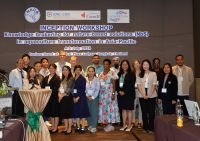
Inception workshop: Knowledge brokering for nature-based solutions in aquaculture transformation

Canada's International Development Research Centre (IDRC) is sponsoring the project "Knowledge Brokering for Nature-Based Solutions in Aquaculture Transformation in Asia-Pacific: Support to the Aquaculture Innovation and Investment Hub." The project is part of a wider IDRC AQUADAPT initiative, a four-year partnership running from 2023-2027. AQUADAPT addresses the intertwined challenges of climate change, biodiversity loss, and food insecurity through applied research on nature-based solutions in aquaculture in Southeast Asia and the Pacific region. AQUADAPT emphasises Gender Equality and Social Inclusion (GESI), ensuring that nature-based solutions are inclusive of all genders and marginalised groups. The project's inception workshop was held in Bangkok from July 4-5, bringing together project teams from Thailand, The Philippines, and Fiji to discuss approaches and methodologies. 

WAS Journal Special Issue: Global Conference on Aquaculture Millennium +20 Thematic Reviews

Eight thematic reviews prepared as preparation for the Global Conference on Aquaculture Millennium +20 (GCA +20) have been published in a Special Issue of the Journal of the World Aquaculture Society "Aquaculture for Food and Sustainable Development". A group of experts prepared advanced working drafts of each thematic review and the key findings from each theme were presented and discussed by expert panels during the GCA +20. Participants were then invited to provide their feedback and perspectives on the reviews and their key messages for consideration in finalisation of the papers. The reviews are available for free download.

NACA awarded the Aziz-Ul Haq Rural Development Medal

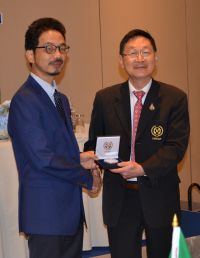
A highlight of the 32nd Governing Council Meeting in Chiang Mai was the award of the Aziz-Ul Haq Rural Development Medal to NACA by the Centre on Integrated Rural Development for Asia and the Pacific (CIRDAP). The award was presented by Dr Cherdsak Virapat, Director General of CIRDAP on behalf of the CIRDAP Governing Council, which had determined to confer the award at a Special Session of the Executive Committee on 25 May.

The award was granted to NACA “…for its remarkable contributions to rural development through sustainable aquaculture and aquatic resource management programs, policy dialogue and regional cooperation in Asia and the Pacific region and for unwavering support to the CIRDAP mission to promote regional sustainable aquaculture development and resilience to climate challenges.”

Shrimp Summit, 24-26 July, Ho Chi Minh City, Vietnam

The 2023 Shrimp Summit will convene the global seafood value chain to address the critical challlenges of Asia’s shrimp-farming sector, from stagnant production to growers’ livelihoods, with a cross-topic focus on sustainability and climate change. The Summit is presented by The Center for Responsible Seafood (TCRS) and co-hosted by the Global Seafood Alliance. The format of the 2023 Shrimp Summit will allow the industry to develop a common understanding of issues, address key challenges through discussion and work toward consensus and actionable solutions. This in-person and virtual event will feature discussions, relevant content and informative webinars before, during and after the event in the TCRS Online Community. Access to the online community is included with event registration.

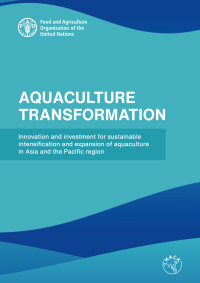
Aquaculture transformation: Innovation and investment for sustainable intensification and expansion of aquaculture in Asia and the Pacific region

The document provides an overall vision and framework intended to accelerate aquaculture transformation in Asia and the Pacific region through innovations and investment, and to provide guidance to partners from the public, private and development communities to actively engage with the region in transforming aquaculture to more efficient, inclusive, resilient and sustainable food systems. The document served as background information for discussion in the High-Level Meeting on Aquaculture Transformation in Asia and the Pacific Region, 22–23 November 2022, organised by the FAO Regional Office for Asia and the Pacific and the Network of Aquaculture Centres in Asia-Pacific. The document is broadly aligned with FAO’s Blue Transformation Roadmap, paying specific attention to the context and needs of aquaculture within Asia and the Pacific region. The Paper translates the Roadmap into a vision and priority actions for aquaculture transformation in the region by 2030.

High-level meeting on aquaculture transformation in Asia and the Pacific region

As a follow on from the September FAO/NACA workshop on aquaculture transformation, FAO and NACA convened a high-level meeting to discuss the issue and the outcome of the previous consultation with policy makers. The meeting was held virtually from 22-23 November and was attended by 79 senior officials from 25 countries and international organisations, with observers from industry and international NGOs. Specific objectives of the high-level meeting were to: Engage senior policy makers and business leaders in the process of defining regional targets, action areas and initiatives for aquaculture transformation in the region by 2030, identify strategies and mechanisms to stimulate innovation and investment, and to recommend follow up actions and commitments.

NACA Newsletter, Vol. XXXVII, October-December 2022

In this issue:

Training Course on Mariculture Technologies in Asia-Pacific; FAO/NACA Virtual Workshop on Aquaculture Transformation in Asia and the Pacific Region; Belt & Road Forum for International Freshwater Fishery Industry Innovation; 8th Global Conference on Gender in Aquaculture and Fisheries, 21-23 November; Reported Aquatic Animal Diseases in the Asia-Pacific Region during the First Quarter of 2022; International Training Course on Biology and Pathology of the Penaeid Shrimp 2022; Angkasa Putra inaugurated as first President of the South-East Asian Fisheries and Aquaculture Student Association; Artemia webinars: Video recordings of technical presentations available.

Global Conference on Aquaculture Millennium +20

The GCA +20 was successfully held as a hybrid event from 22-25 September, with physical participation at the venue in Shanghai, China, and international participation via video conference. A total of 1,728 people participated in the event, of which 500 were physically present in Shanghai. A key output from the GCA +20, the Shanghai Declaration is a call to action that highlights the principles and strategic pathways to maximise the contribution of sustainable aquaculture in achieving the Sustainable Development Goals, with a special focus on “Leaving no one behind”.

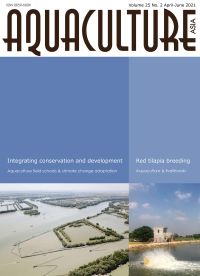
Aquaculture Asia Magazine, April-June 2021

In this issue:

Integrated taxonomy, conservation and sustainable development: Multiple facets of biodiversity; A note on 100th birth anniversary of the late Dr Hiralal Chaudhuri; Aquaculture field schools supporting mangroves for climate change adaptation of Indonesian milkfish-shrimp farmers; An insight to red tilapia breeding and culture: A farmer advisory; Aquaculture for livelihoods and food security in North-western India; NACA Newsletter.

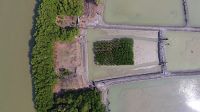
Aquaculture field schools supporting mangroves for climate change adaptation of Indonesian milkfish-shrimp farmers

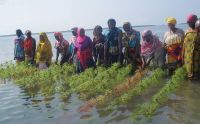
Over the last five decades, over 30 million people along Java’s north coast have experienced subsidence and subsequent soil erosion. In 2015, Building with Nature Indonesia (BwNI-Demak) started a coastal protection project in 10 communities of nine coastal villages of Demak regency. The protection measures introduced included the use of permeable structures (dams) that successfully capture sediment and support natural recovery of mangroves, and aquaculture field schools, to train small-scale farmers on good aquaculture practices such as low external inputs sustainable aquaculture, associated mangrove aquaculture and multi-trophic srhimp aquaculture.

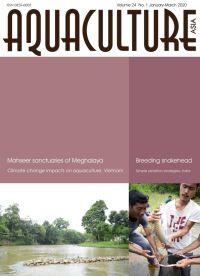
Aquaculture Asia Magazine, January-March 2020

In this issue:

Mahseer sanctuaries of Meghalaya: A conservation and recreational perspective; Impacts of climate change on aquaculture in Vietnam: A review of local knowledge; Simple means of water aeration adopted by progressive fish breeders in West Bengal, India; Breeding striped snakehead (Channa striata) using the concrete tank method in the Cangkringan Area, Special Region of Yogyakarta; NACA Newsletter.

Impacts of climate change on aquaculture in Vietnam: A review of local knowledge

Vietnam has a vast coastline which exposes it to typhoons and flooding. Farmers are at the frontlines of experiencing climate change as their livelihoods are intrinsically linked with the natural environment. Our study collected local knowledge of aquaculture farmers living in South Central Vietnam. The purpose of the interviews was to gather firsthand knowledge on current climate change impacts experienced by farmers, as well as which climate change threats they are most concerned about, and how they are adapting to these threats.

NACA Newsletter, Vol. XXXIV No. 4, October-December 2019

In this issue:

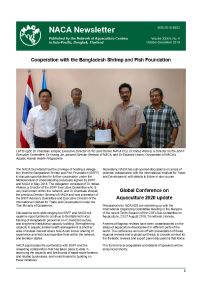
Cooperation with the Bangladesh Shrimp and Fish Foundation; Global Conference on Aquaculture 2020 update; Quarterly Aquatic Animal Disease Report, January-March 2019; A fresh look at inland fisheries and their role in food security and livelihoods; Tuskfish 2 Beta: Testers wanted; APAARI Regional Workshop on Underutilized Fish and Marine Genetic Resources and Their Amelioration; Joint Research Project on Utilization of Thailand Local Genetic Resources to Develop Novel Farmed Fish for Global Market; Impacts of climate change on fisheries and aquaculture.

NACA Newsletter, Vol. XXXIV No. 2, April-June 2019

In this issue:

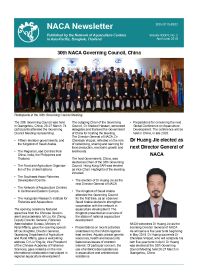
30th NACA Governing Council Meeting, China; Dr Huang Jie elected as the next Director General of NACA; Expert Consultation on Genetically Responsible Aquaculture; Launch of AGRISI: Aquatic Genetic Resource System of India; Aquatic animal epidemiology training course held at NBFGR; Asia-Pacific Laboratory Proficiency Testing Workshop; Proceedings of the FishAdapt Conference; Quarterly Aquatic Animal Disease Report, July-September 2018; Centex Shrimp International Training Course on Biology and Pathology of Penaeid Shrimp; INFOFISH World Shrimp Trade Conference and Exposition.

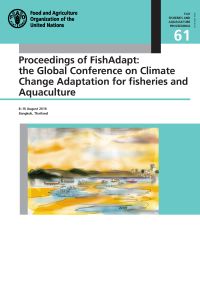
Proceedings of FishAdapt: The Global Conference on Climate Change Adaptation for Fisheries and Aquaculture

Climate variability and change are affecting hydro-meteorological cycles and altering aquatic ecosystems, driving shifts in physical and chemical processes, ecological communities and the distribution and abundance of species. These changes have implications for fisheries management, food security and the livelihoods of more than 600 million people worldwide. The FishAdapt conference was held in Bangkok from 8 to 10 August, 2016. It provided a forum to share practical experiences in understanding the vulnerabilities associated with climate change and ocean acidification and the development of risk management and adaptation strategies.

FAO and NACA to convene Global Conference on Aquaculture 2020

FAO and NACA have signed an agreement to convene a global conference on aquaculture in 2020. This will be the fourth conference in a series that began at the dawn of the industry in Kyoto, 1976. Aquaculture 2020 will be held late in the year in China. Arrangements, programme and partner details will be announced via the NACA website in due course.

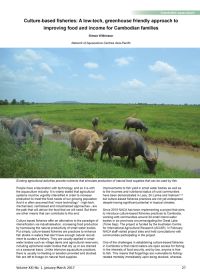
Culture-based fisheries: A low-tech, greenhouse friendly approach to improving food and income for Cambodian families

Improvements to fish yield in small water bodies as well as to the incomes and nutritional status of rural communities have been demonstrated. in Laos, Sri Lanka and Vietnam but culture-based fisheries practices are not yet widespread, despite having significant potential in tropical climates. A project to introduce culture-based fisheries to Cambodia is described. Participating communities reported improved catch per unit effort, an increase in the number of people engaged in fishing and lower food costs.

Developing an Environmental Monitoring System to Strengthen Fisheries and Aquaculture Resilience and Improve Early Warning in the Lower Mekong Basin

These are the proceedings of a consultation on the existence and effectiveness of environmental monitoring systems for fisheries and aquaculture in the Lower Mekong basin. The document provides a baseline assessment of environmental monitoring systems in Cambodia, Thailand and Vietnam and the report of a workshop to discuss the assessments findings and future steps towards an improved environmental monitoring and early warning system that will contribute to climate change adaptation in fisheries and aquaculture in the area.