Advancing global collaboration for sustainable aquaculture in Fuzhou, China
23 March 2026 | 1154 views
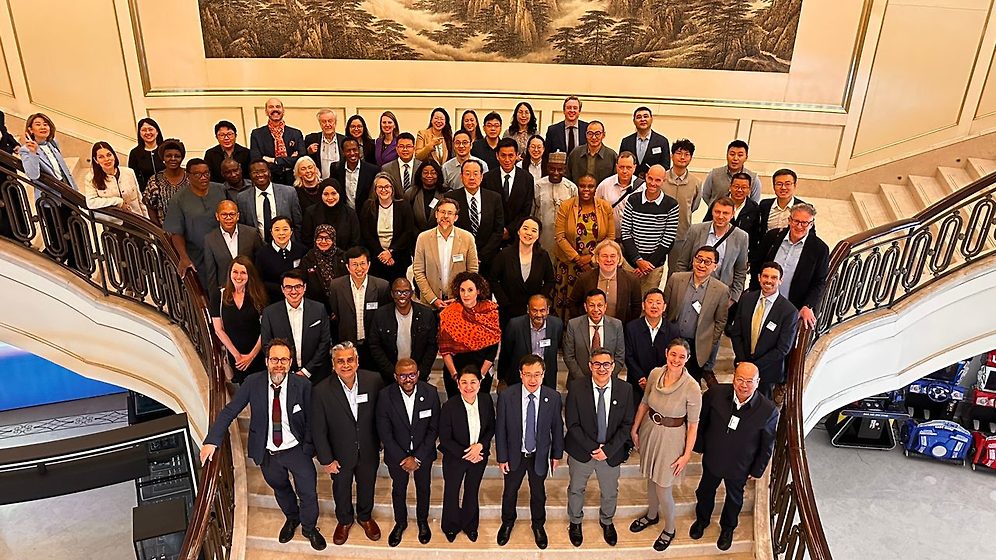
NACA joined international leaders in Fuzhou, China, in March 2026 for two major back-to-back events focused on advancing sustainable aquaculture. Convened by the Food and Agriculture Organization of the United Nations (FAO), the meetings brought together policymakers, researchers, industry stakeholders and development institutions to strengthen collaboration and accelerate implementation of global sustainability frameworks.
The FAO Roundtable on the Global Sustainable Aquaculture Advancement Partnership (GSAAP) and the First FAO–China Fisheries Association (CFA) Joint International Conference on Sustainable Aquaculture underscored the urgency of coordinated action as the sector continues to expand rapidly while facing mounting environmental and structural challenges.
FAO Roundtable on Upgrading the Global Sustainable Aquaculture Advancement Partnership (GSAAP)
The FAO Roundtable on GSAAP, held 17 March, focused on strengthening the partnership as a key mechanism for implementing the FAO Guidelines for Sustainable Aquaculture and advancing the Blue Transformation agenda.
With global aquaculture production continuing to grow, participants highlighted the need to address persistent constraints, including environmental impacts, disease risks, governance gaps and limited access to technical expertise. Discussions emphasised that scaling sustainable aquaculture will require stronger alignment between policy, science, investment and capacity development.
The roundtable opened with a technical matchmaking session, where countries presented priority needs and GSAAP partners identified opportunities to provide targeted support. This practical exchange demonstrated the Partnership’s role in mobilizing expertise and connecting demand with available resources.
In the afternoon, the GSAAP Annual Meeting convened in a roundtable format to examine the Partnership’s future direction. Participants engaged in focused discussions on strategic priorities, institutional strengthening and approaches to scaling impact beyond pilot initiatives.
The meeting concluded with agreement on key priority areas for collaboration and a renewed commitment to strengthening GSAAP as a global platform for coordinated action. Participants also underscored the importance of delivering measurable outcomes through stronger partnerships and more effective implementation mechanisms.
First FAO-CFA Joint International Conference on Sustainable Aquaculture, 18–20 March 2026
Building on the momentum of the Roundtable, the First FAO-CFA Joint International Conference on Sustainable Aquaculture brought together a global audience to examine practical solutions for advancing sustainability across the sector.
With aquaculture now accounting for more than half of global aquatic animal production, and Asia contributing the vast majority, participants stressed the sector’s central role in food security, nutrition and livelihoods, alongside the increasing pressure to improve sustainability and resilience.
Over three days, the conference featured keynote presentations, technical sessions and panel discussions covering key thematic areas, including sustainable feed systems, seed supply chains, aquatic animal health and innovation. Discussions focused on translating policy commitments into practical action, supported by investment, technology transfer and stronger institutional frameworks.
Regional perspectives and country case studies, including experiences from major aquaculture-producing nations, provided insight into both progress and ongoing challenges. Participants highlighted the importance of integrated approaches that connect research, industry and policy to enable scalable and inclusive solutions.
The conference concluded with a field visit to a local aquaculture facility, offering participants direct exposure to emerging technologies and operational practices supporting sustainable production.
Sustaining Momentum Through Partnership
Together, the two events reinforced the importance of global and regional cooperation in shaping the future of aquaculture. The back-to-back format enabled participants to link strategic discussions on partnership development with technical exchanges on implementation and innovation.
For NACA, engagement in these meetings reaffirmed its role in facilitating regional collaboration and knowledge exchange across Asia-Pacific. The outcomes highlighted a shared commitment among stakeholders to move from dialogue to action, with stronger partnerships positioned as a key driver of sustainable aquaculture transformation.
Creative Commons Attribution.
Related
Aquaculture transformation: Innovation and investment for sustainable intensification and expansion of aquaculture in Asia and the Pacific region
24 March 2025 | FAO, NACA | 13781 views | .pdf | 4.76 MB