From hormone to hatchling: A hands-on journey through carp breeding at hatchery
25 August 2026 | Md Faisal Ahmed | 274 Downloads | .pdf | 3.07 MB
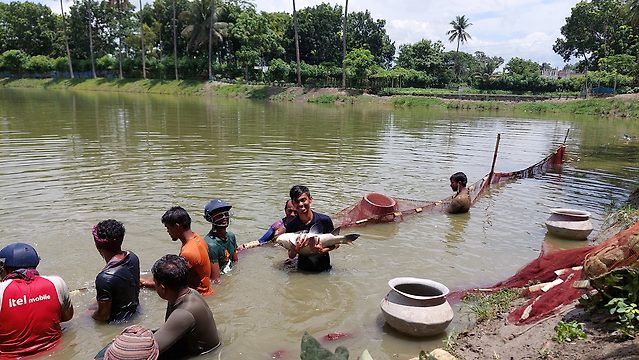
Fish provide about 60% of the animal protein eaten in Bangladesh, and carp farming depends on a steady supply of hatchery-produced seed. Hatcheries now generate around 98% of the country's fry, working from a network of more than a thousand public and private operations.
Carps such as catla, rohu and mrigal spawn naturally only in rivers and floodplains during the monsoon, triggered by water flow, temperature and rainfall. Ponds cannot supply those cues. Induced breeding techniques stimulate maturation and spawning, allowing seed production outside the monsoon, as and when required. The method was first used successfully in Bangladesh in 1967 and has been standard hatchery practice since.
Carp seed production at a commercial hatchery in Jashore illustrates the process for six species. Brood fish are held in prepared ponds and fed a supplementary diet, then selected on age, weight and physical condition. Two inducing agents are commonly in use: pituitary gland extract, prepared on site and favoured for its low cost and availability, and synthetic hormone used mainly for silver and bighead carp. Females receive a priming dose and a larger second dose, and males a single injection. Spawning and fertilisation follow, either in breeding tanks or by hand stripping, after which fertilised eggs are incubated under flowing water. Hatching takes place within two days, and the young fry are reared briefly before being packed in oxygenated bags for delivery.
Several problems limit hatchery performance. The lineage of broodstock is often unknown and age records are unreliable, so inbreeding depression is widespread. Hormone quality and dosing vary, immature fish are sometimes used, and rough handling causes brood fish mortality. Staff may have little training in hygiene, pond soils deteriorate with repeated use, and power failures disrupt water supply. Together these constraints hold back the quality of the seed available to farmers.
1787830782_carp-breeding-hormone-to-hatchling.pdf
Creative Commons Attribution.
Related
Aquaculture Asia Magazine, July-September 2026
24 September 2026 | 2704 views | .pdf | 19.6 MB