Education and Training

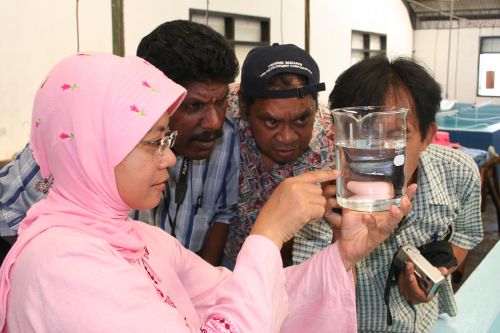
The Education and Training Programme assists capacity building among NACA members through the exchange and sharing of knowledge and skills between members. Activities may take the form of training courses, study visits and personnel exchange. The programme also supports the training components of the other thematic programmes and serves as an outreach arm of NACA. Regular training activities include three to four courses each year on various topics of regional priority in aquaculture development, such as:

  • Broodstock management in aquaculture.
  • Aquaculture business management.
  • Marine finfish seed production.
  • Aquaculture governance and planning.
  • Management for sustainable aquaculture development.

Key activities

Key activities of the programme include:

  • Identifying training needs for aquaculture development in NACA members.
  • Identifying and organising relevant expertise and capacities to meet the training needs.
  • Developing training modules and materials.
  • Facilitating routine education and training activities of NACA.
  • Facilitating and coordinating exchange programmes among members and with other regions.

Creative Commons Attribution.
Related

Subject tags

A collection of subject tags relating to technical matters.

In this collection

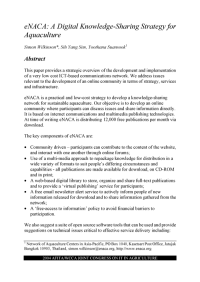
eNACA: A digital knowledge-sharing strategy for aquaculture

This paper provides a strategic overview of the development and implementation of a very low cost ICT-based communications network. We address issues relevant to the development of an online community in terms of strategy, services and infrastructure. Our objective is to develop an online community where participants can discuss issues and share information directly. It is based on internet communications and multimedia publishing technologies. At time of writing eNACA is distributing 12,000 free publications per month via download.

Management options for the shrimp fry fishery: A regional stakeholder workshop in Coxes Bazar

In February 2002 the shrimp fry collection ban was placed into abeyance pending further review of how biodiversity could be conserved at the same time as protecting the livelihoods of 400,000 fry collectors. A Shrimp Action Plan for the period April - September 2002 was drawn up to identify trends impacting on distribution and growth in the shrimp sector, and to explore alternative models for the management of fry resource and to assess their social, institutional and economic implications.

Proceedings of the Learning Workshop on Livelihoods Analysis, 19-20 November 2002, Long An, Vietnam

This Learning Workshop on Livelihoods Analysis was held in Long An Province, Vietnam from 19-20 November 2002. It was part of an ongoing series of activities that will inform the implementation of the Ministry of Fisheries Strategy on Sustainable Aquaculture for Poverty Alleviation under the Vietnamese Government’s Hunger Eradication and Poverty Reduction (HEPR) Program. The recruitment in October of Nguyen Song Ha, STREAM Vietnam Communications Hub Manager, improved preparations within the Vietnamese national context.

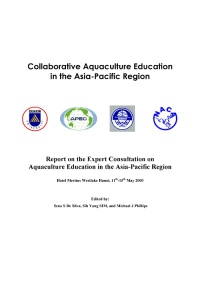
Report of the Expert Consultation on Aquaculture Education in the Asia-Pacific, Hanoi, Vietnam, 11-15 May 2000

The Expert Consultation on Aquaculture Education in the Asia-Pacific was held in, Vietnam, 2000. The consultation was the final activity of APEC project FWG/02/99 “Collaborative Aquaculture Education Program”. This report gives the findings and papers presented to the Expert Consultation, including the follow-up recommendations for establishing an Aquaculture Educational Consortium, in the form of a network, comprising academic and training institutions in the Asia and Oceania regions.

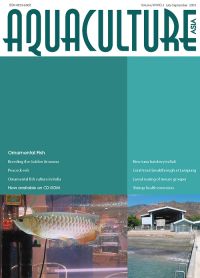
Aquaculture Asia Magazine, July-September 2003

In this issue:

Ornamental fish farming in India. Tilapia for Indian aquaculture? Peri-urban food production in southeast Asia. Socio-economic consequences of shrimp farming in Andhra Pradesh. Breeding techniques for golden arowana Scleropages formosus. Captive breeding of peacock eel Macrognathus aculeatus. Substrate-based aquaculture systems. Extension in shrimp health management - experiences from India. Treatment of disease in freshwater shrimps and crabs in China. Larval rearing techniques for humpback grouper Cromileptes altivelis.

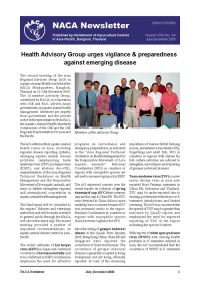
NACA Newsletter Volume XVIII, No. 3-4, July-December 2003

In this issue:

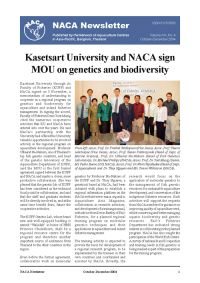
Health Advisory Group urges vigilance and preparedness against emerging disease. New Zealand farmer helps train Asian aquaculturists. Mr Junaidi Che Ayub. Global Aquaculture Discussion Forum, Dhaka, Bangladesh. STREAM Conducts Livelihood Capacity-building in the Philippines, India. MPEDA/NACA shrimp farmer workshop held in Andhra Pradesh, India. Learning by Doing - Fisheries and Adaptive Learning. NACA cooperation expanded to shrimp health management in Vietnam. 150 people trained in Q3-Q4, 2003. International Symposium on Freshwater Prawns Held at Kochi, India. Developing an online aquaculture community for NACA.

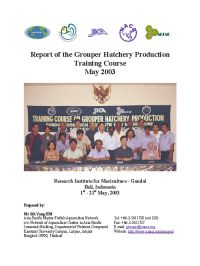
Report of the Grouper Hatchery Production Training Course, May 2003

This report documents a training course that was held at the Research Institute for Mariculture, Bali, Indonesia in May 2003. The course covered both theoretical aspects of grouper husbandry via lectures and practical hands-on work in a grouper hatchery, including broodstock management, tank preparation egg collection, live feed production, health management, harvesting and transport and visits to commmercial grouper and milkfish hatcheries, grow-out facilities, markets and exporters.

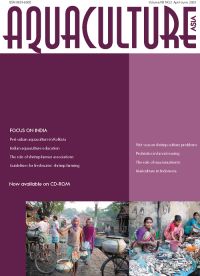
Aquaculture Asia Magazine, April-June 2003

In this issue:

Peri-urban aquaculture in Kolkata. Diffusion and adoption of shrimp farming technologies. Aquaculture education in India. Information system on fish germplasm resources in China. Freshwater crustacean aquaculture in China. The role of macronutrients. Innovations by Bengal farmers. Scientific guidelines for freshwater prawn farmers in India. Status of mariculture in Indonesia. Use of probiotics in larval rearing. Problems in shrimp culture during the wet season.

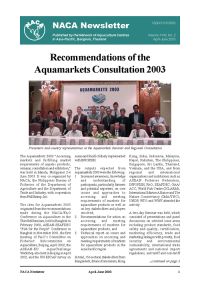
NACA Newsletter Volume XVIII, No. 2, April-June 2003

In this issue:

Recommendations of the Aquamarkets Consultation 2003. EC-funded project targets seafood trade and poverty. Shrimp disease control and coastal management. Fisheries and Adaptive Learning project. Shrimp aquaculture certification: Request for information & advice on a new web site. Workshop on control and responsible use of alien species. MPEDA/NACA Technical Assistance on Shrimp Health and Coastal Management. Changes to the regional list of aquatic animal diseases. STREAM SAPA Stakeholder Workshop in Hanoi. Regional Training Course on Grouper Hatchery Production. Review on low food chain species for marine fish culture. NACA/Deakin University to visit Indonesia 2-7 April 2003.

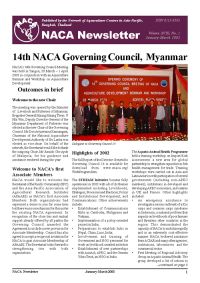
NACA Newsletter Volume XVIII, No. 1, January-March 2003

In this issue:

14th NACA Governing Council, Myanmar. Welcome to NACA's first Associate Member. NACA Alumni notes - U Minn Thame. Australian Youth Ambassador. Assisting in the Development of Recirculating Shrimp Farm Technologies. Nepal to join STREAM Initiative. NACA Joins Thai IT for Agriculture Forum. Indigenous Australian aquaculture group visits Thailand. Bangladesh Fisheries Training and Extension Project tour. Ugandan farmers train on catfish breeding and culture.

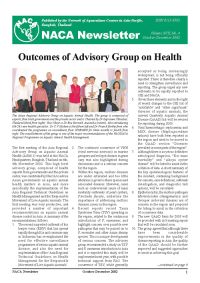
NACA Newsletter Volume XVII, No. 4, October-December 2002

In this issue:

Outcomes of Advisory Group on Health. New FAO Regional Representative for Asia and the Pacific. Chinese Regional Lead Centre provides training in Rice-Fish farming under China-ASEAN Agriculture Cooperation. Development of Second Phase of APARIS. Building the leading source of global information on aquaculture. AFS/Fish Health Section 5th Symposium on Diseases in Asian Aquaculture. Upcoming training courses.

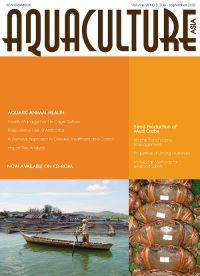
Aquaculture Asia Magazine, July-September 2002

In this issue:

Aquaculture for poverty alleviation and food security. Shrimp pond waste management. Properties of liming materials. Seed production of mud crab Scylla spp. The dilemmas of strain selection. Seed production of the crucifix crab Charybdis feriatus. A general approach to disease treatment and control. Breeding and seed production of mangrove snapper Lutjanus argentimaculatus. Responsible use of antibiotics in shrimp farming. Health management for cultured marine fishes. Molecular methods for rapid detection of pathogens in seafood.

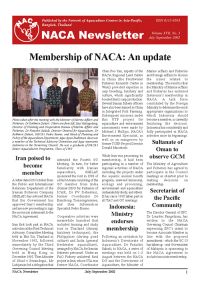
NACA Newsletter Volume XVII, No. 3, July-September 2002

In this issue:

Iran poised to become member. Indonesia Ministry endorses membership. NACA and FAO implements Phase II of the Asia-Pacific Regional Program on Molluscan Health Management. Message to NACA Alumni: Proposed Alumni Network. Research and Technology for Farmer and Environment Friendly Farming of Marine Fish in the Asia-Pacific. NACA Organises Four Training courses and Study Tours for Bangladesh in the third quarter.

Report of the Rural Aquaculture Service Recipients and Implementers Workshop, 9-10 May 2002, Jharkhand

The “Rural Aquaculture Service Recipients and Implementers Workshop” was held from 9-10 May 2002 in Ranchi, Jharkand. It was among the first activities of the DFID NRSP Research Project R8100 entitled “Investigating Improved Policy on Aquaculture Service Provision to Poor People”. The workshop provided the first opportunity for feedback on the project design from people who live and work in tribal communities in the three states of Jharkhand, Orissa and West Bengal.

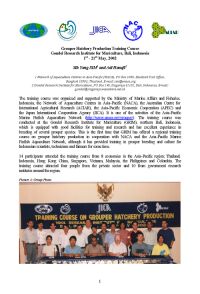
Report of the Grouper Hatchery Production Training Course, May 2002

This report documents a training course that was held at the Research Institute for Mariculture, Bali, Indonesia in May 2003. The course covered both theoretical aspects of grouper husbandry via lectures and practical hands-on work in a grouper hatchery, including broodstock management, tank preparation egg collection, live feed production, health management, harvesting and transport and visits to commmercial grouper and milkfish hatcheries, grow-out facilities, markets and exporters.

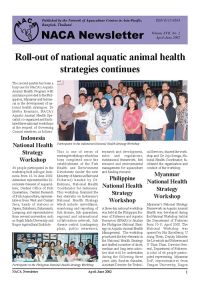
NACA Newsletter Volume XVII, No. 2, April-June 2002

In this issue:

Roll-out of national aquatic animal health strategies continues. STREAM concludes inception phase of 'Improved Policy on Aquaculture Service Provision to Poor People' Project in India. Expert consultation on rapid diagnosis of shrimp viral diseases held in Chennai, India. ACIAR/NACA Workshop on Feeds and Feeding Constraints in Inland Aquaculture: Research and Extension Priorities. NACA supports health management in Indian shrimp farming. Marine Finfish Aquaculture aquaculture programme gears up for workshop. Launch of Trans-Himalayan Coldwater Fisheries Network Website. NACA Organises Emergency Assistance to Indonesia in the Control of a Serious Koi and Common Carp Disease.

NACA Newsletter Volume XVII, No. 1, January-March 2002

In this issue:

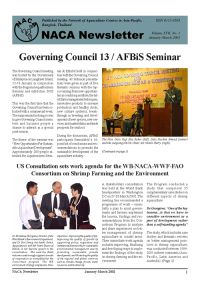
Governing Council 13 / AFBiS Seminar. US Consultation sets work agenda for the WB-NACA-WWF-FAO. Consortium on Shrimp Farming and the Environment. Conclusions and Recommendations of the Joint meeting of AFBiS 2002 and the 13th NACA Governing Council. FAO/NACA Expert Consultation Focusing on Aquaculture and Small-scale Aquatic Resource Management for Poverty Alleviation. Myanmar Fishery and Livestock Fair 2002 a huge success. Nepal develops national strategy on aquatic animal health management. Shrimp Farming & the Environment Case Studies now available on the web. NACA implements APEC project on Import Risk Analysis. MOU on project to prevent disease losses on prawn farms. Andhra Pradesh Fisheries Minister studies Thai & Malaysian aquaculture systems. Vietnamese mission evaluates new high value Chinese species.

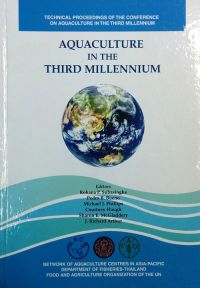
Proceedings of the Conference on Aquaculture in the Third Millennium

This volume, the third major publication arising from the Conference on Aquaculture in the Third Millennium, contains the information essential to conduct well-informed discussion of sustainable aquaculture development - both at the Conference, as well as after. The information provide basic reference points on the progress, direction and magnitude of aquaculture changes, and the factors associated with these changes, within global, regional, sectoral, thematic and technical perspectives.

About NACA

The Network of Aquaculture Centres in Asia-Pacific is an intergovernmental organisation that promotes rural development through sustainable aquaculture and aquatic resources management. NACA seeks to improve the livelihoods of rural people, reduce poverty and increase food security. The ultimate beneficiaries of NACA are farmers and rural communities. NACA implements development assistance projects in partnership with research centres, governments, development agencies, farmer associations and other organisations.

Aquaculture Asia Magazine

Aquaculture Asia Magazine is an autonomous publication that gives farmers and scientists in developing countries a voice. Stories concern the small-scale aquaculture prevalent in the region and the circumstances of farmers trying to make ends meet in an increasingly globalised world. We accept articles on any aspect of aquaculture and the related processing, marketing, economic, environmental and social issues. An RSS feed is available if you wish to stay informed of new issues.