NACA member governments are: Australia, Bangladesh, Cambodia, China, Hong Kong SAR, India, Indonesia, I.R. Iran, Kingdom of Saudi Arabia, Korea (DPR), Lao PDR, Malaysia, Maldives, Myanmar, Nepal, Pakistan, Philippines, Sri Lanka, Thailand and Vietnam.
This report summaries the proceedings of the 20th meeting of the Regional Advisory Group on Aquatic Animal Health, held 4-5 November 2021. The meeting discussed: Progress on NACA’s Asia Regional Aquatic Animal Health Program; updates from the OIE Aquatic Animal Health Standards Commission; aquaculture biosecurity; Progressive Management Pathway for Improving Aquaculture Biosecurity activities relevant to Asia; a systematic approach for quantifying biosecurity measures in aquaculture; aquatic animal health strategy; updates on the OIE Regional Collaboration Framework on Aquatic Animal Health; and updates on the QAAD Reporting and Disease List.
Shanghai Ocean University is offering PhD scholarships for the majors of Aquaculture, Hydrobiology, Fishery Economics and Management, Fishery Resources Management and Fishery Environment Protection and Management. The scholarship program is open to international candidates under 35 years old who have a master’s degree with a good academic record and outstanding research potential. The scholarships include a full tuition fee waiver, accommodation, living allowance and medical insurance. Applicants are highly recommended to submit the application before March 30, 2022. The final application deadline is April 15, 2022.
A free virtual seminar series will be held from 13-17 December, hosted by the Freshwater Fisheries Research Center, Chinese Academy of Fisheries Sciences, in partnership with NACA and the Chinese Ministry of Agriculture and Rural Affairs. The seminar will be held via Zoom. It will give participants a background in aquatic resource conservation practices, recommend options for sustainable aquaculture farming systems with potential for intensification with intervention strategies, and build a communication and experience exchange platform for information dissemination and future collaboration. Participation is free. Registration closes 10 December.
The 2021 Global Forum on Sustainable Fisheries Development, Fisheries Trade Development Summit and the 4th International Forum on Aquaculture for Silk Road Countries will be held on 27 October during the 25th China International Fisheries Expo. The programme will include lectures on fisheries trade, aquaculture genetics, sustainable shrimp farming systems, response to the COVID pandemic and Atlantic salmon farming, among others. Participation in the event is free, but registration is required.
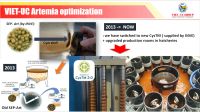
Global Conference on Aquaculture Millennium +20; Workshop on SDG-aligned Artemia aquaculture; Professor Sena De Silva Memorial Oration, 8 October 2021; Apply now: Training Course on Mariculture Technology in Asia-Pacific; New project on “Blue transformation in aquaculture”; Webinar on Status of Artemia cyst use in fish and crustacean hatcheries.
A free training course on mariculture technologies will be offered online via Zoom from 18 October to 5 November, by the Yellow Sea Fisheries Research Institute (YSFRI), People’s Republic of China. The course will cover genetics and breeding of mariculture species; large-scale propagation; disease control and prevention; nutrition research and feed development; technology for different farming models; equipment research, engineering and construction of farming facilities; quality and safety inspection technology for aquatic products. Space is limited, applications close 11 October.
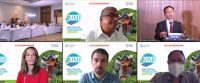
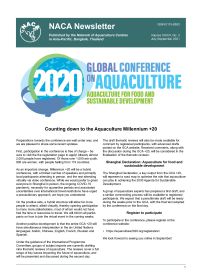
The GCA +20 was successfully held as a hybrid event from 22-25 September, with physical participation at the venue in Shanghai, China, and international participation via video conference. A total of 1,728 people participated in the event, of which 500 were physically present in Shanghai. A key output from the GCA +20, the Shanghai Declaration is a call to action that highlights the principles and strategic pathways to maximise the contribution of sustainable aquaculture in achieving the Sustainable Development Goals, with a special focus on “Leaving no one behind”.
Videos from our recent webinar Status of the use of Artemia cysts in fish and crustacean hatcheries around the world are now available on NACA's Youtube channel. Please consider subscribing for more technical aquaculture content!
Video recordings of technical presentations from the webinar on Culture-based fisheries for rural development (31 May 2021) are now available on Youtube. Presentations cover technical constraints, the socio-economic and impact on communities, micro-nutrient security, monitoring and evaluation, improving water quality through stocking selected species, biodiversity considerations, and success stories.
Please visit NACA's Youtube channel to access the videos. Our Youtube channel is brand new, please consider subscribing for more technical aquaculture videos!
Counting down to Aquaculture Millennium +20; Free webinar - Fish Vaccination: Theory, Innovations and Application; Quarterly Aquatic Animal Disease Report, October-December 2020; Invasive disease linked to raw freshwater fish: Group B Streptococcus; International Crustacean Symposium 2021.
Join us on 31 May for a free webinar on Culture-based fisheries for rural development, with leading experts from the Asian region. Culture-based fisheries (CBF) are practices to enhance fish stocks in waters that don't have enough natural recruitment to sustain a fishery. CBF practices are usually applied in small water bodies such as village dams and irrigation reservoirs. Fish growth is driven by the natural productivity of the waters, foraging on natural food supplies. The simplicity and low capital requirements of CBF make it easy for farming communities to learn and adopt.
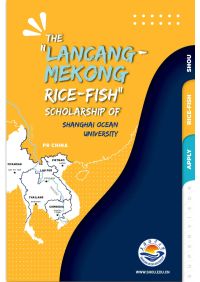
Shanghai Ocean University is offering master and PhD scholarships for aquaculture and hydrobiology-related majors interested in studying rice-fish farming in the Lancang Mekong River area. The scholarship programme is open to nationals of Myanmar, Cambodia, Lao PDR, Thailand and Vietnam who are less than 35 years old and have a bachelor degree with good academic record. The scholarships include full tuition fee waiver, accommodation, living allowance and medical insurance. Applications close 30 May 2021.
This report summarises the proceedings of the 19th meeting of the Advisory Group, held 26-27 November 2020 via video conference. The group's role includes reviewing disease trends and emerging threats in the region, identifying developments in global aquatic disease issues and standards, evaluating the Quarterly Aquatic Animal Disease Reporting Programme and providing guidance on regional strategies to improve aquatic animal health management.
Registrations open for the Global Conference on Aquaculture Millennium +20; Presentation of the State of World Aquaculture and the Regional Aquaculture Reviews 2020; Webinar: International Forum of Aquaculture in Silk Road Countries; Quarterly Aquatic Animal Disease Report, April-June 2020; World Fisheries Day Lecture Series, 20 December: Biosecurity - the concept to guarantee sustainable development of aquaculture; Webinar: Beauty and the Beast: Important Parasites of Fish; Second Online Training on Mariculture Technology for the Asia-Pacific Region: Aquaculture Biosecurity.
We are pleased to announce that registration for the Global Conference on Aquaculture Millennium +20 (GCA +20) is now open. Interested participants are invited to complete the application form and the conference Secretariat will inform registrants as to the status of their application in due course. The GCA +20 will be a hybrid conference; registration will allow attendance of conference in-person or virtually, with the indicated preference taken into account to the extent possible. The maximum number of in-person participants will have to be capped, in close consultation with the host and in line with the latest advice from health authorities. The GCA is open to all interested stakeholders, including from government, academia, private sector and civil society. Women and youth (35 years of age or younger) are strongly encouraged to apply. Kindly note that registration is free.
As a follow on from the first course, the Second Online Training Program of Mariculture Technology for the Asia-Pacific Region will be held from 15 to 20 December 2020 via Zoom. The course will focus on aquaculture biosecurity and related technologies at the international, national, and on-farm levels. Lectures will be given by experts from FAO, OIE, NACA, YSFRI, and industry. Participation is free but pre-registration is required.
A free webinar on aquaculture in silk road countries will be held from 24-25 November, from 10:00 to 17:00 Beijing time (UTC +8). The theme of the forum is Sustainable Aquaculture Development: Response Strategies Towards Post-pandemic. Participation is free for all but registration is required. The webinar will be held via Zoom.
13th Technical Advisory Committee; Presentation of the State of World Aquaculture and Regional Aquaculture Reviews 2020; Online training course on mariculture technologies for the Asia-Pacific region; Quarterly Aquatic Animal Disease Report, January-March 2020; Regional Webinar on Infection with Decapod Iridescent Virus 1 (DIV1) and Preparedness for Emerging Shrimp Diseases; China announces import measures to respond to nucleic acid positives of COVID-19 detected from the outer packaging of frozen white leg shrimp from Ecuador.
The Yellow Sea Fisheries Research Institute, Chinese Academy of Fisheries Sciences and NACA are organising a free online training course on mariculture technologies, to be held from 21-25 September 2020. The programme will cover breeding, disease control and prevention, nutrition and feed research, breeding model construction, farm technology development, engineering, quality, safety and inspection technology for aquatic products. The course is open to government officials, researchers, enterprise managers and technicians from developing countries. The deadline for applications is 19 September 2020.