NACA member governments are: Australia, Bangladesh, Cambodia, China, Hong Kong SAR, India, Indonesia, I.R. Iran, Kingdom of Saudi Arabia, Korea (DPR), Lao PDR, Malaysia, Maldives, Myanmar, Nepal, Pakistan, Philippines, Sri Lanka, Thailand and Vietnam.
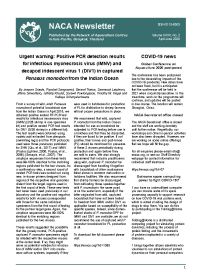
Urgent warning: Positive PCR detection results for infectious myonecrosis virus (IMNV) and decapod iridescent virus 1 (DIV1) in captured Penaeus monodon from the Indian Ocean; COVID-19 news; Urgent announcement on usefulness of the lymphoid organ (LO) as an additional prime target for diagnosis of decapod iridescent virus 1 (DIV1) in diseased P. vannamei; Fresh or frozen seafood?; Report of the Eighteenth Meeting of the Asia Regional Advisory Group on Aquatic Animal Health; COVID-19 fallout could push half a billion people into poverty in developing countries; Simple techniques double crablet production.
6 April 2020 | Joesyl Marie de la Cruz | 4532 views
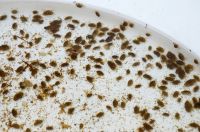
Crab farmers will be happier, and the environment hopefully better, with recent improvements at the mangrove crab hatchery of SEAFDEC/AQD in Iloilo, Philippines. Crablets used in the farming of the prized mangrove crabs, Scylla serrata, are usually collected from the wild and increasing demand has threatened their natural population. However, Huervana recently revealed that simple tweaks in protocols at the SEAFDEC/AQD hatchery have led to a significant boost in their crablet production, with survival increasing twofold.
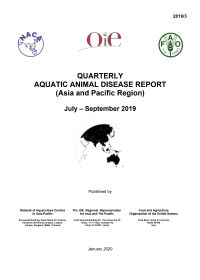
The 83rd edition of the Quarterly Aquatic Animal Disease report contains information from twelve governments. The foreword discusses the upcoming 11th Symposium on Diseases in Asian Aquaculture (DAA 11), which will be held from 29 September to 2 October 2020, at the Borneo Convention Center, Kuching, Sarawak, Malaysia.
The 35th Session of Asia-Pacific Fishery Commission has identified the lack of effective governance as a major threat to sustainable aquaculture growth for greater contribution to achievement of the Sustainable Development Goals. The objectives of the consultation were to: Share the results of country studies on aquaculture governance in respective countries; identify gaps, issues and challenges in aquaculture governance; and recommend strategies and actions to improve and strengthen aquaculture governance.
27 January 2020 | Dr Roger Mamauag | 4490 views | .mp3 | 4.83 MB
Audio recording of presentation delivered at the Consultation on Strengthening Governance of Aquaculture for Sustainable Development in Asia-Pacific, 5-6 November 2019, Bangkok, Thailand.
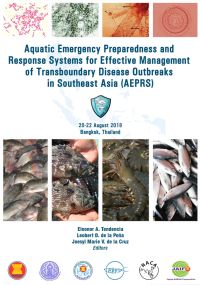
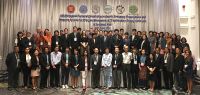
The ASEAN Regional Technical Consultation on Aquatic Emergency Preparedness and Response Systems for Effective Management of Transboundary Disease Outbreaks in Southeast Asia was held from 20-22 August 2018 in Bangkok, Thailand. The consultation discussed the status of and/or need for aquatic emergency preparedness and response systems for effective management of transboundary disease outbreaks in Southeast Asia. Issues were addressed through country reports, technical presentations and a workshop.
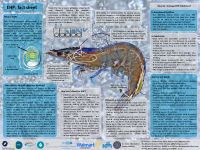
EHP or Enterocytozoon hepatopenaei is a fungal microsporidian parasite that infects the hepatopancreas (hp) of tiger shrimp (Penaeus monodon) and whiteleg shrimp (P. vannamei) in Thailand and results in slow growth and, in chronic infections, mortalities. EHP is also known from Brunei, China, India, Indonesia, Malaysia, Philippines, Venezuela and Vietnam. This fact sheet provides information on the EHP life cycle, signs of infection, diagnosis and management in both hatcheries and growout, as well technical contacts for further information.
The 82nd edition of the Quarterly Aquatic Animal Disease report contains information from eleven governments. The foreword welcomes Dr Huang Jie, NACA's new Director General, a health specialist that has previously participated in the Asia-Pacific Regional Advisory Group on Aquatic Animal Health.
Two consultations were held back to back in Thailand from 5-7 November, namely the Consultation on Strengthening Governance of Aquaculture for Sustainable Development in Asia-Pacific and the Consultation on Demographic Changes in Fishing Communities in Asia. The consultations were held at the Centara Grand Hotel at Ladprao, Bangkok. The consultations were attended by 29 participants from 15 countries in the Asia-Pacific region. The consultations were jointly organised by FAO and NACA. Audio recordings are available of some presentations.
The 81st edition of the Quarterly Aquatic Animal Disease report contains information from twelve governments. The foreword discusses the proposed Regional Collaboration Framework on Aquatic Animal Diseases in Asia and the Pacific. This will initially focus on building a framework of actors with the aim of strengthening laboratory capacity for aquatic animal disease activities in Asia and the Pacific, for example to support emergency response.
This report summarises the proceedings of the 17th meeting of the Advisory Group, held 13-14 November 2018 in Bangkok, Thailand. The group's role includes reviewing disease trends and emerging threats in the region, identifying developments in global aquatic disease issues and standards, evaluating the Quarterly Aquatic Animal Disease Reporting Programme and providing guidance on regional strategies to improve aquatic animal health management.
The 80th edition of the Quarterly Aquatic Animal Disease report contains information from twelve governments. The foreword discusses revisions to the regional reporting system for 2019.
Fifty fellowships are available for young scientists and researchers under the ASEAN-India Research Training Fellowship Scheme (AIRTF), to study at Indian academic and R&D institutions. The fellowships are for a period of up to six months and include travel and financial support. The fellowships are intended to build capacity among young ASEAN researchers in science and technology and to further strengthen the bond between India and ASEAN member states.
The 78th edition of the Quarterly Aquatic Animal Disease Report contains information from twelve governments in the Asia-Pacific region. The foreword discusses three recent aquatic animal health consultations: The ASEAN Regional Technical Consultation on Aquatic Emergency Preparedness and Response Systems for Effective Management of Transboundary Disease Outbreaks in Southeast Asia; the Regional Consultation and Related Study on Antimicrobial Resistance Risk to Aquaculture in Asia; and the Preliminary Consultation on Monitoring of Antimicrobial Resistance in Bacterial Pathogens in Aquaculture.
The ASEAN Regional Consultation on Aquatic Emergency Preparedness and Response Systems for Effective Management of Transboundary Disease Outbreaks in Southeast Asia was held in Bangkok, 20-22 August. The objective of the consultation was to bring together ASEAN member states and technical experts to discuss the current status of emergency animal disease preparedness and response systems, and to identify gaps and opportunities for regional cooperation in management of transboundary disease.
The EURASTiP Exchange Programme provides opportunities for industry, researchers and educators from Europe and south-east Asia to connect and gain new perspectives while sharing innvovative ideas to help develop long term partnerships. Bursaries of up to €3,000 per exchange are available (subject to eligibility criteria) to support international innovation and collaboration. The deadline for applications is 20 September 2018. For more information on how to apply please see the EURASTiP website.
The 76th edition of the Quarterly Aquatic Animal Disease Report contains information from 14 governments. The foreword discusses the outcomes of a Stakeholder Consultation on Progressive Management Pathway to Improve Aquaculture Biosecurity, organised by the Food and Agriculture Organization of the United Nations, Mississippi State University and the World Bank.
22 March 2018 | Network of Aquaculture Centres in Asia-Pacific | 3289 Downloads | .pdf | 3.45 MB
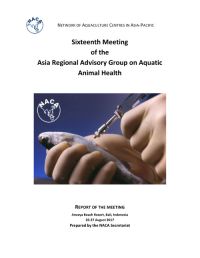
This report summarises the proceedings of the 16th meeting of the Advisory Group, held 26-27 August 2017 in Bali, Indonesia. The group's role includes reviewing disease trends and emerging threats in the region, identifying developments in global aquatic disease issues and standards, evaluating the Quarterly Aquatic Animal Disease Reporting Programme and providing guidance on regional strategies to improve aquatic animal health management. The meeting included discussion on Tilapia Lake Virus (TiLV) and developments in antimicrobial resistance.
This collection contains video recordings of the lectures from the Regional Training Course on Culture-based Fisheries in Inland Waters, held at Nha Trang University, Vietnam. The objective of the course was to provide participants with the skills to assist local communities to plan and manage culture-based fisheries; a relatively simple and low cost technology that can deliver nutritional and economic benefits to rural communities with few livelihood options. The course was sponsored by the United Nations University Fisheries Training Programme.
The 75th edition of the Quarterly Aquatic Animal Disease Report contains information from 14 governments. The foreword discusses the 10th Symposium on Disease in Asian Aquaculture, and the 11th Technical Group Meeting and election of a new Executive Committee for the Fish Health Society (2018-2020).