NACA member governments are: Australia, Bangladesh, Cambodia, China, Hong Kong SAR, India, Indonesia, I.R. Iran, Kingdom of Saudi Arabia, Korea (DPR), Lao PDR, Malaysia, Maldives, Myanmar, Nepal, Pakistan, Philippines, Sri Lanka, Thailand and Vietnam.
9 August 2004 | Simon Wilkinson, Sih Yang Sim and Yioothana Suansook | 1450 Downloads | .pdf | 114.32 KB
This paper provides a strategic overview of the development and implementation of a very low cost ICT-based communications network. We address issues relevant to the development of an online community in terms of strategy, services and infrastructure. Our objective is to develop an online community where participants can discuss issues and share information directly. It is based on internet communications and multimedia publishing technologies. At time of writing eNACA is distributing 12,000 free publications per month via download.
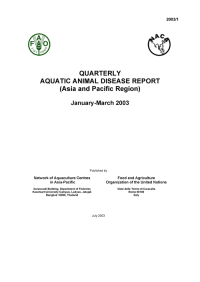
This report, the 25th in the series, contains information about the aquatic animal health status of fifteen states in the Asia-Pacific region. The foreword discusses the outcomes of the third meeting of the Asia Regional Advisory Group on Aquatic Animal Health.
A regional response to aquatic invasive alien species. 6th Symposium on Diseases in Asian Aquaculture. Indonesia plan EC PREP seafood trade study. NACA Website: Guide to member services. Preparing and responding to health emergencies. New publication: Marine Finfish Aquaculture Magazine. STREAM Agreement with MOF Vietnam on Communications. STREAM Agreement with NAFEC Vietnam on Livelihoods Approaches. NACA-NACEE Cooperation. Training and study tours.
24 May 2004 | M.G. Bondad-Reantaso, J. Humphrey, S. Kanchanakhan and S. Chinabut | 3461 Downloads | .pdf | 2.2 MB
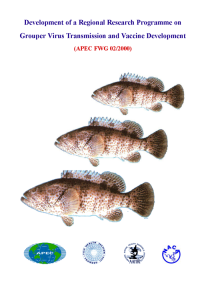
These are the proceedings of a workshop, funded by the APEC Fisheries Working Group Project 02/2000. The project developed a framework with nine major research components: Health and production at hatcheries, regional collaborative disease resource centers, regional disease monitoring and surveillance, improving regional diagnostic capabilities, responsible trans-boundary movement, farm health management, vaccines and vaccination, funding mechanisms and establishment of an ad-hoc working group.
This report, the 24th in the series, contains information about the aquatic animal health status of seventeen states in the Asia-Pacific region. The foreword discusses capacity building to prevent, prepare for an respond to aquatic animal health emergencies.
The purpose of this workshop was to build shared understandings of participatory livelihoods concepts and approaches, with emphases on the approaches as ways of thinking and working, and on learning from concrete examples from the experiences of STREAM in Cambodia and Vietnam, and SPARK in the Philippines. One outcome from the first workshop, was that between the two workshops participants would carry out follow-up tasks appropriate to their context.
This report, the 23rd in the series, contains information about the aquatic animal health status of twenty states in the Asia-Pacific region. The foreword discusses a project on Capacity and Awareness Building on Import Risk Analysis for Aquatic Animals, funded by the APEC Fisheries Working Group.
The Asia Regional Advisory Group on Aquatic Animal Health meets annually to discuss regional health issues including emerging disease threats. This report includes a review of regional disease status circa 2003, global and regional disease reporting arrangements, global issues and standards, progress in implementation of the the Regional Technical Guidelines on Health management for the Responsible Movement of Live Aquatic Animals, identification and designation of regional aquatic animal health resources and regional and international cooperation.
23 November 2003 | Ayu Nissapa and Somsak Boromthanarat | 1450 Downloads | .pdf | 2.35 MB
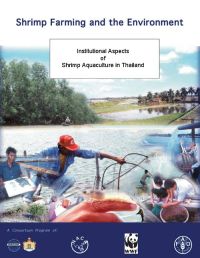
This case study documents the success and lessons learnt from local co-management approaches involving farmers associations and local government in Thailand. The case study also shows the linkages and relationships of institutions operating at different levels of administration from farm to national levels and their effect on management. The case study provides an analysis of institutional supports and mechanisms needed for successful shrimp farming management via case studies.
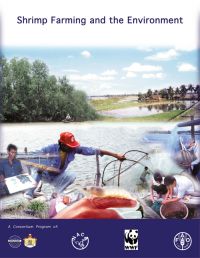
This collection of publications originates from the International Consortium Program on Shrimp Farming and the Environment, which was implemented by the World Bank, the Network of Aquaculture Centres in Asia-Pacific (NACA), the World Wildlife Fund (WWF), the Food and Agriculture Organization of the United Nations (FAO), and the United Nations Environment Programme (UNEP). The consortium supported 35 complementary case studies prepared by more than 100 researchers in more than 20 shrimp farming countries.
19 November 2003 | De Silva, S.S., S.Y. Sim and M.J. Phillips (eds.) | 2477 Downloads | .pdf | 960.92 KB
The Expert Consultation on Aquaculture Education in the Asia-Pacific was held in, Vietnam, 2000. The consultation was the final activity of APEC project FWG/02/99 “Collaborative Aquaculture Education Program”. This report gives the findings and papers presented to the Expert Consultation, including the follow-up recommendations for establishing an Aquaculture Educational Consortium, in the form of a network, comprising academic and training institutions in the Asia and Oceania regions.
This report, the 22nd in the series, contains information about the aquatic animal health status of seventeen states in the Asia-Pacific region. The foreword discusses the role of disease surveillance programmes and issues realted to the OIE Aquatic Animal Health Standards Commission.
This report, the 21st in the series, contains information about the aquatic animal health status of sixteen states in the Asia-Pacific region. The foreword discusses the outcomes of the second meeting of the Asia Regional Advisory Group on Aquatic Animal Health.
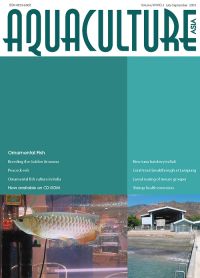
Ornamental fish farming in India. Tilapia for Indian aquaculture? Peri-urban food production in southeast Asia. Socio-economic consequences of shrimp farming in Andhra Pradesh. Breeding techniques for golden arowana Scleropages formosus. Captive breeding of peacock eel Macrognathus aculeatus. Substrate-based aquaculture systems. Extension in shrimp health management - experiences from India. Treatment of disease in freshwater shrimps and crabs in China. Larval rearing techniques for humpback grouper Cromileptes altivelis.
The Second STREAM Regional Conference was held in Tagaytay City, Philippines, from 8-10 June 2003 with the participation of 23 people from Australia, Cambodia, India, Nepal, Philippines, Thailand, Vietnam and Yunnan Province of China. Following a regional overview of STREAM’s themes, country partners, donors and funding, and activities, participants visited four “stations” on the themes of livelihoods, institutions, policy development, and communications, working in groups representing National Coordinators, Communications Hub Managers, and Partners. STREAM operations were discussed.
In this issue: Livelihoods and languages - a SPARK-STREAM learning and communications process. Towards broader contextual understandings of livelihoods. Using tools to build shared understandings, using a sustainable livelihoods framework to learn. Learning about rattan as a livelihood. Meanings of "community-managed area". Lessons learnt about processes for learning and communicating. About the STREAM Journal. About STREAM. This edition is also available in Bahasa (Indonesia), Ilonggo, Vietnamese, Bengali and Oriya.
This report, the twentieth in the series, contains information about the aquatic animal health status of nineteen states in the Asia-Pacific region. The editorial discusses health risks associated with trans-boundary movement of live aquatic animals and the role of risk analyses.
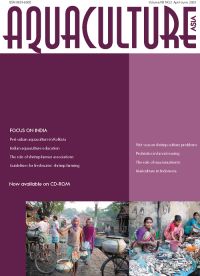
Peri-urban aquaculture in Kolkata. Diffusion and adoption of shrimp farming technologies. Aquaculture education in India. Information system on fish germplasm resources in China. Freshwater crustacean aquaculture in China. The role of macronutrients. Innovations by Bengal farmers. Scientific guidelines for freshwater prawn farmers in India. Status of mariculture in Indonesia. Use of probiotics in larval rearing. Problems in shrimp culture during the wet season.
This report, the nineteenth in the series, contains information about the aquatic animal health status of sixteen states in the Asia-Pacific region. The editorial discusses the role of the Quarterly Aquatic Animal Disease Reporting System.
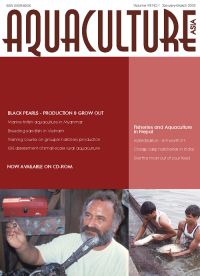
Fertilisation, soil and water quality management. Commercialisation of giant freshwater prawn culture in India. Aquaculture in reservoir-fed canal systems. Production of black-lip pearl oyster Pinctada margaritifera. Hybridisation hassles. Breeding sea cucumber Holothuria scabra in Vietnam. Use of palm kernel meal in feeds. Getting the most out of your feed. Marine finfish aquaculture in Myanmar. Penaeus monodon culture in low-salinity areas. Fisheries and aquaculture in Nepal.