Thailand

Thailand's involvement in NACA.

Creative Commons Attribution.

Related

NACA member governments

NACA member governments are: Australia, Bangladesh, Cambodia, China, Hong Kong SAR, India, Indonesia, I.R. Iran, Kingdom of Saudi Arabia, Korea (DPR), Lao PDR, Malaysia, Maldives, Myanmar, Nepal, Pakistan, Philippines, Sri Lanka, Thailand and Vietnam.

In this collection

Regional Workshop Launches Third Asia-Pacific Laboratory Proficiency Testing Program for Aquatic Animal Diseases

The third Asia-Pacific Laboratory Proficiency Testing Program for Aquatic Animal Diseases has been launched, with a regional workshop in Bangkok bringing together 50 people from 13 countries and territories across the region. The program, supported by the Australian Government Department of Agriculture, Fisheries and Forestry and CSIRO’s Australian Centre for Disease Preparedness, builds on more than a decade of collaboration to strengthen diagnostic capacity, safeguard aquaculture livelihoods, and support safe trade and food security.

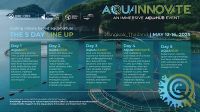
AQUAINNOVATE showcases regional aquaculture innovation and nature-based solutions

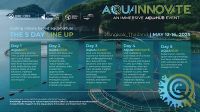
A networking and coaching event for aquaculture entrepreneurs and startups was held in Bangkok from 12-19 May. AQUAINNOVATE brought together promising startups to pitch their ideas, network, and participate in expert coaching circles.

Convened by NACA and FutureFish with funding support from Canada's International Development Research Centre, the programme included sessions on business fundamentals, investing for impact, nature and community based business innovations, and interactions with experts from the the National Innovation Agency, Center of Excellence for Shrimp Molecular Biology and Biotechnology, the National Center for Genetic Engineering and Biotechnology, and Mahidol University.

Watch the entrepreneur pitch presentations now!

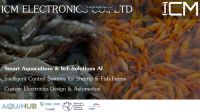
Green Controller: Smart Farming for a Sustainable Future

Green Controller by ICM Electronics is a smart water quality monitoring system for aquaculture, powered by high-precision titanium sensors. It tracks dissolved oxygen, salinity, and pH in real time, with full control through a mobile app and instant anomaly alerts. The system enables automated aeration based on live data, reducing energy use, lowering aerator run time, and improving feed conversion efficiency for more sustainable aquaculture operations. This pitch was presented Sukmit Teekhasenee of ICM Electronics.

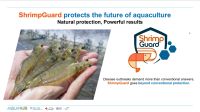
ShrimpGuard: Nature's shield for healthy shrimp

ShrimpGuard, developed by BIOTEC, NSTDA, and Kasetsart University in Thailand, is a phage-based innovation for managing shrimp health. It targets Vibrio infections using bacteriophages combined with immune-boosting agents, reducing antimicrobial use while improving farm productivity and sustainability across ASEAN. The project also engages farmers directly through training, outreach, and field trials to ensure practical application and lasting benefits for coastal communities and the wider aquaculture sector. This pitch was presented by Wanilada Rungrassamee of BIOTEC.

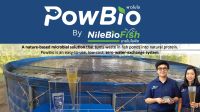
PowBio: A nature-based microbial solution turning fish pond waste into protein

PowBio is a microbial inoculant developed by NileBioFish (NINEBIO GROUP Co., Ltd.) in Thailand to support sustainable biofloc aquaculture systems. Co-developed with Maejo University’s Faculty of Fisheries and Aquatic Resources and supported by the Thailand National Innovation Agency, PowBio uses high-efficiency microorganisms to turn fish pond waste into natural protein. By reducing ammonia and nitrite levels, improving water quality, and recycling nutrients within ponds, PowBio helps farmers cut feed costs, lower water exchange needs, and reduce chemical inputs. The result is healthier harvests without muddy off-flavors—delivered through a practical, low-cost, and easy-to-use solution for more productive and resilient aquaculture. This pitch was presented by Nissara Kitcharoen of NileBiofish.

Life Cycle Assessment for Eco-friendly and Sustainable Aquaculture by Nature-based Practice

This presentation introduces a life cycle assessment tool designed to evaluate the sustainability of nature-based aquaculture practices. The tool measures environmental impacts such as carbon footprint and supports farmers, researchers, and policymakers in identifying mitigation strategies for more eco-friendly production systems. This pitch was presented by Kobboon Kaewpila of the Life Cycle Sustainability Assessment Laboratory, King Mongkut’s University of Technology Thonburi.

UniFAHS: The Startup Journey of a Thai Phage Biotech Pioneer

Kitiya Vongkamjan, co-founder of UniFAHS, shares the journey of building a pioneering phage biotechnology company in Thailand. UniFAHS develops bacteriophage-based solutions to tackle antimicrobial resistance and improve food safety in agriculture, aquaculture, livestock, and food processing. UniFAHS was recognised as a Global Finalist in the Extreme Tech Challenge 2022 and has grown into a venture-backed startup, raising USD 1.4 million in seed funding from A2D Ventures, ADB Ventures, and InnoSpace (Thailand). The story highlights how cutting-edge science can be transformed into scalable commercial solutions with real-world impact.

HydroNeo: Startup Journey of a Smart Aquaculture Innovator

In this presentation, Fabian Reusch, founder of HydroNeo, shares the story of how HydroNeo began and the lessons learned along the way of building a tech startup in Thailand. Aimed at fellow aquaculture entrepreneurs and startup founders, his talk is an open and honest reflection on the realities of the journey — not a polished, glamorous pitch that only highlights the wins, but a candid look at both successes and setbacks, the difficult decisions, and the ongoing challenges that shape the real path of building a company.

Thailand: Innovation showcase for aquaculture transformation

This video by Montakan Tamtin, Department of Fisheries, features two presentations from Thailand’s delegation to the 3rd High-Level Meeting on Aquaculture Transformation in Asia and the Pacific Region. The first showcases innovation and nature-based solutions in aquaculture via the IDRC-funded AQUADAPT Project; the second presents Thailand’s pilot initiative for low-carbon shrimp farming under an FAO Technical Cooperation Programme.

Innovations on alternatives to antimicrobials in aquaculture

This video by Chokanan Prompichai, NACA, presents two promising innovations aimed at reducing antimicrobial use (AMU) in aquaculture, showcased as part of Thailand’s National Innovation and Investment Plan (NIIP) and via the IDRC-funded InnoVet-AMR 2.0 Project. NanoVac, developed by AIT, uses nanobubbles to deliver vaccines to tilapia, while ShrimpGuard, developed by BIOTEC and KU, is a bacteriophage-based solution for managing shrimp diseases. Both technologies offer potential to combat antimicrobial resistance (AMR) without leaving chemical residues. The presentation compares their readiness, challenges, and adoption, incorporating feedback from shrimp farmers across Thailand. It highlights the need for cost-effective, easy-to-use solutions that align with farmers' real-world needs and regulatory frameworks.

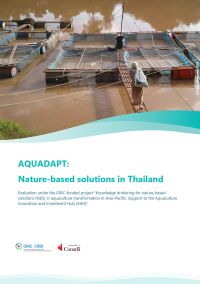
AQUADAPT: Nature-based solutions in Thailand

The project evaluated the effectiveness of various types of nature-based solution (NbS) in Thailand that contribute to climate change resilience by enabling off-grid farm operations and reducing reliance on costly fossil fuels. Aquaculture enterprises were assessed for this project based on the NbS they utilised and the potential benefits they offer in mitigating climate change impacts and enhancing production systems in Thailand. Three enterprises / innovations were selected and are described within.

NACA Newsletter, Vol. XXXX, April-June 2025

In this issue:

  • Report of the 23rd Asia regional Advisory Group on Aquatic Animal Health.
  • Sign up for our new Email Newsletter!
  • AQUAINNOVATE: An AquaHub Event.
  • Workshop on sustainable brine shrimp Artemia cultivation, 17 February, Tashkent.
  • Tuskfish CMS V2.1 released.
  • TCRS Shrimp Summit to spotlight issues.
  • Global Artemia Summit: 27 June, Entebbe, Uganda.

Call for Innovators: Aqua-Innovate Workshop on Scaling Nature-Based Solutions in Aquaculture

NACA and FUTUREFISH invite aquaculture innovators to apply for Aqua-Innovate: Scaling Nature-Based Solutions in Aquaculture, a 5-day innovation workshop to be held from May 12–16 in Bangkok, Thailand.

This event will bring together startups, researchers, solution providers, seafood producers, and investors to identify commercially viable and scalable nature-based solutions to the challenges facing aquaculture. Our goal is to transform the aquaculture industry through innovations, and nature-based solutions practices. 

Selected participants will receive targeted mentoring and support to refine their ideas and explore real-world applications and partnerships. If you're developing a product, service, or approach that supports sustainable seafood production, we encourage you to apply.

Join us to share your stories, collaborate on identifying challenges, and co-create solutions together. We invite you to engage with us and explore how you can be part of this transformative journey.

NACA Newsletter, Vol. XXXX, January-March 2025

In this issue:

  • FAO programme supports national innovation and investment plans for aquaculture transformation.
  • 14th Asian Fisheries Forum, 12-15 February 2025 register now!
  • Saudi International Marine Exhibition (SIMEC) 3-5 February 2025, Riyadh.
  • Workshop on Sustainable Brine Shrimp Artemia Cultivation, 17 February, Tashkent.
  • Status, technological innovations, and industry development needs of mud crab (Scylla spp.) aquaculture.
  • Global Seaweed: New and Emerging Markets Report 2023.

NACA Newsletter, Vol. XXXIX, October-December 2024

In this issue:

  • Training Programme on Safeguarding Artemia Resources for Aquaculture held in Rome.
  • First International Artemia Aquaculture Consortium Conference and Members' Meeting, Ostend, Belgium.
  • Inception workshop: Knowledge brokering for nature-based solutions in aquaculture transformation.
  • Reported Aquatic Animal Diseases in the Asia-Pacific Region during the First Quarter of 2024.
  • 14th Asian fisheries and Aquaculture Forum, India.
  • PhD scholarships: Shanghai Ocean University PhD Programme 2025.

Knowledge brokering for nature-based solutions in aquaculture and transformation in Asia-Pacific: Support to the Aquaculture Innovation and Investment Hub

This project contributes to NACA's recent work with the FAO on aquaculture transformation. The aim is to create more efficient, inclusive, resilient, and sustainable food systems through innovation, investment, and partnerships. NACA is developing an Aquaculture Innovation and Investment Hub (AIIH) to help realise this vision in the region, providing a facility that will bring together innovators, startups, and investors to accelerate transformation. The project will contribute to developing National Innovation and Investment Plans for Thailand, The Philippines, and Fiji, which will address issues including climate change, disease prevention and management, environmental sustainability, gender equality and social inclusion, and resource utilisation and management. The project is part of a wider AQUADAPT initiative, a four-year partnership running from 2023-2027, funded by Canada's International Development Research Centre.

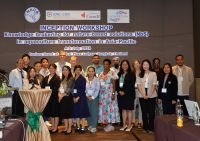
Inception workshop: Knowledge brokering for nature-based solutions in aquaculture transformation

Canada's International Development Research Centre (IDRC) is sponsoring the project "Knowledge Brokering for Nature-Based Solutions in Aquaculture Transformation in Asia-Pacific: Support to the Aquaculture Innovation and Investment Hub." The project is part of a wider IDRC AQUADAPT initiative, a four-year partnership running from 2023-2027. AQUADAPT addresses the intertwined challenges of climate change, biodiversity loss, and food insecurity through applied research on nature-based solutions in aquaculture in Southeast Asia and the Pacific region. AQUADAPT emphasises Gender Equality and Social Inclusion (GESI), ensuring that nature-based solutions are inclusive of all genders and marginalised groups. The project's inception workshop was held in Bangkok from July 4-5, bringing together project teams from Thailand, The Philippines, and Fiji to discuss approaches and methodologies. 

NACA Newsletter, Vol. XXXIX, July-September 2024

In this issue:

  • NACA and Thailand's Department of Fisheries Strengthen Collaboration.
  • Full-degree scholarships and research internship grants from Prince of Songkla University, Thailand.
  • Manual on Artemia production and use.
  • The Grass Carp Aquaculture Manual.
  • Pacific oyster farming: A practical manual.
  • The State of World Fisheries and Aquaculture 2024: Blue Transformation in action.
  • Safeguarding salt lake brine shrimp (Artemia) resources for aquaculture: A training project.
  • Reported Aquatic Animal Diseases in the Asia-Pacific Region during the Fourth Quarter of 2023.
  • First International Artemia Aquaculture Consortium Conference, 9 September (hybrid event).

NACA and Thailand Department of Fisheries Strengthen Collaboration

NACA's newly appointed Director General, Dr. Eduardo Leano, along with staff, paid a courtesy call to Mr. Bancha Sukkaew, the Director General of the Department of Fisheries (DOF), Thailand, and directors of DOF's divisions. Discussions centered on ongoing projects between NACA and DOF and explored opportunities for collaboration both in Thailand and the wider region. Mr. Sukkaew emphasized the need to improve food security in the Asia-Pacific region and the importance of cooperation in information sharing and R&D to enhance productivity and reduce costs. Thailand is currently participating in a NACA project on Knowledge brokering for nature-based solutions in aquaculture transformation in Asia-Pacific. The Thai team is identifying innovations and nature-based solutions in the aquaculture industry, as a contribution to the regional Aquaculture Innovation and Investment Hub, presently in development.