NACA publishes a wide range of aquaculture publications including technical manuals, workshop proceedings, better practice guidelines and several serials including Aquaculture Asia Magazine, the NACA Newsletter and the Quarterly Aquatic Animal Disease Report. To keep up to date with developments you could consider subscribing to our RSS feed.
4 October 2012 | M. Muralidhar, M. Kumaran, M. Jayanthi, B. Muniyandi, A.G. Ponniah, Udaya S. Nagothu, Patrick White and Ambekar Eknath | 3883 Downloads | .pdf | 2.64 MB
Shrimp aquaculture is threatened by climatic changes that affect infrastructure and livelihoods of farmers. Ecological changes, inundation of low-lying lands and saline intrusions into freshwater regions are likely to cause substantial dislocation of communities and disruption of farming systems. The focus of the present study report is on mapping the small scale farmer’s perceptions and attitudes towards climate change impacts and their adaptive capacities to address the impacts in Krishna District, Andhra Pradesh, India.
This case study examines the impacts of climate change on milkfish farmers in Iloilo. Farmer perceptions of climate change, attitudes and adaptation strategies were mapped via focus group discussion, stakeholder workshops and questionnaires. Measures that could be achieved to reduce vulnerability to climate change include sustainable aquaculture practices; diversification of farmers’ income sources; diversification of culture species; utilising natural resources to increase productivity; and building farmer capacities through access to information and knowledge.
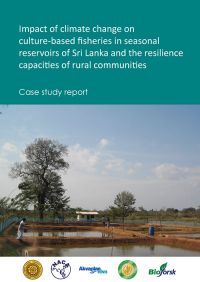
The present study identifies changes in reservoir filling patterns and water retention period of seasonal reservoirs in Sri Lanka in five administrative districts from 1960 to 2010. Results reveal that there is high drawdown in the recent past in seasonal reservoirs compared to the 1960s, and a forward shifting pattern of drawdown due to altered rainfall patterns. These changes have affected the culture season and the duration of the culture period of stocked fingerlings in the reservoirs.
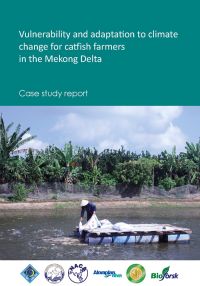
The catfish industry in the Mekong Delta faces several risks and challenges including disease, environmental issues, fluctuating price, higher quality requirement of the product, and climate changes, including salt water intrusion. The different production zones were found to be different in terms of their climate change impacts, productivity, culture system and socio-economic characteristics. This study examines farmers perceptions of climate change, scientific and policy support requirements and potential adaptation strategies to sustain the industry.
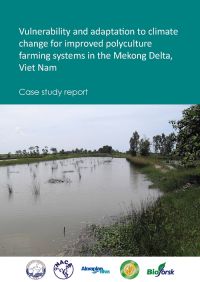
The shrimp farming case study was conducted in Cà Mau and Bạc Liêu provinces, Mekong Delta, Southern Vietnam by: (1) organized stakeholder workshops to map farmer's perceptions, adaptation measures and agencies involved; and (2) questionnaire survey to assess vulnerability of the production system to climatic changes and extreme climatic events. Farmer perceptions of climate change and possible adaptation measures were identified. Policy frameworks including the policy options were recommended and an action plan proposed.
17 January 2012 | Nguyen Thi Bang Tam, Nguyen Hai Dang and Nguyen Xuan Cuong | 1626 Downloads | .pdf | 1.93 MB
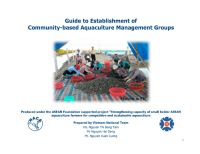
This practical manual "Guide to establishment of community-based aquaculture management groups" was prepared by the national team of Vietnam under the ASEAN Foundation supported project "Strengthening capacity of small holder ASEAN aquaculture farmers for competitive and sustainable aquaculture".
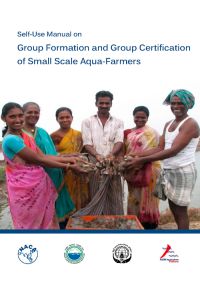
This manual is intended for the use by the current and prospective small-scale farmer groups who are interested in obtaining accreditation for their production process. The objective is to provide them an easy-to-follow, stepwise guide that can be used as a practical tool in their venture of attaining group certification. However, this can be used by the field extension officers and certifiers who are directly involved in the process or other interested parties.
9 January 2012 | Reza Shah Pahlevi, Abdullah and N. Kurnia | 4162 Downloads | .pdf | 3.66 MB
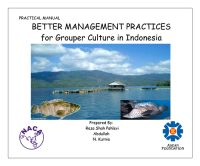
This practical manual covers key aspects for successful grouper farming including formation of farmer groups, cage crop planning, crop calendar and better management practices for cage aquaculture of grouper. These include site selection, design, cage preparation, seed selection and stocking practices, feed, water and health management, harvest and post-harvest, record keeping, marketing and capital strengthening. It is designed for use by small-scale farmers.
9 January 2012 | Nemencio B. Arevalo, Tiburcio C. Donaire, Maximo A. Ricohermoso and Ronald Simbajon | 3293 Downloads | .pdf | 8.53 MB
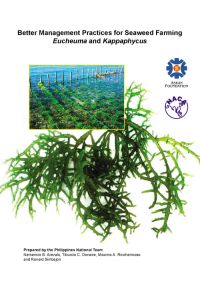
This practical manual "Better management practices for seaweed farming" is produced by the Philippines national team under the ASEAN Foundation supported project "Strengthening capacity of small holder ASEAN aquaculture farmers for competitive and sustainable aquaculture" implemented by NACA in five ASEAN countries. The long-term objective of the project was to assist ASEAN small- scale aquaculture farmers improve their livelihoods by being competitive in markets and improving farm management practices to deliver quality and sustainably produced aquaculture products.
This study is a continuation of “Evaluation of the impact of the Indian Ocean tsunami and US antidumping duties on the shrimp farming sector of South and South-East Asia” with the aim of assessing the impact of the 2004 Indian Ocean tsunami and the introduction of anti-dumping duties on shrimp farming in the Asian region, with special focus on the effect that these unforeseen events had on shrimp prices and livelihoods of the stakeholders.
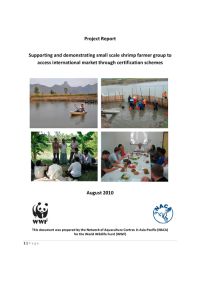
This project was conducted to demonstrate small scale shrimp farmer group access to international markets through certification schemes. This project proved that small-scale farmers organised into groups, can improve their technical capacities, and achieve access to markets. This achievement was the result of strong partnerships with producers, private sector and government agencies assisting to develop a sustainable business model for small scale aquaculture. Cost of compliance was found to be a significant barrier to entry.
23 May 2011 | Nguyen Thanh Phuong, Nguyen Van Hao, Bui Minh Tam, Phan Thanh Lam, Vo Minh Son, Nguyen Nhut, Duong Nhut Long, Thuy Nguyen T.T., Geoff J. Gooley, Brett A. Ingram and Sena S De Silva | 10322 Downloads | .pdf | 4.11 MB
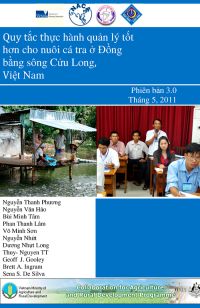
Tài liệu này là phiên bản thứ 3.0 về “Thực hành quy phạm thực hành quản lý tốt hơn (BMP) cho nghề nuôi cá tra vùng Đồng bằng Sông Cửu Long, Việt Nam”. Phiên bản này được chỉnh sửa từ phiên bản 2.0 dựa trên kết quả thí nghiệm ở 11 điểm trình diễn tự nguyện thực hiện theo BMP phiên bản 2.0 và ý kiến phản hồi của các hộ tham gia trình diễn và các nhóm liên quan khác trong các đợt hội thảo. Cùng với tài liệu này, nông dân cũng được dự án cung cấp một bản hướng dẫn BMP đơn giản hơn bằng tiếng Việt (chỉ bao gồm các bước thực hiện BMP) và sổ ghi chép các hoạt động hằng ngày. “Gói tài liệu” này được phổ biến đến người nuôi nhằm thúc đẩy quá trình ứng dụng BMP vào nghề nuôi cá tra ở Việt Nam.
23 February 2011 | Nguyen Thanh Phuong, Nguyen Van Hao, Bui Minh Tam, Phan Thanh Lam, Vo Minh Son, Nguyen Nhut, Duong Nhut Long, Thuy Nguyen T.T., Geoff J. Gooley, Brett A. Ingram and Sena S De Silva | 2642 Downloads | .pdf | 3.3 MB
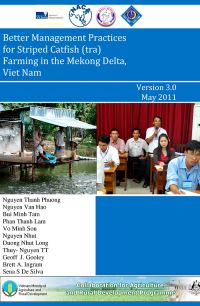
This document is Version 3.0 of “Better Management Practices for Catfish Aquaculture in the Mekong Delta, Vietnam”. It incorporates revisions of previous versions and experiences from demonstration farms, as well as feedback from a National CatFish BMP Workshop, held 23-24 November 2010 in Long Xuyen City, An Giang Province, involving all stakeholders of the tra/striped catfish (Pangasianodon hypophthalmus) farming sector of the Lower Mekong Delta. A Vietnamese translation is available.
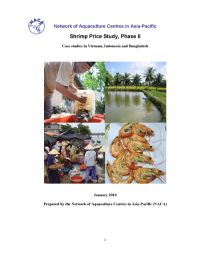
This report is the outcome of a study conducted by NACA to assess the shrimp price trends in Vietnam, Indonesia and Bangladesh from January 2008 to June 2009, updating the previous study Evaluation of the impact of the Indian Ocean Tsunami and US Anti-Dumping Duties on the Shrimp Farming Sector of South and South-East Asia, 2006. The previous study highlighted the need for continuous collection of price data at all levels in the supply chain.
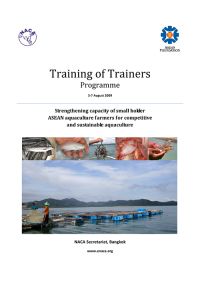
This is the manual for the "train the trainers" course aiming to increase the capacity of small-scale farmers in ASEAN countries. The manual focusses on five countries and commodities: Snakehead (Cambodia), Tilapia (Thailand), seaweed (Philippines), marine fish (Indonesia) and shrimp (Vietnam). In this volume, lectures presented by experts are included. The training program included technical aspects related to the culture of commodities, marketing, access to information, organization of farmer groups, gender and good culture practices.
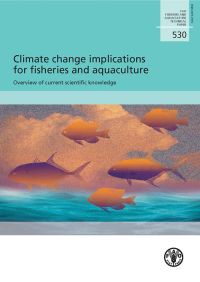
11 December 2009 | Cochrane, K., De Young, C., Soto, D., Bahri, T. (eds). | 6326 Downloads | .pdf | 1.89 MB
An overview of the current scientific knowledge available on climate change implications for fisheries and aquaculture is provided through three technical papers that were presented and discussed during the Expert Workshop on Climate Change Implications for Fisheries and Aquaculture (Rome, 7-9 April 2008). A summary of the workshop outcomes as well as key messages on impacts of climate change on aquatic ecosystems and on fisheries- and aquaculture-based livelihoods are provided in the introduction of this technical paper.
25 September 2009 | Jianshou Liu, Zhongjie Li, Songguang Xie, Weimin Miao, Wangbao Gong and Lang Wu | 1560 Downloads | .pdf | 299.39 KB
Fish species introduction has been a very important method of increasing fisheries production and economic output in China. A good example is the introduction of the icefish Neosalanx taihuensis into reservoirs and lakes in most areas of China. The present study aims to provide basic information on production, management strategies and biological characteristics in target reservoirs and lakes in China and guide introduction and management practices of the fish.
19 August 2009 | Ahmad Syafei Sidik | 3062 Downloads | .pdf | 425.19 KB
The vegetation in Mahakam Delta is predominantly mangrove forest that consists of a pedada zone, Rizophora zone, transition zone, Nipa zone and nibung zone. Prior to 1980, mangrove vegetation in Mahakam Delta was pristine. Considerable changes in the extent of mangrove ecosystem occurred between 1990-2002 until 2001 when about 63% mangrove areas was deforested mainly due to conversion for shrimp ponds. Since 2002, partial efforts for restoration had been taken in mangrove replanting at some sites.
7 June 2009 | Sena De Silva and Upali Amarasinghe (eds.) | 2506 Downloads | .pdf | 1.1 MB
Reservoir fish fauna, fisheries production and management methods, amongst others factors, differ widely. The differences in fish yield between reservoirs and/or between countries cannot be easily understood and are unlikely to be determined by individual parameters or characteristics. This volume takes stock of the current management practices with a view to utilising this knowledge to develop and or evolve appropriate national and or regional strategies for sustained development of reservoirs fisheries.
20 October 2008 | Varunthat Dulyapurk, Wara Taparhudee, Ruangvit Yoonpundh and Sirisuda Jumnongsong | 1470 Downloads | .pdf | 2.14 MB
This report provides an appraisal of the status of mangrove ecosystems and linkages with associated communities and their livelihoods. The report addresses ecosystem health and function, the livelihoods of poor people, goods and services and gender issues. The major causes of impacts to mangrove forest and related aquatic resources are considered along with community perceptions of trends in natural resource quantity, economy, social relations and conflicts. Relevant policies and laws are briefly reviewed.