23 November 2003Stanislaus Sonnenholzner, Laurence Massaut, Carlos Saldias, Jorge Calderon and Claude E. Boyd | 3580 Downloads | .pdf | 18.6 KB
This case study review shrimp aquaculture development in Ecuador. The prevailing farming systems and practices are described. Most farms are extensive or semi-intensive and the industry is shifting to hatchery-reared PL rather than wild due to unpredictability in wild PL supply and disease outbreaks. A survey of water quality intake and outfall from farms is reported on with suggestions for farm design to reduce nutrient load in outfall is discussed. Health issues and mangrove degredation are discussed.
The goal of this project was to optimise the economic yield from mixed shrimp aquaculture-mangrove forestry farming systems in Ca Mau Province, Vietnam, in a sustainable manner. Specific objectives were to investigate factors controlling the yields of shrimp and wood from shrimp farming-mangrove systems, experiment with shrimp pond and mangrove forest management to evaluate different culture options, identify improved practices and assist government to transfer the results of the project to the wider coastal farming community.
This document provides the report of the joint APEC/FAO/NACA/SEMARNAP workshop on “Trans-boundary aquatic animal pathogen transfer and the development of harmonized standards on aquaculture health management,” held at Puerto Vallarta, Mexico, 2000. The workshop reviewed the impacts of trans-boundary pathogens, management strategies and harmonisation of of aquatic animal health management measures. Participants adopted the “Puerto Vallarta Plan of Action” incorporating recommendations for to control the spread of serious aquatic animal pathogens.
20 November 2003Michael Phillips, Jason Clay, Ronald Zweig, Carl Gustav Lundin and Rohana Subasinghe | 1341 Downloads | .doc | 39 KB
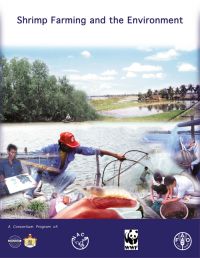
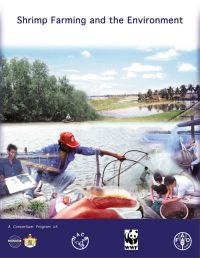
This article describes the international Consortium Programme on Shrimp Farming and the Environment, which was formed based on the recommendations of the World Bank review on shrimp aquaculture and the environment (1998), a 1999 NACA/WWF meeting in Bangkok, Thailand on shrimp management practices, and an FAO Bangkok technical consultation on policies for sustainable shrimp aquaculture (12/1997). The article was prepared for publication in InterCoast Issue #39, Cross Portfolio Learning for Enhancing Integrated Coastal Management.
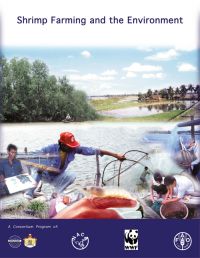
This collection of publications originates from the International Consortium Program on Shrimp Farming and the Environment, which was implemented by the World Bank, the Network of Aquaculture Centres in Asia-Pacific (NACA), the World Wildlife Fund (WWF), the Food and Agriculture Organization of the United Nations (FAO), and the United Nations Environment Programme (UNEP). The consortium supported 35 complementary case studies prepared by more than 100 researchers in more than 20 shrimp farming countries.