Don’t miss this opportunity! Only ten places are left. The Yantai Institute of Coastal Zone Research will sponsor international applicants to attend an in-person Training Course on Science and Technology for Coastal Ecological Aquaculture and Biotechnology in Qingdao, China, from 23 April to 7 May. Enrollments close soon, do not delay. Please see the enclosed application form and information sheet for more details.
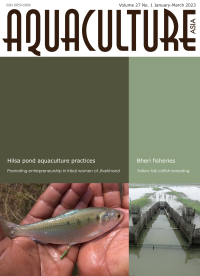
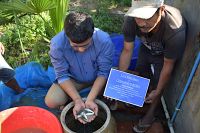
Augmenting entrepreneurial attitude among tribal women of Jharkhand through a skill development programme in fish value added products; Culture of hilsa, Tenualosa ilisha in freshwater ponds: Progress and prospects in farming practice; Present status of medium-saline ‘bheri’ fishery and integrated mangrove aquaculture in West Bengal, India: A short study, Part I; Information for farmers on yellow tail catfish, Pangasius pangasius, for easier captive production; Captive breeding and larval rearing of Cirrhinus reba, a small indigenous fish of aquaculture importance; NACA Newsletter.
Cirrhinus reba or ‘reba carp’ is a commercially important indigenous minor carp species distributed over south Asia. It is highly popular among consumers and fetches a better price than the major carps. A herbivorous species, C. reba can easily digest plant protein sources. It has been identified as a priority species for aquaculture diversification in India and has great scope for incorporation in carp culture and polyculture systems.
22 February 2023S.K. Sahoo, S. Ferosekhan, S.N. Sahoo, P.K. Tiwari, B. Mishra and S.S. Giri | 1639 Downloads | .pdf | 5.43 MB
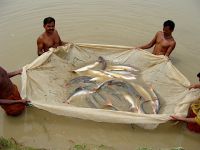
The yellow tail catfish Pangasius pangasius is found throughout the rivers of the Indian subcontinent. A large, omnivorous, and highly fecund species, it is suitable for aquaculture. Initial work on captive breeding of yellow tail catfish was carried out by scientists from the ICAR-Central Institute of Freshwater Aquaculture in the early 1990's. This article provides updated information on captive reproduction, larval rearing and nusery techniques for this species, which will be of use for farmers and entrepreneurs interested in producing it.
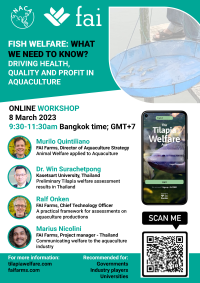
FAI and NACA will convene a webinar on fish welfare issues on 8 March from 9:30-11:30 am Bangkok time (GMT+7). The webinar will address the relationship between welfare, health, quality and profit in aquaculture production. The programme will feature talks on:
Animal welfare applied to aquaculture.
Preliminary tilapia welfare assessment results in Thailand.
A practical framework for assessments on aquaculture productions.
Communicating welfare to the aquaculture industry.