4 July 2023Stanzin Gawa, A.K Singh and Jag Pal | 2851 Downloads | .pdf | 1.39 MB
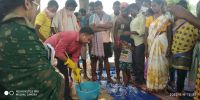
Management of waste products produced by fish processing can be an environmental and public health issue. But fish waste can be converted into agricultural fertilisers using simple backyard technology. This article describes techniques for producing fertilisers from fish waste, and a successful demonstration of the technology by the College of Fisheries, Gumla, to tribal communities in the state of Jharkand, India.
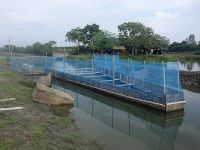
This is part 2 of an article describing farming practices in bheri systems in West Bengal, India, including their integration with mangrove aquaculture. Since the late 1960s, brackishwater rural aquaculture in West Bengal grew and improved at a fast rate, from an extensive method of farming to a modified-extensive method. Part 2 discusses brackishwater polyculture in South 24 Parganas, including the experiences of farmers implementing an integrated mangrove-aquaculture project, and information on local bheri fisheries derived from published articles.
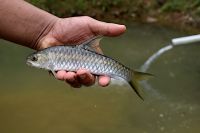
Arunachal Pradesh is a hill state with a population of 1.38 million in far north-eastern India. With climate ranging from tropical to alpine across a steep altitudinal gradient, the state has a high fish biodiversity and a wide range of aquaculture systems and fishing practices. Both indigenous and exotic species are farmed and fished.
This article describes the species, aquaculture systems and capture fisheries practiced in Arunachal Pradesh as well as their future prospects for further development.
FAO, the World Organisation for Animal Health (WOAH), NACA and partners have developed the “Progressive Management Pathway for Aquaculture Biosecurity” (PMP/AB), as an extension of the progressive control pathways concept used for controlling major livestock and zoonotic diseases. A Technical Working Group for PMP/AB has been established at the recommendation of the FAO Sub-Committee on Aquaculture.
Expressions of interest are requested from qualified professionals wishing to join the Technical Working Group. Expressions should be submitted by 20 June. Please see the attached announcement for further details.
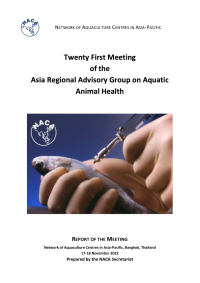
This report summaries the proceedings of the 21st meeting of the Regional Advisory Group on Aquatic Animal Health, held 17-18 November 2022. The role of the group is to review trends in disease and emerging threats in the region, identify developments in global disease issues and standards, to evaluate the Quarterly Aquatic Animal Disease Reporting Program and to provide guidance on regional strategies to improve aquatic animal health management.