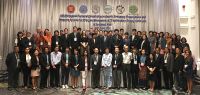
The ASEAN Regional Consultation on Aquatic Emergency Preparedness and Response Systems for Effective Management of Transboundary Disease Outbreaks in Southeast Asia was held in Bangkok, 20-22 August. The objective of the consultation was to bring together ASEAN member states and technical experts to discuss the current status of emergency animal disease preparedness and response systems, and to identify gaps and opportunities for regional cooperation in management of transboundary disease.
The EURASTiP Exchange Programme provides opportunities for industry, researchers and educators from Europe and south-east Asia to connect and gain new perspectives while sharing innvovative ideas to help develop long term partnerships. Bursaries of up to €3,000 per exchange are available (subject to eligibility criteria) to support international innovation and collaboration. The deadline for applications is 20 September 2018. For more information on how to apply please see the EURASTiP website.
The 76th edition of the Quarterly Aquatic Animal Disease Report contains information from 14 governments. The foreword discusses the outcomes of a Stakeholder Consultation on Progressive Management Pathway to Improve Aquaculture Biosecurity, organised by the Food and Agriculture Organization of the United Nations, Mississippi State University and the World Bank.
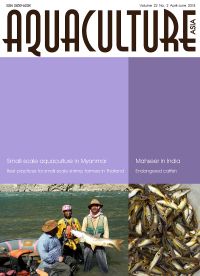
Mahseer in recreational fisheries and ecotourism in India; Small-scale aquaculture of wild fish in Myanmar: A preliminary report from the Bago Region; Current know how and possibility for growout culture of an endangered catfish, Horabagrus brachysoma; Accelerated poverty alleviation of tribal households - cage fish farming by displaced fishers in reservoirs of Jharkhand; Adaptive learning in sustainable aquaculture: Best practices for small-scale shrimp farmers in Thailand; NACA Newsletter.
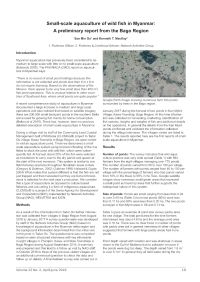
Myanmar aquaculture has previously been considered to be medium to large scale with little to no small-scale aquaculture. Here we report on an indigenous small-scale aquaculture system in Myanmar based on natural monsoon stocking of rice fields with wild fish, which are subsequently trapped, fed and grown out, with a portion used as broodstock to supplement the next years production. The practice is widespread and interviews with farmers suggest that it has been in place for at least 40 years.