The 82nd edition of the Quarterly Aquatic Animal Disease report contains information from eleven governments. The foreword welcomes Dr Huang Jie, NACA's new Director General, a health specialist that has previously participated in the Asia-Pacific Regional Advisory Group on Aquatic Animal Health.
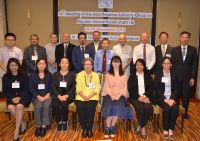
The Advisory Group (AG) is a body of technical experts that meets annually to provide advice to NACA member governments on aquatic animal health management. The group is drawn from academia, the private sector and government. The role of the AG is to review disease trends in the region, identify emerging threats and developments in global aquatic disease issues and standards, evaluate the Quarterly Aquatic Animal Disease Reporting Programme operated by NACA/FAO/OIE and regional governments, and to provide guidance on strategies to improve aquatic animal health management. This year’s meeting took place from 18-19 November at the Amari Don Muang Airport Hotel in Bangkok.
Shrimp 2019 was held in Bangkok, Thailand from 12-14 November at the JW Marriot Hotel, jointly organised by INFOFISH, the Thai Department of Fisheries, NACA and the Thai Shrimp Association. The conference provided a forum for publicising shrimp farming technology, production standards, harvesting, and processing products, as well as related trade and investment. Over 200 participants attended from all regions of the world. The theme of the conference was “Modelling for Sustainability”.
Two consultations were held back to back in Thailand from 5-7 November, namely the Consultation on Strengthening Governance of Aquaculture for Sustainable Development in Asia-Pacific and the Consultation on Demographic Changes in Fishing Communities in Asia. The consultations were held at the Centara Grand Hotel at Ladprao, Bangkok. The consultations were attended by 29 participants from 15 countries in the Asia-Pacific region. The consultations were jointly organised by FAO and NACA. Audio recordings are available of some presentations.
Cooperation with the Bangladesh Shrimp and Fish Foundation; Global Conference on Aquaculture 2020 update; Quarterly Aquatic Animal Disease Report, January-March 2019; A fresh look at inland fisheries and their role in food security and livelihoods; Tuskfish 2 Beta: Testers wanted; APAARI Regional Workshop on Underutilized Fish and Marine Genetic Resources and Their Amelioration; Joint Research Project on Utilization of Thailand Local Genetic Resources to Develop Novel Farmed Fish for Global Market; Impacts of climate change on fisheries and aquaculture.