Audio recording of presentation delivered at the Consultation on Strengthening Governance of Aquaculture for Sustainable Development in Asia-Pacific, 5-6 November 2019, Bangkok, Thailand.
27 January 2020Trinh Quang Tu | 3845 views | .mp3 | 12.87 MB
Audio recording of presentation delivered at the Consultation on Strengthening Governance of Aquaculture for Sustainable Development in Asia-Pacific, 5-6 November 2019, Bangkok, Thailand.
15 January 2020DAA 11 national Technical Organizing Committee | 1421 Downloads | .pdf | 1.05 MB
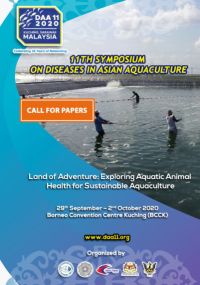
The 11th Symposium on Diseases in Asian Aquaculture (DAA11) marks 30 years since the Fish Health Section - Asean Fisheries Society (FHS-AFS) establishment and it will be celebrated in Malaysia. Local hosts, the Department of Fisheries Malaysia (DOF) under the Ministry of Agriculture and Agro-based Industry together with the Ministry of Modernisation of Agriculture, Native Land and Regional Development Sarawak (MANRED) will be organising the event in cooperation with the FHS-AFS.
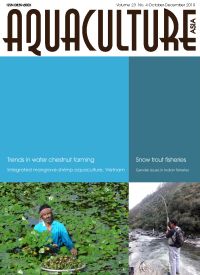
Trends in water chestnut Trapa bispinosa farming in West Bengal, India; Improving livelihoods and increasing coastal resilience: A look at integrated mangrove-shrimp aquaculture in Vietnam; Snow trout fisheries in Arunachal Pradesh of the Eastern Himalayas; Gender issues in the fisheries sector of India; NACA Newsletter.
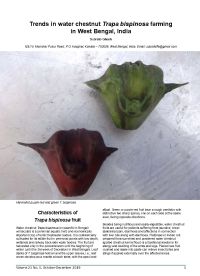
Water chestnut Trapa bispinosa (or paanifol in Bengali vernacular) is a perennial aquatic herb and economically important crop of lentic freshwater bodies. It is commercially cultivated for its edible fruit in shallow perennial ponds, wetlands and railway track-side water bodies. The fruit are harvested only in the post-monsoon until the beginning of winter. This article describes the farming and management of water chestnut, market chains, economic returns and role of this crop in the livelihoods of farmers in West Bengal, India.