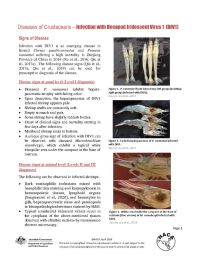
Infection with DIV1 is an emerging disease in farmed Cherax quadricarinatus and Penaeus vannamei suffering a high mortality. This disease card provides information on signs of disease at pond and animal level (levels I - III diagnoses), the disease agent, known host range and distribution in the Asia-Pacific region, molecular diagnostic methods and provides key expert contact points.

In this issue:
Potential new species in the Kingdom of Saudi Arabia: Sabaki tilapia (Oreochromis spilurus); Role of fish & fisheries in national nutrition of Pakistan; Success story of first fish farmer in India to be awarded ‘Padma Shri’; Insights into the fishing gear and ichthyofauna of major lentic water bodies of Kashmir Valley; NACA Newsletter.
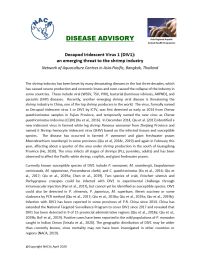
This disease advisory describes the history, known host range, clinical signs and PCR detection methods for decapod iridescent virus 1 (DIV1). Preventative strategies are suggested. Currently known susceptible species of DIV1 include Penaeus vannamei, Macrobrachium rosenbergii, Exopalaemon carinicauda, M. nipponense, Procambarus clarkii, and Cherax quadricarinatus. Clinical signs of infected P. vannamei are not typical, including slightly reddish body, hepatopancreatic atrophy with colour fading, and empty stomach and guts.
In this issue:
Urgent warning: Positive PCR detection results for infectious myonecrosis virus (IMNV) and decapod iridescent virus 1 (DIV1) in captured Penaeus monodon from the Indian Ocean; COVID-19 news; Urgent announcement on usefulness of the lymphoid organ (LO) as an additional prime target for diagnosis of decapod iridescent virus 1 (DIV1) in diseased P. vannamei; Fresh or frozen seafood?; Report of the Eighteenth Meeting of the Asia Regional Advisory Group on Aquatic Animal Health; COVID-19 fallout could push half a billion people into poverty in developing countries; Simple techniques double crablet production.
From a survey of wild, adult Penaeus monodon of potential broodstock size from the Indian Ocean in April 2018, we obtained positive nested RT-PCR test results for infectious myonecrosis virus (IMNV) and positive nested PCR test results for DIV1. As a confirmatory step, a second round of nested PCR tests was carried out using new, in-house primers designed from regions of the respective viral genomes distant from the target regions used in the first round of tests. These results suggested the possibility that the grossly normal, PCR-positive captured P. monodon specimens might be infected with the respective viruses at the carrier level. If so, they might serve as potential vehicles for introduction of IMNV and/or DIV1 into crustacean culture systems, especially if they were used in hatcheries for production of PL for distribution to shrimp farmers without proper precautions in place.