This report, the 63rd in the series, contains information about the aquatic animal health status of fifteen states in the Asia-Pacific region. The foreword provides an update on acute hepatopancreatic necrosis disease of cultured shrimp, including a description of an improved PCR method for detection of AHPND bacteria.
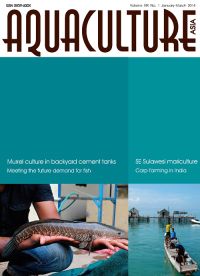
Towards meeting future demand for fish: Aquaculture in inland or marine land or water-based systems? Status of carp farming in India. Recent trends in mariculture in southeast Sulawesi, Indonesia. Murrel (snakehead) culture in backyard cement tanks: A breakthrough and a success story. Mobile telephony - ICT eneabled fisheries extension service for sustainable shrimp farming. International Symposium on Small-scale Freshwater Aquaculture Extension. Report on early mortality syndrome / acute hepatopancreatic necrosis syndrome of shrimp.
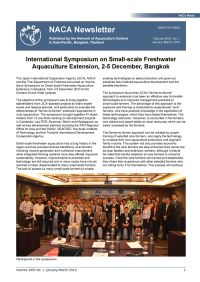
International Symposium on Small-scale Freshwater Aquaculture Extension, 2-5 December, Bangkok. 12th Meeting of the Asia Regional Advisory Group on Aquatic Animal Health. National Workshop on EMS/AHPND of Cultured Shrimp held in India. Report on early mortality syndrome / acute hepatopancreatic necrosis syndrome of shrimp. Sustaining Ethical Aquaculture Trade Newsletter. India and the AFSPAN Project. Report on AFSPAN Chilean survey. Feeding and feed management of Indian major carps in Andhra Pradesh.
Many attempts to extend small-scale inland aquaculture have been made so far in many parts of Asia and some parts of Africa. According to lessons learnt from these experiences, stable seed production is the most decisive factor to develop freshwater fish farming in poor rural areas. Seed production technology, with ensuring the supply of good quality brood stock, should firmly be built. Seed production will be highly commercialised, contributing to a growth of local economy.
Small aquaculture farm holders are experiencing some drastic changes, the shift from household consumption focused subsistent production to market oriented commercial production and external environment changes such as tightening governance on environment impacts control and resource allocation and increasingly stringent standard for food safety and quality. To adapt to the changes, the small-scale farmers need to intensify, diversify and commercialise production, which requires better management.