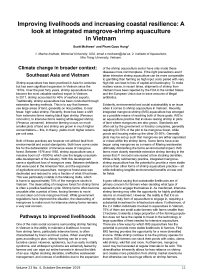
In the last decade, integrated mangrove-shrimp aquaculture has emerged as a means of cultivating shrimp while maintaining the benefits of rearing shrimp in their natural environment. Furthermore, mangrove-shrimp aquaculture provides an additional means for farmers to secure livelihoods. Increased mangrove coverage provides considerable benefits to ecosystems and communities. Mangrove forests have also been shown to increase coastal resilience to climate change as they mitigate the effects of climate change and erosion. This research attempts to assess the feasibility of large scale implementation of integrated mangrove-shrimp aquaculture in coastal Vietnam.
The ASEAN Regional Technical Consultation on Aquatic Emergency Preparedness and Response Systems for Effective Management of Transboundary Disease Outbreaks in Southeast Asia was held from 20-22 August 2018 in Bangkok, Thailand. The consultation discussed the status of and/or need for aquatic emergency preparedness and response systems for effective management of transboundary disease outbreaks in Southeast Asia. Issues were addressed through country reports, technical presentations and a workshop.
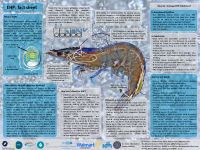
EHP or Enterocytozoon hepatopenaei is a fungal microsporidian parasite that infects the hepatopancreas (hp) of tiger shrimp (Penaeus monodon) and whiteleg shrimp (P. vannamei) in Thailand and results in slow growth and, in chronic infections, mortalities. EHP is also known from Brunei, China, India, Indonesia, Malaysia, Philippines, Venezuela and Vietnam. This fact sheet provides information on the EHP life cycle, signs of infection, diagnosis and management in both hatcheries and growout, as well technical contacts for further information.
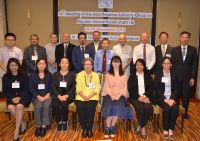
The Advisory Group (AG) is a body of technical experts that meets annually to provide advice to NACA member governments on aquatic animal health management. The group is drawn from academia, the private sector and government. The role of the AG is to review disease trends in the region, identify emerging threats and developments in global aquatic disease issues and standards, evaluate the Quarterly Aquatic Animal Disease Reporting Programme operated by NACA/FAO/OIE and regional governments, and to provide guidance on strategies to improve aquatic animal health management. This year’s meeting took place from 18-19 November at the Amari Don Muang Airport Hotel in Bangkok.
Shrimp 2019 was held in Bangkok, Thailand from 12-14 November at the JW Marriot Hotel, jointly organised by INFOFISH, the Thai Department of Fisheries, NACA and the Thai Shrimp Association. The conference provided a forum for publicising shrimp farming technology, production standards, harvesting, and processing products, as well as related trade and investment. Over 200 participants attended from all regions of the world. The theme of the conference was “Modelling for Sustainability”.