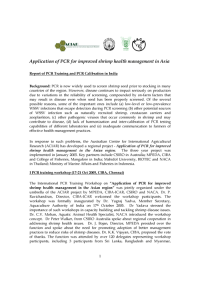
This is the report of the project Application of PCR for improved shrimp health management in the Asian region. The training programme included two training workshops that were designed to provide a good understanding of PCR methodology, laboratory practices and trouble shooting in detection of both DNA and RNA viruses. The workshops were followed by by two rounds of an anonymous PCR inter-calibration or ring testing exercise to allow laboratories to gauge their own performance.
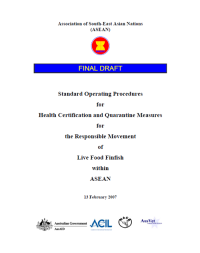
These standard operating procedures were developed to reduce the risk of spread of trans-boundary disease of aquatic animals through the movement of live food fish. The procedures are a set of documents for health certification and quarantine measures to be used by competent authorities in trade among ASEAN member countries. The procedures recognise the existing variation in capacity between ASEAN members and have been designed so that they can be implemented across varying policy and legal frameworks.
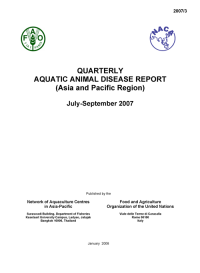
This report, the 37th in the series, contains information about the aquatic animal health status of fourteen states in the Asia-Pacific region. The foreword discusses emerging diseases in the region.
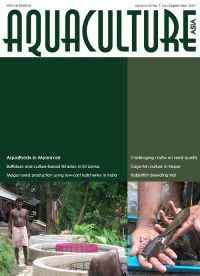
In this issue:
Buffaloes in favour of culture-based fisheries in Sri Lanka. Aquafeeds in Myanmar: A change from farm-made to factory-made feeds. Challenging myths about seed quality and potential benfits to the rural poor. Catfish Clarius batrachus production using low cost hatcheries. Cage fish culture and livelihoods in the mid-hill lakes of Pokhara, Nepal. Marine fish hatchery training. Rabbitfish Siganus guttatus breeding and larval rearing. Vietnamese extension manual on culture-based fisheries.
A technical mission to Myanmar was undertaken to support development and implementation of national aquatic animal health strategies from 3 - 9 September 2006. The mission was part of the AADCP-RPS project "Strengthening Aquatic Animal Health Capacity and Biosecurity in ASEAN". The mission was coordinated by NACA and worked with stakeholders to develop simple and practical approaches to implement national aquatic animal health strategies in Myanmar.