Policy guidelines, certification and codes of practice

Policy briefs and guidelines, certification standards, codes of practice and other voluntary instruments relating to aquaculture

Creative Commons Attribution.
Related

Publications

NACA publishes a wide range of aquaculture publications including technical manuals, workshop proceedings, better practice guidelines and several serials including Aquaculture Asia Magazine, the NACA Newsletter and the Quarterly Aquatic Animal Disease Report. To keep up to date with developments you could consider subscribing to our RSS feed

In this collection

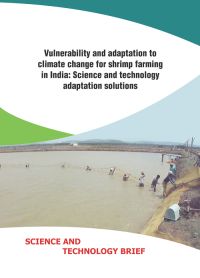
Science brief: Vulnerability and adaptation to climate change for shrimp farming in India

This brief summarises the results from the interdisciplinary and multi stakeholder participatory study conducted within the Aquaclimate project in Krishna District, Andhra Pradesh, India, looking at the impacts of climate change and adaptation measures in the shrimp farming sector. The brief based on scientific analysis and stakeholders inputs, further provides science and technology solutions to be undertaken for improving farmers' adaptive capacity to climate change.

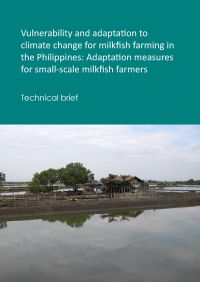
Technical brief: Vulnerability and adaptation to climate change for milkfish farming in the Philippines

This technical brief summarises the results from an interdisciplinary study in two municipalities in Panay Island, Philippines, looking at vulnerability to climate change, impacts and adaptation measures for milkfish farmers. The brief provides guidelines for adaptation measure that can be undertaken by the farmers together with institutional, policy, science and technology support required to improve their adaptive capacity to cope with future climate change.

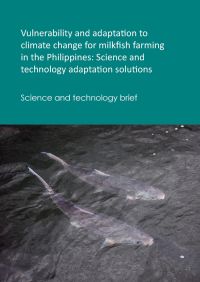
Science brief: Vulnerability and adaptation to climate change for milkfish farming in the Philippines

This brief summarises the results from the interdisciplinary study conducted within the AQUACLIMATE project in Iloilo province in the Philippines, looking at the impacts of climate change on small scale milkfish farming. The brief provides guidelines for academics, researchers and technologists to support farmers for adaptation measures to address the climate change impacts on small scale milkfish farming.

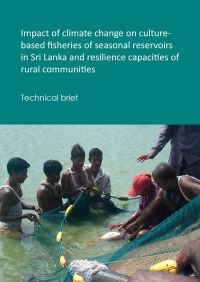
Technical brief: Impact of climate change on culture-based fisheries in seasonal reservoirs, Sri Lanka

This brief summarises the results from the interdisciplinary study conducted within the Aquaclimate project in Sri Lanka looking at the impacts of climate change on culture based fisheries. The brief further provides guidelines for farmers seeking to address the climate change impacts on culture-based fisheries in Sri Lanka.

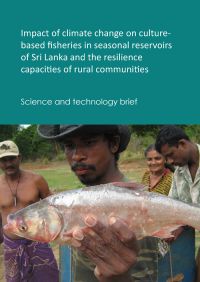
Science brief: Impact of climate change on culture-based fisheries in seasonal reservoirs, Sri Lanka

This brief summarises the results from the interdisciplinary study conducted within the Aquaclimate project in Sri Lanka looking at the impacts of climate change on culture based fisheries. The brief further provides guidelines for academia, researchers and technologists to support farmers for adaptation measures to address the climate change impacts on CBF in Sri Lanka.

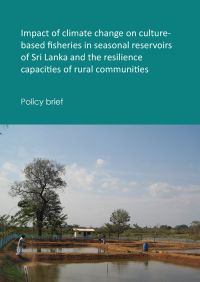
Policy brief: Impact of climate change on culture-based fisheries in seasonal reservoirs, Sri Lanka

This brief summarises the results from the interdisciplinary study conducted within the Aquaclimate project in Sri Lanka, which investigated the impacts of climate change on culture based fisheries. The brief further provides guidelines for adaptation and policy development to address the climate change impacts on culture based fisheries in Sri Lanka and how adaptation measures should be implemented.

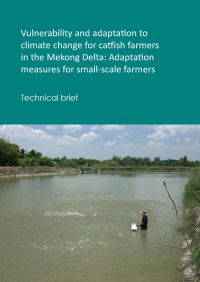
Technical brief: Vulnerability and adaptation to climate change for catfish farmers, Mekong Delta

This brief summarises the results from the interdisciplinary study conducted within the AQUACLIMATE project, working with catfish farmers in the Mekong Delta. It highlights on farm adaptation measures that can be implemented by catfish farmers to adapt to and prepare for climate change.

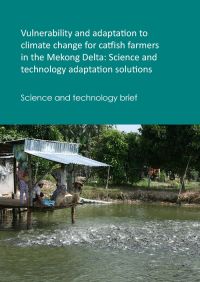
Science brief: Vulnerability and adaptation to climate change for catfish farmers, Mekong Delta

This brief summarises the results from the interdisciplinary study conducted within the AQUACLIMATE project, working with catfish farmers in the Mekong Delta. It highlights the science and technology needs that must be addressed to sustain the industry and its contribution to the livelihoods of poor farmers and food security.

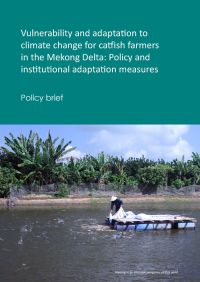
Policy brief: Vulnerability and adaptation to climate change for catfish farmers in the Mekong Delta

This brief summarises the results from the interdisciplinary study conducted within the AQUACLIMATE project, working with catfish farmers in the Mekong Delta. It highlights the policy implications, research agenda and on farm adaptations that will be required to sustain the Vietnamese catfish industry and its contribution to the livelihoods of poor farmers and food security.

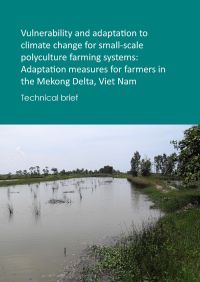
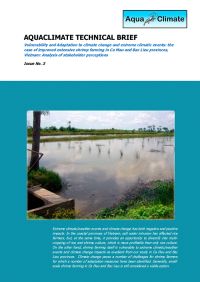
Technical brief: Vulnerability and adaptation to climate change for polyculture systems, Vietnam

This brief summarises the results from the interdisciplinary study conducted within the Aquaclimate project in Ca Mau and Bac Lieu provinces of the lower Mekong Delta looking at the impacts of climate change on small scale improved polyculture systems. The brief provides guidelines for policy development to address the climate change impacts on small scale improved polyculture farming systems in Vietnam and how adaptation measures should be implemented in the region.

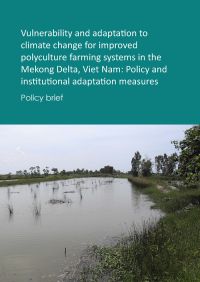
Policy brief: Vulnerability and adaptation to climate change for polyculture systems, Vietnam

This policy brief summarises the results from the interdisciplinary study in Ca Mau and Bac Lieu provinces of the lower Mekong Delta looking at the impacts of climate change on small scale improved polyculture farming. The brief provides guidelines for policy development to address the climate change impacts on small scale improved polyculture farming systems in Vietnam and how adaptation measures should be implemented in the region. The guidelines are based on recommendations from stakeholders including farmers.

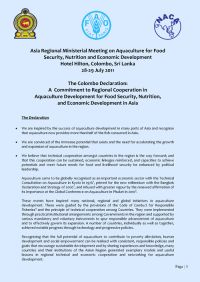
The Colombo Declaration: A Commitment to Regional Cooperation in Aquaculture Development

The Colombo Declaration is a commitment to regional cooperation in aquaculture development for food security, nutrition and economic development in Asia. It was developed and agreed on by delegations from 18 states at a ministerial-level meeting held in Colombo, Sri Lanka, 28-29 July 2011.

Guidelines on Aquaculture Society Certification

These guidelines prepare and enable aquaculture societies to seek group certification from independent third party certification programmes. The guidelines are independent of commodity and certification standards. They were developed as part of a collaborative MPEDA/NaCSA/NACA project on the certification of aquaculture societies. Draft guidelines developed by the project partners were discussed at the inception meeting on aquacutlure society certifiction held at Kakinada during 1-2 September 2009.

Technical brief: Climate change vulnerability and adaptation for improved extensive shrimp farming in Vietnam

In Vietnam, small scale farmers and other stakeholders involved in aquaculture perceive that climate changes such as frequent extreme weather events have serious impacts on their farming systems. Farmers have started to adapt by changing the management practices. Institutional initiatives that have been introduced includes provision of budget for climate change response for aquaculture, aquaculture area planning and monitoring, government financial support, policy on mangrove planting for coastal protection and development of farmer associations.

Phuket Consensus: A re-affirmation of commitment to the Bangkok Declaration

The Phuket Consensus is a declaration on aquaculture development endorsed by participants of the Global Conference on Aquaculture 2010, held in Phuket, Thailand, 22-25 September. The consensus builds on the Bangkok Declaration, which was formulated at the International Conference on Aquaculture in the Third Millennium, held in Bangkok, 20-25 February 2000. The consensus and declaration provide strategic guidance on sustainable development of aquaculture considering social, environmental, technical and economic issues.

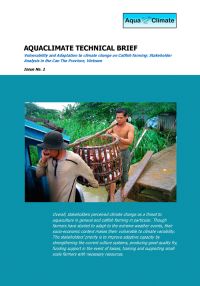
Technical brief: Vulnerability and adaption to climate change impacts on catfish farming in Vietnam

This brief reports on a catfish farming stakeholder workshop and focus group meeting on vulnerability and adaption to climate change held in Can Tho, Vietnam. Stakeholders including catfish farmers in general expressed that climate change is a serious threat, having observed shifts in climatic patterns, saline water intrusion and frequent typhoons. Suggestions to reduce on-farm risks included producing quality fry, developing new culture systems, elevating dykes, livelihood diversification, awareness workshops and financial support to farmers.

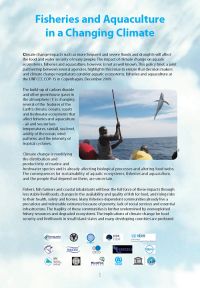
Policy brief: Fisheries and aquaculture in a changing climate

Climate change impacts such as more frequent and severe floods and droughts will affect the food and water security of many people. The impact of climate change on aquatic ecosystems, fisheries and aquaculture, however, is not as well known. This policy brief, a joint partnership between several agencies, highlights this issue to ensure that decision makers and climate change negotiators consider aquatic ecosystems, fisheries and aquaculture at the UNFCCC COP-15 in Copenhagen, December 2009.

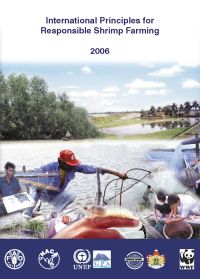
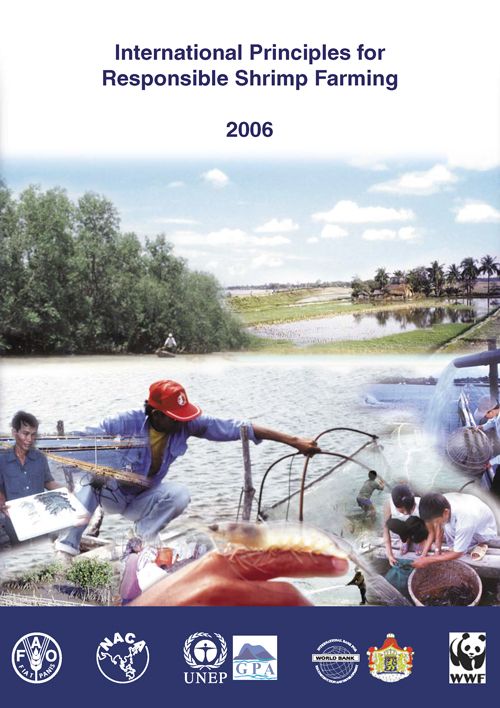
International Principles for Responsible Shrimp Farming

Shrimp farming is one of the fastest growing aquaculture sectors in many parts of the world and also one of the most controversial. The International Principles for Responsible Shrimp Farming provide the basis upon which stakeholders can collaborate for a more sustainable development of shrimp farming. The principes address issues including farm siting, farm design, water use, broodstock and postlarvae, feed management, health management, food safety and social responsibility.

What are policy briefs?

Our policy briefs are an attempt to share beneficial lessons that are learnt from local practice or from research, to many more people within Asia-Pacific and to enable people, institutions and policy makers to use new tools and mechanisms which support aquatic resources management in ways that benefit the livelihoods of people who are poor. 

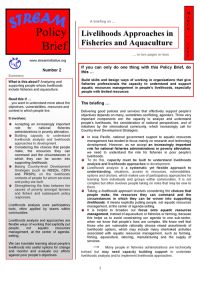
Policy brief: Livelihoods approaches in fisheries and aquaculture

In the Asia-Pacific region national government support to aquatic resources management has tended to focus mainly on research and technology development. However, as we accept an increasingly important role for national fisheries administrations in poverty alleviation, we need to consider the choices that people make, the resources they can command and the circumstances in which they can be woven into supporting livelihoods. This means understanding more about people's livelihoods, resources, context, vulnerabilities and objectives.