Better management practices

Improved management practices to generate better crop outcomes, environmental performance and profitability through improved resource utilisation efficiency.

Creative Commons Attribution.
Related

Subject tags

A collection of subject tags relating to technical matters.

In this collection

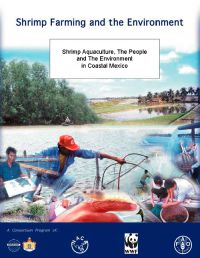
Shrimp aquaculture, the people and the environment in coastal Mexico

This report reviews the state of shrimp aquaculture developent in Mexico, including its impact on employment, complexities surrounding coastal property rights, investment and health issues. Regulation and monitoring of the industry are still in their infancy, but SEMARNAP is putting in place a system that may be able to ensure that aquaculture will be sustainable. More effective involvement of the NGO community in the aquaculture sector may also help to monitor and ensure compliance with environmental regulations.

Economics of better management practices for semi-intensive shrimp farms in Honduras and shrimp cooperatives in Nicaragua

Several stakeholder groups have formulated and recommended the implementation of better management practices (BMPs)aimed at improving production efficiency and/or ameliorating impacts of shrimp farming on the environment. In this study, an economic optimisation model with an environmental component was used to evaluate the effects of five specific BMPs on the profitability, optimal selection of management strategies, and net quantities of nutrients discharged by semi-intensive shrimp farms in Honduras and small-scale operations in Honduras and Nicaragua.

A Practical Guide to Feeds and Feed Management for Cultured Grouper

Most marine fish farms in Asia still rely on what is commonly termed "trash fish". Despite it's apparent abundance and availability, there are some issues and problems related to its use in fish farming. This guide explores new and better farming practices making use of formulated feeds, as well as technical aspects of feed storage and quality control, management of feeding including weaning of groupers onto formulated feeds and economic considerations.

Silvofishery farming systems in Ca Mau Province, Vietnam

This case study provides (1) a description of the farming systems and management practices for mixed shrimp aquaculture-mangrove farming systems in the Mekong delta of Vietnam and (2) the findings from a detailed socio-economic study of these systems. The findings provide insight into the social and economic status of farmers involved in mixed aquaculture-mangrove farming, and the constraints associated with the adoption of management recommendations, with special consideration of the problems faced by poor farmers.

An evaluation of rice-shrimp farming systems in the Mekong Delta

The integration of dry season shrimp farming into rice fields has raised incomes over several consecutive seasons for many farmers in the region. However, our study has revealed some key constraints that need to be addressed in order improve environmental and economic sustainability. The results of our study show that the traditional practice of recruiting native shrimp species through water exchange is not sustainable because of the attendant build-up of sedimentation on the farm.

Shrimp farming in Rushan County, China (abstract)

This case study is based on a farm survey of 41 farms out of the total 340 farms in the Rushan County. The results presented in this paper highlight two main problems. The first issue revolves around labor cost statistics. The value of labor cost during the culture period forms a larger than proportionate ratio of total variable cost. The second problem lies in the high fixed cost incurred by rehabilitated farms.

Shrimp aquaculture management in Bangladesh (abstract)

This case study is based on review of existing publications/reports and stakeholder consultations. It is divided into three main sections, namely: 1) Background review on shrimp aquaculture in Bangladesh. 2) Results from a case study of farm management practices, hatcheries and wild shrimp fry collection and 3) Results from a case study on the social aspects of shrimp aquaculture, based on detailed local level studies in the Khulna region.

The environmental management of shrimp farming in Australia

In Australia, strict Commonwealth and state environmental regulations have constrained development of shrimp farming. A high level of resources, relative to the size and value of the industry, has been devoted to collaborative research on the environmental management of shrimp farming in Australia. The research findings are being used to provide a scientific basis for discharge license requirements and are incorporated into an advanced geographic information and decision support system in order to improve site selection and aquaculture planning.

Thematic review on management strategies for major diseases in shrimp aquaculture

This document presents the report of the Expert Workshop on Management Strategies for Major Diseases in Shrimp Aquaculture. The report includes summaries of fifteen national review papers on the history and current national status of major shrimp diseases, including their socioeconomic impacts and an evaluation of the successes and failures of state and private sector interventions to solve major disease problems and to develop more sustainable shrimp culture industries, and four thematic reviews.

Thematic review on coastal wetland habitats and shrimp aquaculture

This review documents the status of shrimp aquaculture in relation to mangrove forest ecosystems. The environmental, social and economic impacts of shrimp farming are discussed, with examples covering both the negative and positive aspects of the sector. The review considers interventions and other activities to improve the sustainability of shrimp farming in the context of coastal zone management and the protection of mangrove ecosystems. The effectiveness of these interventions is considered in the light of experience based on case studies.

Thematic review of feeds and feed management practices in shrimp aquaculture

This paper reviews feeds and feed management practice in shrimp aquaculture and assesses the trends and environmental implications of feed use. Particular attention is given to the use of fish meal in shrimp diets and water pollution caused by feeds. The review identifies practices at farm, manufacturing and ecosystem levels that can reduce environmental impacts associated with the use of shrimp feeds. Trends in the use of alternative ingredients to replace fish meal are also considered.

Codes of practice and conduct for marine shrimp aquaculture

The rapid expansion of marine shrimp aquaculture in many tropical developing countries has proceeded without effective environmental regulation. Most countries with shrimp farming do not have an established regulatory apparatus to monitor and enforce environmental and socioeconomic standards. Therefore, voluntary codes of conduct are a possibility for improving overall management and possibly profitability of the marine shrimp aquaculture industry until effective governmental regulation is implemented. This paper reviews the status of existing codes of conduct for shrimp farming.

Coastal water quality monitoring in shrimp farming areas: An example from Honduras

Various substances in shrimp farm ponds can contaminate waters, including nutrients, metabolic wastes, veterinary chemicals, and suspended soil particles from erosion. This report discusses ways to monitor these aspects of water quality, which is important from two standpoints for shrimp farmers. Incoming water used top supply shrimp ponds must be healthful and free of toxins to protect the growing shrimp, and effluent must be clean enough to avoid harming aquatic ecosystems and water quality standards downstream.

The integration of mangrove and shrimp farming: A case study on the Caribbean coast of Colombia

Shrimp aquaculture has been accused of threatening mangrove forests worldwide. Mangrove and shrimp ponds are known to have mutually supportive functions. Mangrove wetlands can treat effluents from shrimp ponds effectively by removing suspended solids and nutrients. This activity can be expected, in turn, to enhance mangrove productivity. This report describes an integrated mangrove wetland–shrimp farm operating in Colombia since 1996. At this site, shrimp farm effluent is recirculated through an 120 ha mangrove area.

The adoption of good management practices by the shrimp industry on the Caribbean coast of Colombia

This report discusses the recent history of shrimp aquaculture along the Caribbean coast of Colombia, with a focus on effective management practices that have been implemented since the mid-1990s. While the primary reason for using different practices has been preventing outbreaks of shrimp diseases, many such practices provide environmental benefits as well. Examples include reducing the use of water and ensuring that effluent entering natural water bodies is at least as clean as the intake water.

Key management challenges for the development and growth of a shrimp farm in northeast Brazil: A case study of Camanor Produtos Marinhos Ltda.

This case study discusses the main lessons for management practices learned at the shrimp farm Camanor, in Rio Grande do Norte, Brazil. Since it was founded in 1982, the farm has yielded data that allow the lessons and insights to be drawn. This case documents the most important lessons learned by Camanor during the past 18 years. The most important challenges before the shrimp aquaculture industry involve developing better practices and implementing industry wide standards that are more sustainable.

Shrimp farming in Brazil: An industry overview

The purpose of this study is to assess the development of the shrimp farming industry in Brazil, identifying past obstacles and key incentives for its expansion. The shrimp industry has taken longer to develop in Brazil than in other countries. Despite favorable conditions, it is only recently that successful efforts are consolidating. This report analyzes the main factors that have inhibited the development of the industry and describes the sector's current characteristics.

Aquaculture Development Beyond 2000: The Bangkok Declaration and Strategy

The main output of the International Conference on Aquaculture in the Third Millennium. The Declaration summarises the key impediments and opportunities in aquaculture development that are likely to arise over the next 20 years and provides strategic policy guidance for sustainable aquaculture development. The Declaration was adopted by conference participants in a plenary session.

Management options for the shrimp fry fishery: A regional stakeholder workshop in Coxes Bazar

In February 2002 the shrimp fry collection ban was placed into abeyance pending further review of how biodiversity could be conserved at the same time as protecting the livelihoods of 400,000 fry collectors. A Shrimp Action Plan for the period April - September 2002 was drawn up to identify trends impacting on distribution and growth in the shrimp sector, and to explore alternative models for the management of fry resource and to assess their social, institutional and economic implications.

Chemical and biological amendments used in shrimp farming (abstract)

This article compares the use of chemical and biological amendments in shrimp farming in Asia and the Americas. The information comes mainly from the author’s experience in Thailand and Ecuador, as well as from the literature. The amendments are discussed according to three major categories: (1) water and soil quality management products, (2) biocides, and (3) feed additives. Certain agents, while necessary to successful shrimp farming, should be used only when needed and in a safe and responsible manner.