Better management practices

Improved management practices to generate better crop outcomes, environmental performance and profitability through improved resource utilisation efficiency.

Creative Commons Attribution.

Related

Subject tags

A collection of subject tags relating to technical matters.

In this collection

TOMGOXY: Super Intensive Vannamei Shrimp Farming Towards Sustainability and Carbon Neutrality

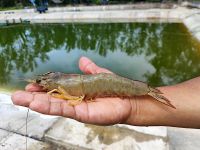
TOMGOXY is an AI- and IoT-powered shrimp farming system developed by RYNAN Aquaculture in Vietnam. It transforms traditional ponds into super-intensive, high-efficiency systems that deliver higher yields with reduced water and energy use. The platform integrates smart sensors, cloud analytics, and advanced aeration to maintain optimal water quality, cut antibiotic reliance, and advance sustainable shrimp aquaculture. By combining digital technology with practical training and on-farm deployment, TOMGOXY helps farmers increase productivity, lower costs, and build long-term resilience in the shrimp industry. This pitch was presented by Dang Pham of RYNAN Aquaculture.

Digital Solutions for Farmers in Myanmar

Farm Suite by Greenovator is a digital farm management tool tailored for aquaculture in Myanmar. The platform helps farms and agribusinesses streamline planning and daily operations by tracking activities, inputs, and yields through a real-time, business-grade dashboard. Recognised as a top-3 innovation in the Grow Asia Challenge, Farm Suite provides an affordable, professional alternative to manual record-keeping. With its mobile app interface, it delivers actionable insights that empower aquaculture managers to boost productivity and sustainability. This pitch was presented by Yin Yin Phyu.

Nature-based Aquaculture for Entrepreneurs and Innovators

Mariska Bottema (WorldFish) and Rebecca McMillan (IDRC) discuss the concept of nature-based aquaculture, why it matters for innovation and entrepreneurship, and how it can support ecosystems, communities, and profitability. Topics include: Defining nature-based aquaculture and its connection to nature-based solutions; criteria such as climate resilience, ecosystem health, reduced antimicrobial use, and inclusivity; global examples: mangrove–shrimp integration, women-led seaweed farming, integrated multi-trophic systems, and rice–fish farming; supportive technologies including IoT, renewable energy, and life cycle assessment; and opportunities for entrepreneurs: resilient farms, reduced risks, lower costs, premium markets, funding, and partnerships.
Thailand: Innovation showcase for aquaculture transformation

This video by Montakan Tamtin, Department of Fisheries, features two presentations from Thailand’s delegation to the 3rd High-Level Meeting on Aquaculture Transformation in Asia and the Pacific Region. The first showcases innovation and nature-based solutions in aquaculture via the IDRC-funded AQUADAPT Project; the second presents Thailand’s pilot initiative for low-carbon shrimp farming under an FAO Technical Cooperation Programme.

Videos available: First International Artemia Aquaculture Consortium Conference and Members' Meeting

The first ever IAAC conference was a free half day event held in Ostend, Belgium on 9 September, as a prelude to Larvi 2024, which ran from 9-12 September. The conference featured twelve presentations introducing the IAAC and providing an overview of many of the issues surrounding Artemia, including management of salt lakes habitats that still provide the bulk of global Artemia supplies, Artemia biodiversity, hatching optimisation, and aquaculture of Artemia biomass in tanks and ponds. Video recordings of most will be posted shortly (the programme below will be updated with links). Video recordings of the presentations are now available on the NACA YouTube channel.

The first IAAC Members’ Meeting was held in the afternoon following the IAAC Conference. The proceedings involved two panel discussions, by the Academic Sector and Private Sector respectively. The panels included remote members participating via Zoom.

Videos available: Training Programme on Safeguarding Artemia resources for Aquaculture held in Rome

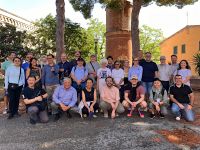
The Training Programme on Safeguarding Salt Lake Brine Shrimp (Artemia) Resources for Aquaculture was held in Rome from 2-6 September. The course was attended by 37 participants from 15 countries. The programme was jointly organised by FAO, NACA / IAAC, and by RAOS and ANSO, which provided the financial support that made the activity possible. The programme featured a series of expert presentations on three themes: Salt lakes, management tools for Artemia cyst and biomass harvesting, and Artemia biodiversity. The full programme is appended below, along with links to the video recordings of the presentations on NACA’s YouTube channel.

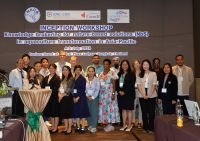
Inception workshop: Knowledge brokering for nature-based solutions in aquaculture transformation

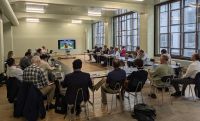
Canada's International Development Research Centre (IDRC) is sponsoring the project "Knowledge Brokering for Nature-Based Solutions in Aquaculture Transformation in Asia-Pacific: Support to the Aquaculture Innovation and Investment Hub." The project is part of a wider IDRC AQUADAPT initiative, a four-year partnership running from 2023-2027. AQUADAPT addresses the intertwined challenges of climate change, biodiversity loss, and food insecurity through applied research on nature-based solutions in aquaculture in Southeast Asia and the Pacific region. AQUADAPT emphasises Gender Equality and Social Inclusion (GESI), ensuring that nature-based solutions are inclusive of all genders and marginalised groups. The project's inception workshop was held in Bangkok from July 4-5, bringing together project teams from Thailand, The Philippines, and Fiji to discuss approaches and methodologies. 

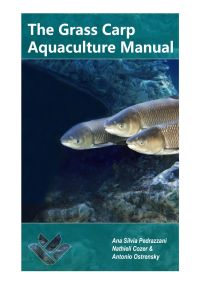
The Grass Carp Aquaculture Manual

This manual covers everything from grass carp's natural distribution and reproductive behaviours to its biology and anatomy. This manual also explores diseases that can affect grass carp and emphasises the crucial connection between animal welfare and stress in fish. With a detailed discussion on cultivation systems, this manual includes pond structures and fish farming techniques in both polyculture and monoculture. It provides practical insights into important aspects such as water quality monitoring, feeding, nutrition, health checks and behaviour assessments at every stage of grass carp farming – from broodstock management to pre-slaughter and slaughter processes. The emphasis is on responsible harvesting techniques, transportation considerations and humane slaughter methods. This manual offers a comprehensive guide for both novice and experienced fish farmers, and enthusiasts interested in cultivating grass carp sustainably and ensuring optimal animal welfare.

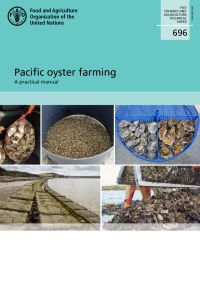
Pacific oyster farming: A practical manual

The purpose of this manual is to give the reader a foundation of practical knowledge regarding all aspects of Pacific oyster cultivation. It is targeted at new entrants to the market wishing to establish a farm, and existing operators who wish to develop their farms and explore new cultivation techniques. The methodologies described can be applied to both low-tech, low budget, small-scale farming operations and to high-tech, big budget, industrial-scale aquaculture production enterprises. This guide focuses on the functional expertise and technical equipment required to construct and manage an operational farm in the diverse environmental and physical locations in which they can be situated, from the initial stages of finding and selecting a suitable site, to the conclusion of the first production cycle and harvesting the crop.

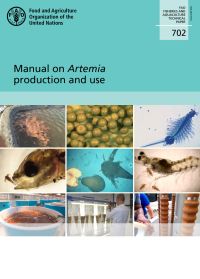
Manual on Artemia production and use

This FAO publication on brine shrimp is a manual for all those who are using Artemia or have an interest in this organism, whether as a source of live food in the hatchery, as a model organism in research, or for other purpose. It is intended for those who wish to update their knowledge on its biology, production or its use, but also for those who want to learn about Artemia for the first time. This manual presents in a concise form essential information on Artemia biology and the most important natural cyst resources that find their way to the aquaculture market. It also provides detailed information on general principles and practical procedures to produce Artemia in ponds and in tank systems. Finally, the manual offers a compilation of state-of-the-art guidelines and methodologies related to the use of this crucial live food organism in aquaculture.

Expert Workshop on Aquaculture Effluent Management held in Bangkok

In 2023, FAO and NACA initiated a consultation process on aquaculture effluent management in Asia and the Pacific in collaboration with NACA member governments. Experts across the region gathered information to assess the state of governance, advancements in technology and innovation in aquaculture effluent management. The consultative process culminated in an expert workshop, convened from 14 to 15 November, funded by FAO, to share views and national experiences on aquaculture effluent management.

Second High-Level Meeting on Aquaculture Transformation in Asia and the Pacific Region

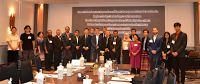
A second High Level Meeting on Aquaculture Transformation: A Call for Collective Action was held in Bangkok from 8-9 November 2023 to further facilitate regional collaboration towards the Blue Transformation vision. The purpose of the meeting was to review progress made after the First HLM and discuss specific actions and mechanisms needed to enhance regional cooperation and progress transformation at scale by 2030. The meeting discussed and reviewed a draft Action Guide for Aquaculture Transformation for Asia and the Pacific Region. A proposal to develop an Asia-Pacific Aquaculture Innovation and Investment Hub as a regional mechanism providing policy advice, monitoring, resource mobilisation, partnership and capacity building functions as a regional platform driving aquaculture transformation was also considered.

Thai Fish Project: A path towards a sustainable aquaculture

The Thai Fish Project began in 2019, and involves around 200 research members and multiple institutions in Thailand and Japan. The project aims to promote domestication and wise use of two Thai native aquatic species, namely the Asian sea bass Lates calcarifer and banana shrimp Penaeus merguiensis through increasing productivity, reducing the impact of infectious diseases, and preserving genetic resources. The project also encompasses several specific research topics to ensure that it comprehensively addresses the concerns on safeguarding the food security and enhancing the environmental sustainability as much as possible. This article describes the main research activities, outputs and future expectations of the Thai Fish Project.

Transforming waste to wealth: An onsite demonstration of transforming fish waste into fish fertiliser to tribal communities of Jharkhand

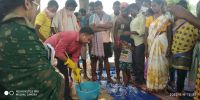
Management of waste products produced by fish processing can be an environmental and public health issue. But fish waste can be converted into agricultural fertilisers using simple backyard technology. This article describes techniques for producing fertilisers from fish waste, and a successful demonstration of the technology by the College of Fisheries, Gumla, to tribal communities in the state of Jharkand, India.

Shrimp Summit, 24-26 July, Ho Chi Minh City, Vietnam

The 2023 Shrimp Summit will convene the global seafood value chain to address the critical challlenges of Asia’s shrimp-farming sector, from stagnant production to growers’ livelihoods, with a cross-topic focus on sustainability and climate change. The Summit is presented by The Center for Responsible Seafood (TCRS) and co-hosted by the Global Seafood Alliance. The format of the 2023 Shrimp Summit will allow the industry to develop a common understanding of issues, address key challenges through discussion and work toward consensus and actionable solutions. This in-person and virtual event will feature discussions, relevant content and informative webinars before, during and after the event in the TCRS Online Community. Access to the online community is included with event registration.

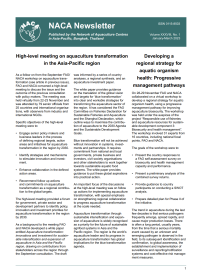
NACA Newsletter, Vol. XXXVIII, January-March 2023

In this issue:

High-level meeting on aquaculture transformation in the Asia-Pacific region; Developing a regional strategy for aquatic organism health: Progressive management pathways; Job opportunity - health management and husbandry researcher; 2022 China-ASEAN International Forum on Sustainable Development of Fisheries and Aquaculture Under the Blue Transformation Strategy; A new progressive management pathway for improving seaweed biosecurity; Indian delegates visit Thailand for training and industry exposure; PhD scholarships: Shanghai Ocean University PhD Programme 2023; Reported aquatic animal diseases in the Asia-Pacific region during the second quarter of 2022.

Aquaculture transformation: Innovation and investment for sustainable intensification and expansion of aquaculture in Asia and the Pacific region

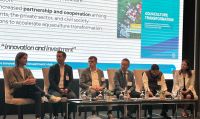
The document provides an overall vision and framework intended to accelerate aquaculture transformation in Asia and the Pacific region through innovations and investment, and to provide guidance to partners from the public, private and development communities to actively engage with the region in transforming aquaculture to more efficient, inclusive, resilient and sustainable food systems. The document served as background information for discussion in the High-Level Meeting on Aquaculture Transformation in Asia and the Pacific Region, 22–23 November 2022, organised by the FAO Regional Office for Asia and the Pacific and the Network of Aquaculture Centres in Asia-Pacific. The document is broadly aligned with FAO’s Blue Transformation Roadmap, paying specific attention to the context and needs of aquaculture within Asia and the Pacific region. The Paper translates the Roadmap into a vision and priority actions for aquaculture transformation in the region by 2030.

FAO/NACA workshop to developing a regional strategy for aquatic organism health using progressive management pathways

On 28-29 November FAO and NACA collaborated on a virtual workshop to develop a regional strategy for aquatic organism health, using a progressive management pathway for improving aquaculture biosecurity. The workshop was held under the auspices of the project “Responsible use of fisheries and aquaculture resources for sustainable development component 3: Biosecurity and health management”. The workshop involved 31 experts from 16 countries, including national focal points, FAO and NACA. The objectives of the workshop were to: Present and analyse country responses to a self-assessment survey on biosecurity and health management capacity and performance; to provide guuidance to country participants on conducting a SWOT analysis; and to prepare a detailed plan for Phase II of the initiative.

High-level meeting on aquaculture transformation in Asia and the Pacific region

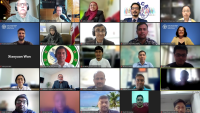
As a follow on from the September FAO/NACA workshop on aquaculture transformation, FAO and NACA convened a high-level meeting to discuss the issue and the outcome of the previous consultation with policy makers. The meeting was held virtually from 22-23 November and was attended by 79 senior officials from 25 countries and international organisations, with observers from industry and international NGOs. Specific objectives of the high-level meeting were to: Engage senior policy makers and business leaders in the process of defining regional targets, action areas and initiatives for aquaculture transformation in the region by 2030, identify strategies and mechanisms to stimulate innovation and investment, and to recommend follow up actions and commitments.

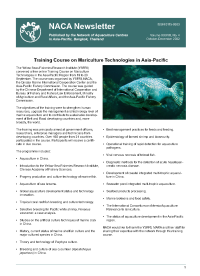
NACA Newsletter, Vol. XXXVII, October-December 2022

In this issue:

Training Course on Mariculture Technologies in Asia-Pacific; FAO/NACA Virtual Workshop on Aquaculture Transformation in Asia and the Pacific Region; Belt & Road Forum for International Freshwater Fishery Industry Innovation; 8th Global Conference on Gender in Aquaculture and Fisheries, 21-23 November; Reported Aquatic Animal Diseases in the Asia-Pacific Region during the First Quarter of 2022; International Training Course on Biology and Pathology of the Penaeid Shrimp 2022; Angkasa Putra inaugurated as first President of the South-East Asian Fisheries and Aquaculture Student Association; Artemia webinars: Video recordings of technical presentations available.