Thailand charts aquaculture transformation plan at Bangkok workshop
22 October 2025 | 2029 views
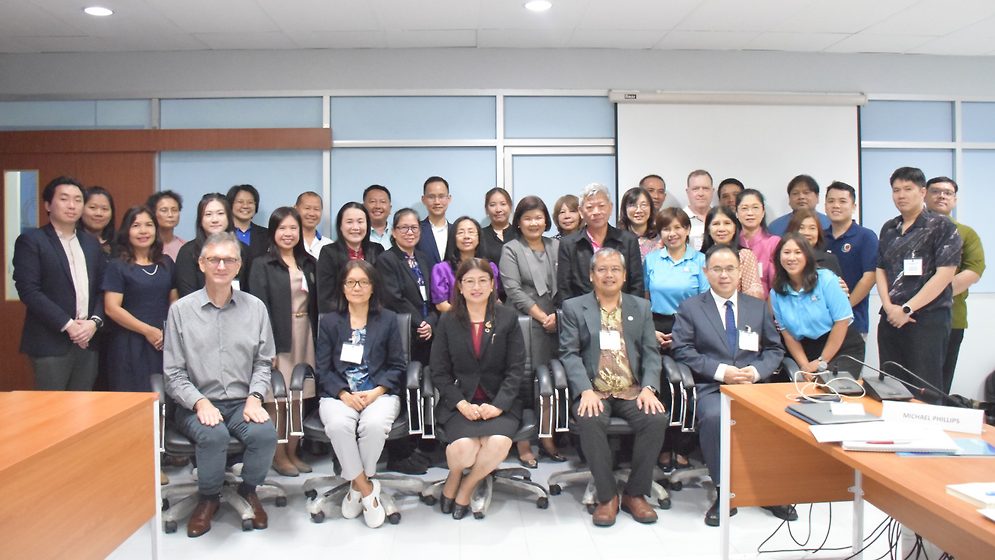
Bangkok, 21-22 October 2025 - Thailand convened a two-day workshop at the Department of Fisheries to shape a National Innovation and Investment Plan (NIIP) for aquaculture. The meeting formed part of FAO’s Technical Cooperation Programme project TCP/RAS/4004, implemented with NACA, which is supporting India, the Philippines, Thailand and Viet Nam to prepare NIIPs and link them into a shared Aquaculture Transformation Monitoring, Evaluation and Learning System (ATMS) for Asia and the Pacific.
Blue Transformation: from vision to implementation
FAO’s Blue Transformation sets a 2030 direction for aquatic food systems that is not simply about producing more, but producing better. For aquaculture, this means climate-smart and lower-carbon growth, greater resource efficiency, strengthened aquatic animal health, and broader social inclusion along the value chain. In Asia and the Pacific, FAO and NACA translated this direction into a regional White Paper (2022) and an action guide (2023) that show how countries can move from high-level goals to practical reforms, investment pipelines and measurable results.
Within this approach, the NIIP serves as the national vehicle for action. It defines a shared sector vision and the future state Thailand aims to reach; identifies bottlenecks that impede progress; prioritises areas for policy reform, innovation and investment; and assembles a shortlist of flagship programmes and projects. It also sets out enabling measures such as standards, permitting, extension and digital services; proposes financing pathways that blend public expenditure with private capital; and specifies the data, roles and timelines needed to manage delivery and adjust course as evidence accumulates.
Inside the Bangkok workshop
The programme was designed to move from context to action. Short technical briefings situated Thailand’s work within the regional project and illustrated how other countries have approached NIIP design. Facilitated sessions then worked through the NIIP steps. Participants reviewed recent performance and development trends in Thai aquaculture and mapped system bottlenecks such as input costs, biosecurity, market access, environmental compliance and workforce skills. They framed a transformation vision for Thailand that reflected national priorities while aligning with regional targets, describing the future state in terms of resilience to climate shocks, lower emissions intensity, improved biosecurity and welfare, fair participation along the value chain and global competitiveness.
The discussion organised reforms and investments into practical pathways: technology adoption and innovation; aquatic animal health and biosecurity; environmental performance and water quality; data, traceability and market standards; finance, insurance and risk-sharing; and skills, extension and digital advisory services. Participants outlined an initial tranche of flagship programmes and projects suitable for development partners and private investors, with indicative scope and expected outcomes. Financing options were considered, including how to combine public budgets, concessional resources and private capital, and where guarantees or insurance could help crowd-in investment. The meeting agreed immediate next steps and responsibilities for completing the NIIP, along with the data and milestones required for implementation.
Connecting Thailand’s NIIP to the regional monitoring system
A core deliverable of the Technical Cooperation Project is a regional Aquaculture Transformation Monitorying System that allows countries to track progress in a comparable way and to learn from one another. Thailand’s NIIP will be linked to this system through harmonised indicators and regular reporting. The ATMS is designed to establish a common baseline foreseen for 2026; enable comparison across countries on productivity, environmental performance, climate resilience, aquatic animal health and welfare, social inclusion and investment mobilisation; and provide an evidence base for policy dialogue and for signalling bankable opportunities to public and private investors. Periodic regional syntheses, including an initial consolidated report targeted for 2028, will highlight trends, gaps and emerging good practice that can be replicated or adapted.
For Thailand, this linkage means national progress will be visible in a regional frame. The country will be able to benchmark outcomes, share lessons, and signal investment-ready programmes that align with both national objectives and the wider regional transformation.
Outcomes
By the close of the workshop Thailand had defined the components of a draft NIIP draft that sets a clear transformation vision, prioritises a manageable set of reforms and investments, identifies a first set of flagship programmes for detailed design, outlines feasible financing pathways, and assigns responsibilities, timelines and data requirements for implementation. Alignment with the ATMS will support transparent tracking of results over time, such as adoption of climate-smart practices, improved biosecurity, reduced environmental footprint, increased participation by women and smallholders, and mobilisation of private investment-while enabling timely adjustments as conditions evolve.
By situating national planning within a coherent regional effort, the outcomes of the Bangkok workshop will help Thailand progress from strategy to delivery, contributing to a more sustainable, competitive and inclusive aquaculture sector, and to shared monitoring and learning across Asia and the Pacific.
Creative Commons Attribution.
Related
Aquaculture transformation: Innovation and investment for sustainable intensification and expansion of aquaculture in Asia and the Pacific region
24 March 2025 | FAO, NACA | 13778 views | .pdf | 4.76 MB