AquaHub private-sector engagement discussion at 3rd AQUADAPT Peer Learning Event
12 October 2025 | 1267 views
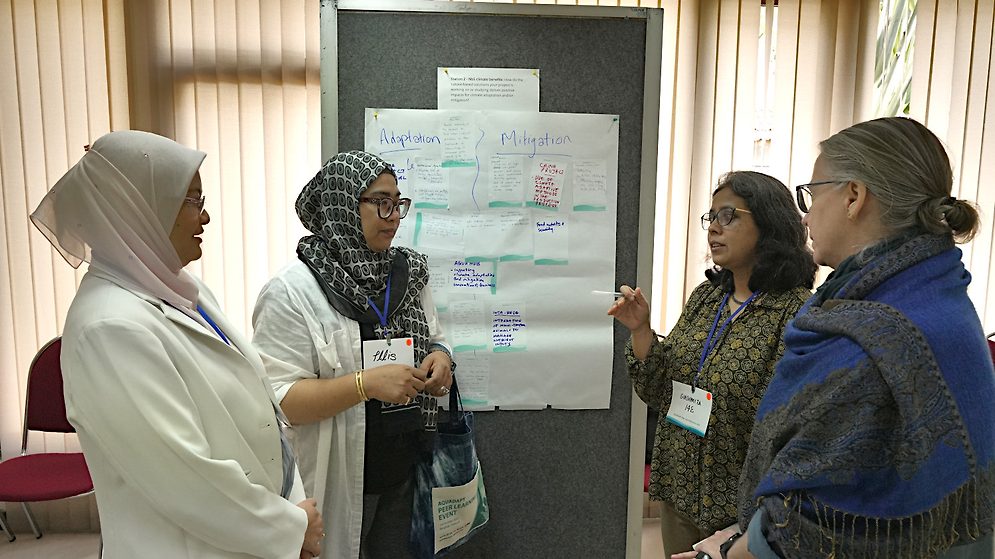
Pathum Thani, 5-6 October - NACA participated in the 3rd AQUADAPT Peer-Learning Event at the Asian Institute of Technology Conference Center. Partners reviewed progress on nature-based solutions (NbS) in aquaculture, shared experience and set priorities for the year ahead. The two-day programme combined project presentations, a world-café on climate resilience, and working sessions designed to turn research insights into practice.
The Peer Learning Event opened with a review of the cohort's progress against the wider Theory of Change for the AQUADAPT project. Presentations examined inclusive and equitable NbS for climate resilience and biodiversity; co-developing and testing inclusive nature-based solutions with communites; and monitoring and assessment frameworks for inclusive and gender-responsive approaches. This was followed by a report-back from working groups and consensus on programme-level priorities for knowledge sharing and synthesis into 2026.
The AquaHub project of NACA and FutureFish led a working session on “Knowledge brokering: Private sector engagement and nature-based and inclusive business models,” convening researchers and practitioners to sharpen strategies for scaling NbS through market actors across the value chain, from small-scale farmers and associations to SMEs and larger enterprises. Discussion centred on pragmatic engagement models that can connect research outcomes to investable, inclusive business opportunities.
The session opened with findings and recommendations from 2024-25 private-sector scoping work under AQUADAPT. Participants shared their feedback, highlighting where there were opportunities to align NbS adoption with commercial realities, as well as roadblocks that could be overcome through incentives, risk-sharing and collaborative arrangements.
Project teams then conducted a “private sector engagement check-in” to take stock of current engagement with firms and producer groups, identify gaps, and outline next steps to move promising innovations toward uptake. Several teams prioritised partner mapping, light-touch investment readiness work, and clearer benefit sharing to encourage farmer participation.
AquaHub also invited feedback on the design of a virtual and in-person network to support learning, enterprise development and partnering around sustainable aquaculture. Inputs from the session will be used to refine service pathways, participation criteria and the interface between research partners, entrepreneurs and investors.
Immediate follow-ups from the working session include: circulating the scoping summary to participants for targeted feedback; consolidating a private-sector partner roster with clear entry points; and aligning AquaHub’s tools and mentoring offers with project needs identified in the check-in exercises.
NACA acknowledges the support of Canada’s International Development Research Centre (IDRC) and the AQUADAPT programme, under the project "Knowledge brokering for nature-based solutions in aquaculture and transformation in Asia-Pacific: Support to the Aquaculture Innovation and Investment Hub".
Creative Commons Attribution.