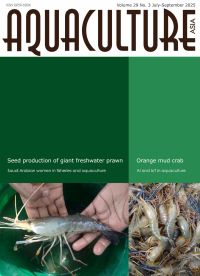
From office to field: The role of women in Saudi Arabia’s small-scale aquaculture and fisheries sector
9 October 2025 | Hana Bahi, Osamah Ahmad, Pedro Guemes, Benjamin C. Young, Hussain Alnazry, Saif Algethami, and Ali Al Shaikhi | 1251 Downloads | .pdf | 1.62 MB
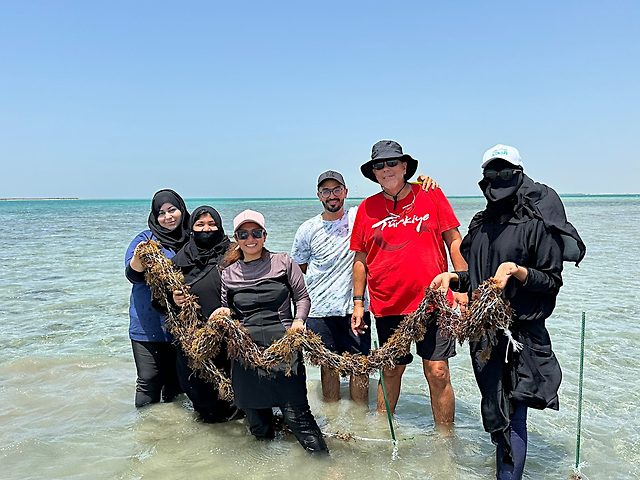
This article documents recent efforts by Saudi Arabia’s Ministry of Environment, Water and Agriculture (MEWA) and the Food and Agriculture Organization (FAO) to expand women’s participation in small-scale aquaculture and fisheries under the REEF programme, aligned with Vision 2030. It outlines structural factors that have historically concentrated women in office-based roles, and describes field initiatives piloted since 2023–2024, particularly seaweed farming of Gracilaria multipartita near Jeddah and in the Farasan Islands that lower physical and technical barriers to entry.
A complementary 2025 initiative in the Farasan Islands supports women processors through training, basic equipment, hygiene and quality control practices, branding, and cooperative formation. Early outcomes include improved practices among 23 participants and a demonstrated increase in product value (e.g., tuna canning). The article concludes with practical priorities: scaling smallholder production, building market linkages, targeted capacity development, and rigorous quality assurance to embed women’s roles across the value chain and contribute to food security, rural livelihoods, and environmental sustainability
1760092958_women-in-saudi-arabia-aquaculture.pdf
Creative Commons Attribution.
Related
Aquaculture Asia Magazine, July-September 2025
10 October 2025 | 9687 views | .pdf | 14.32 MB