AI and IoT (AIoT): The New Wave in Fish Farming
6 October 2025 | Arun Konduri, Raveendar Banothu, Shyam Prasad. M, Potluri Sai Kishore, Kalithkar Bheemeswararao | 9895 Downloads | .pdf | 329.47 KB
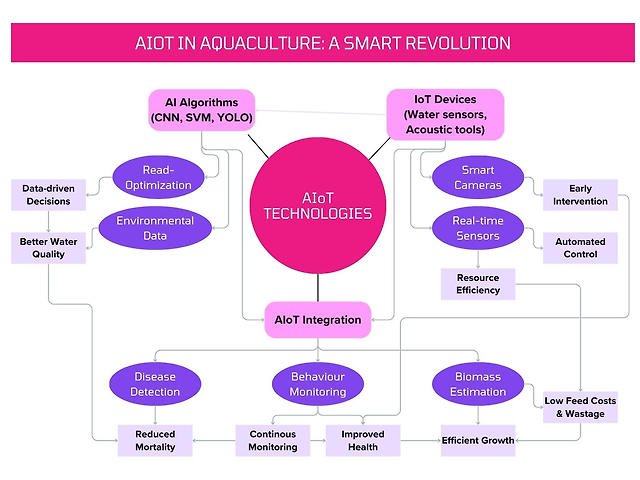
Aquaculture is changing as farms add artificial intelligence (AI) and the Internet of Things (IoT). Sensors and cameras watch water quality and animal behaviour, while software analyses the data to guide feeding, detect disease early, and plan harvests. This “AIoT” approach helps farmers act faster and with more accuracy.
With AI and IoT working together, ponds and cages can be monitored around the clock, turning raw sensor and camera data into practical advice. Farmers can feed more precisely, keep oxygen and pH in safe ranges, spot disease earlier, and count or weigh stock without stress. These tools reduce waste, cut labour, and support healthier animals, while giving managers a live picture of conditions across the farm.
This article walks through the main applications such as stock counting, biomass checks, smart feeding, water-quality prediction, behaviour monitoring, and disease detection, and looks ahead to improved traceability, and increasing levels of automation. Data-driven aquaculture can raise output and resilience while reducing impacts, provided farmers can access the tech and the skills to use it.
1760188804_ai-and-iot-new-wave-fish-farming.pdf
Creative Commons Attribution.
Related
Aquaculture Asia Magazine, July-September 2025
10 October 2025 | 9689 views | .pdf | 14.32 MB