Aquaculture opportunities in lowlands of Brahmaputra valley, Assam
22 September 2026 | Deepjyoti Baruah, A.K. Balange, L.K. Baishya, K. Saikia, Da u ruhi Pde, A. Baruah, M. Pandey, A.K. Srivastava, B. Handique, Azhaguraja, M., M.B. Chaudhary and Ch Srinivasa Rao | .pdf | 5.14 MB
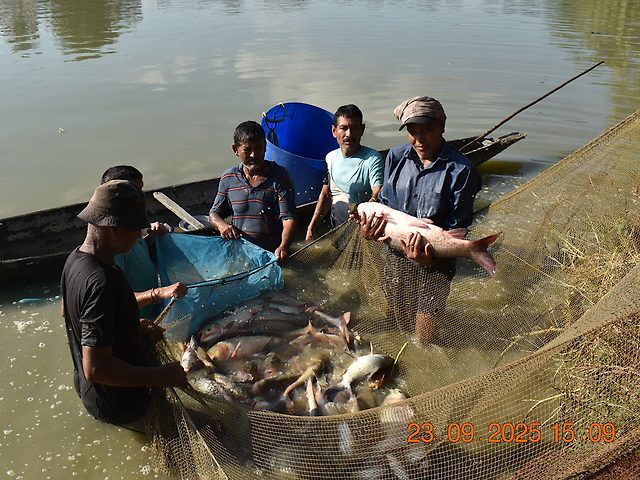
The floodplains of the Brahmaputra valley in northeast India contain an abundance of waters that serve as habitat and conservation sites for many native fish species, yet lowland fish productivity there has received far less study than in western and central India. An assessment carried out at the Gerua Centre of ICAR-Indian Agricultural Research Institute, Assam, has identified ten aquaculture-based development options for the campus and the surrounding lowlands.
Integrated farming systems combine rice with fish in trenches and dugouts, horticultural crops on embankments, and duck, pig or poultry components, with pond water and muck returned as manure. Existing polyculture ponds, mainly carp-based with featherback knifefish (chital), pacu (roopchanda) and minor carps, yield 3,500 to 4,500 kg per hectare and can be improved; the low output is attributed to imbalanced stocking densities, poor-quality seed, insufficient supplementary feeding and poor water management. Monoculture of climbing perch is practised in fertilised ponds of 1,000 to 5,000 square metres from April to September, with seed sourced from West Bengal and Nalbari. Short-term nursery rearing of day-old spawn to 100 mm fingerlings over two to three months is proposed as an income source for small-scale farmers and a use for weed-choked low ground.
Further options include ornamental fish production and a public aquarium, supported by the trade, accessories and transport links available in nearby Guwahati; biofloc technology for air-breathing species, carps and tilapia, suited to small landholdings and new entrepreneurs; and recirculating aquaculture systems for high-density culture on marginal land, in urban settings and in areas with limited water. Freshwater pearl culture was also assessed. Wetland fisheries receive particular attention: Assam holds 50% of India's wetlands, where intensive gear, siltation, plant infestation, encroachment and illegal fishing have reduced catches, and culture-based fisheries with cage and pen culture are identified as the preferred option for raising production.
1790081238_aquaculture-opportunities-brahmaputra-valley-lowlands.pdf
Creative Commons Attribution.