Aquaculture potential of Ophichthys cuchia in Northeast India: Current understanding and prospects
23 September 2026 | .pdf | 2.65 MB
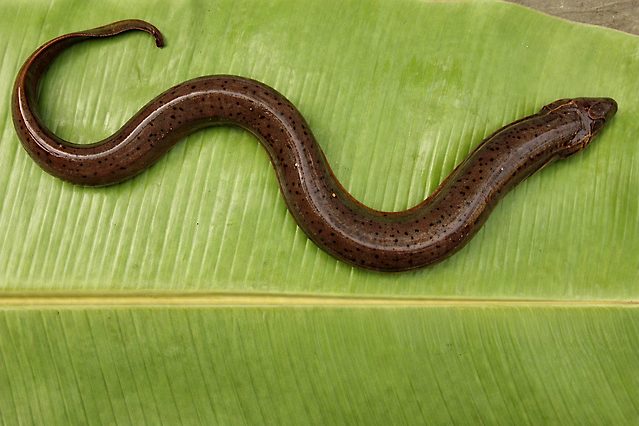
The Gangetic swamp eel, Ophichtys cuchia, is among the highest-value indigenous freshwater fish in Northeast India, yet supply still depends almost entirely on wild capture. Natural stocks are declining under unregulated fishing, wetland drainage, siltation and pesticide contamination of paddy habitats, while demand continues to grow at home and abroad.
The species is well suited to the region's water bodies. It is an obligate air-breather, using vascularised buccal and pharyngeal tissue, the skin and paired suprapharyngeal air chambers, and it tolerates low dissolved oxygen, shallow water and seasonal drying. It occupies ponds, beels, floodplains, canals and rice fields with muddy substrates, feeding at night on small fish, tadpoles, insects, crustaceans, earthworms and snails.
Breeding is the central difficulty. The eel is a protandrous hermaphrodite, starting life as male and changing sex on maturity, so sex ratios and transition timing in captive stock remain poorly understood. Gonadosomatic index peaks between April and June, and spawning takes place in burrows guarded by the male. Induced breeding has succeeded in Bangladesh using hormone inducing agents.
Culture trials, mostly from Bangladesh, report production of about 1,440 kg/ha over 150 days at 90% survival, and 2,505 kg/ha over 240 days at a feed conversion ratio of 1.95, provided shelter such as bamboo roots, hollow pipes and vegetation is supplied for burrowing. Muscle protein averages 18.7 g/100 g, with high calcium and iron. A 2025 survey recorded Rs. 800/kg in Manipur against Rs. 150 to 200/kg for common carp.
Scaling up is held back by the absence of any hatchery network in India, unstandardised breeding protocols, costly high-protein feeds and little disease information. Priorities include region-specific breeding and larval rearing methods, plant-protein feed substitution, disease surveillance and farm-level economic analysis.
1790133956_gangetic-swamp-eel-aquaculture-prospects.pdf
Creative Commons Attribution.