Gender

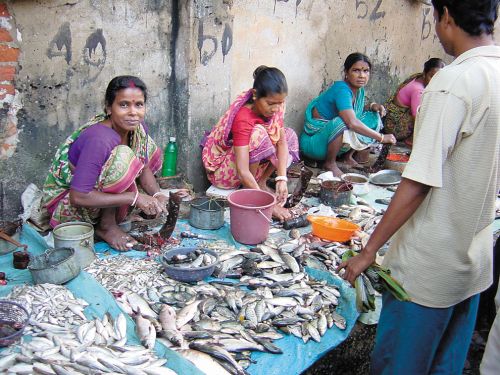
The Gender Programme was established to ensure that NACA implements the action plans on gender mainstreaming within its activities. With a continued interest in embracing gender integration among relevant agencies, NACA aims to build up capacity of members in gender mainstreaming in all its undertakings, and motivate support and action globally.

Insufficient capacity for gender research and application among stakeholders is a hindrance to effectively implement programs integrating the gender dimensions in development. Adding a gender dimension in aquaculture value chains will give assurance to consumers that seafood has been produced sustainably.

Key activities

Key activities of the programme are:

  • Women, Youth and Aquaculture Development Programme.
  • Organising and supporting symposia on Gender in Aquaculture and Fisheries.
  • Capacity building on gender integration and mainstreaming.
  • Curriculum development on gender in aquaculture and fisheries education.
  • In-country gender assessment reports for policy, action and research.
  • Publication of case studies and success stories on gender in aquaculture value chains.
  • Coordinating the Regional Gender Practitioners’ Network and mentoring programmes.
  • Campaigns and policy advocacy for gender integration in aquaculture.

Creative Commons Attribution.
Related

Subject tags

A collection of subject tags relating to technical matters.

In this collection

Integrated rice-fish farming in hilly terraces of the Apatani Plateau, Arunachal Pradesh

Rice-fish farming is a popular activity amongst the Apatani tribe of the Ziro valley, conducted in their wet rice terraces. The strains of fish cultured include mirror carp Cyprinus carpio specularis, scale carp C. carpio communis and leather carp C. carpio nudus, cultivated synchronously with local rice cultivars (Oryza sativa), viz. eamo, ampu, mipya, pyapu, pyaping and eylang. This article describes the integrated farming practices and socio-economic circumstances of the Apatani in the Yachuli, Hapoli, Hong, Hari, Hija, Bula, Dutta and Old Ziro villages.

FAO and NACA to convene Global Conference on Aquaculture 2020

FAO and NACA have signed an agreement to convene a global conference on aquaculture in 2020. This will be the fourth conference in a series that began at the dawn of the industry in Kyoto, 1976. Aquaculture 2020 will be held late in the year in China. Arrangements, programme and partner details will be announced via the NACA website in due course.

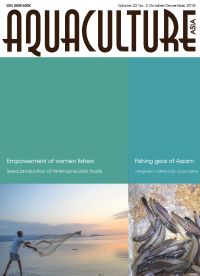
Aquaculture Asia Magazine, October-December 2018

In this issue:

Concept of seed production of Heteropneustes fossilis in farmers' fields in West Bengal, India; Fishing gear and practices in flood waters of Assam; Fisherwomen empowerment: Shedding light on the invisible gender; Integrated multi-trophic aquaculture systems: A solution of sustainability.

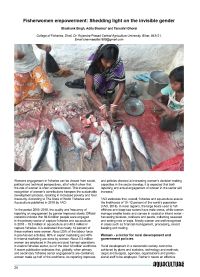
Fisherwomen empowerment: Shedding light on the invisible gender

Women's engagement in fisheries can be viewed from social, political and technical perspectives, all of which show that the role of women is often underestimated. In the fisheries sector participation by women may only become visible after the landing of the catch. The inadequate recognition of women's contributions hampers development, slowing progress in reduction of poverty and food insecurity. This article examines the diversity of women's involvement in fisheries and aquaculture and highlights opportunities to increase the participation of women.

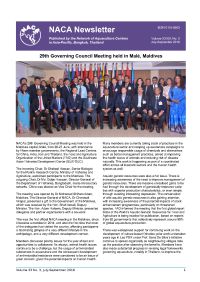
NACA Newsletter, Vol. XXXIII, No. 3, July-September 2018

In this issue:

29th Governing Council Meeting held in Malé, Maldives; Proceedings of the Emergency Regional Consultation for Prevention and Management of Tilapia Lake Virus in the Asia-Pacific; NACA signs MOU on cooperation with the Bangladesh Shrimp and Fish Foundation; Aquaculture in China: Success Stories and Modern Trends; Quarterly Aquatic Animal Disease Report; Gender in Aquaculture and Fisheries 2018; International Training Course on the Biology and Pathology of Penaeid Shrimp; ASEAN-India Research Training Fellowships and more.

Gender in Aquaculture and Fisheries 2018: Early registration closing soon!

The 7th Global Symposium jointly organised by Gender in Aquaculture and Fisheries Section of the Asian Fisheries Society and Asian Institute of Technology (AIT) will be held at AIT, Bangkok during 18-20 October 2018. GAF conferences endeavour to explore the expanding horizons of gender dimensions in aquaculture and fisheries, while highlighting the need for expanding gender inclusiveness and equity. Renowned researchers from around the world will present papers on various topics related to gender issues in aquaculture and fisheries policy and practice.

GAF7: Gender in Aquaculture and Fisheries - abstract submission extended

The 7th Global Conference on Gender in Aquaculture and Fisheries (GAF7) will be held from 18-20 October 2018, at the Asian Institute of Technology, Pathum Thani, Thailand. The GAF7 website and a conference brochure are now available. Submission of abstracts has been extended to 15 May.

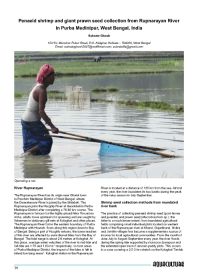
Penaeid shrimp and giant prawn seed collection from the Rupnarayan River in Purba Medinipur, West Bengal, India

The practice of collecting penaeid shrimp seed and prawn seed from inundated agricultural fields adjacent to the Rupnarayan River has become a supplementary source of income for local communities. During the wet season each year, the river floods the extended open tract of unsown paddy fields. This article describes the traditional fishing practices, gear and livelihoods associated with capture and grow out of shrimp and prawn seed in this region of West Bengal, India.

NACA Newsletter, Vol. XXXIII, No. 1, January-March 2018

In this issue:

First training course on culture-based fisheries held in Nha Trang, Vietnam; GAF7: Gender in Aquaculture and Fisheries; 3rd International Symposium on Aquaculture and Fisheries Education, India; International Fishing Industry Safety and Health Conference, Canada; WHO: Stop using antibiotics in healthy animals to prevent the spread of antibiotic resistance; Register for the 8th International Symposium on Aquatic Animal Health; Quarterly Aquatic Animal Disease Report, July-September 2017; Biology and Management of Invasive Apple Snails; Antimicrobial use in the aquaculture sector.

Gender mainstreaming in culture-based fisheries

A presentation on mainstreaming gender issues in culture-based fisheries development.

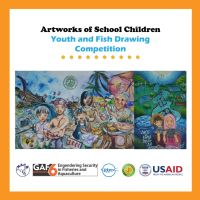
Youth and Fish Drawing Competition Art Book

An art book containing the winners of the Youth and Fish Drawing Competition, which was held during the 6th Global Symposium on Gender in Aquaculture and Fisheries (GAF), 4-7 August 2016, Bangkok, Thailand. Ten senior and seven junior high schools participated, with two students (male and female) from each school. The competition ended after three hours of drawing and painting. This was the first activity involving youth in raising awareness of gender to be conducted at a GAF event.

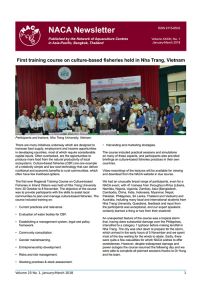
First training course on culture-based fisheries held in Nha Trang, Vietnam

The first ever Regional Training Course on Culture-based Fisheries in Inland Waters was held at Nha Trang University from 30 October to 8 November. The objective of the course was to provide participants with the skills to assist local communities to plan and manage culture-based fisheries. These practices are an example of a relatively simple and low cost technology that can deliver nutritional and economic benefits to rural communities, which often have few livelihood options.

Aquaculture Asia Magazine, July-September 2017

In this issue:

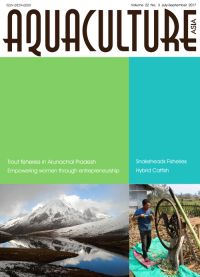
Regional network on culture-based fisheries and stock enhancement; trout fisheries in the uplands of Arunachal Pradesh - resources and opportunities; empowering young Indian women through entrepreneurship development - opportunities and constraints; a view on murrel (snakehead) fisheries in India; hybrid catfish Clarias batrachus x Heteropneustes fossilis produced by farmers in West Bengal, India; Backyard fish based pig farming using low-cost feed in Arunachal Pradesh - a success story; NACA Newsletter.

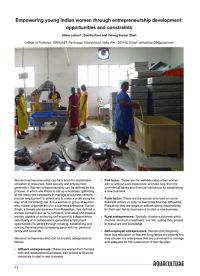
Empowering young Indian women through entrepreneurship development: Opportunities and constraints

Women’s entrepreneurship can be a boon for sustainable utilisation of resources, food security and employment generation. Women entrepreneurship can be defined as the process, in which she thinks to set up a business, gathering all the resources necessary to manage a business venture, provide employment to others and to make a profit along the way while minimising risk while initiating, organising and running a business enterprise.

Job opportunity - gender and social development specialist

The SEAFDEC-Sweden project is seeking a Gender and Social Development Specialist with a knowledge and passion for gender equality, human rights and social development. As a Gender and Social Development Specialist, you shall have deeper understanding of gender, human rights and social development aspects helping SEAFDEC-Sweden project, its implementing partners and project staff on how to promote gender equality, human rights and social development through internal practice and gender analysis.

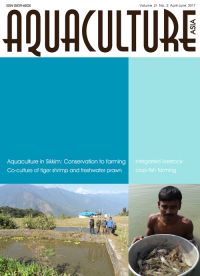
Aquaculture Asia Magazine, April-June 2017

In this issue:

Inspiring story of aquaculture in Sikkim - a journey from conservation to farming; farming of scampi and tiger shrimp together - a case study from West Bengal; Labeo pangusia - a candidate for diversification of hill aquaculture; sustainability of an integrated livestock-fish-crop farming system as a small scale enterprise; sustainable coastal aquaculture in India; potential scope and prospects of domestic fish market in Chhattisgarh.

Potential scope and prospects of domestic fish market in Kawardha District, Chhattisgarh, India

Trade in fisheries products is an important source of livelihoods for economically underprivileged people in Chhattisgarh. A socio-economic profile of traders and other actors from a domestic fish market is presented, including age, gender, education and income levels. The market infrastructure, distribution channels and species traded are described. Constraints to marketing arrangements are identified and include a lack of cold chain, storage and transport facilities.

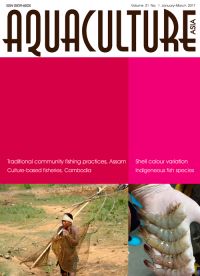
Aquaculture Asia Magazine, January-March 2017

In this issue:

Anti-microbial resistance in aquaculture; participatory market chain approaches to boost fish nurseries; traditional community fishing practices of rural Assam; practical significance of restricted feeding regimes in aquaculture; Bangana dero: A potential indigenous fish species for diversification of carp culture; shell colour variation in farmed Litopenaeus vannamei: Comparison of white- and brown-shelled shrimp; culture-based fisheries: A low-tech, greenhouse friendly approach to improving food and income for Cambodian families.

Giant Prawn 2017

The fourth major international event on giant freshwater prawns was organised by the Asian Institute of Technology from 20-24 March 2007. The conference, organised by Salin Krishna and Michael New, built on a series of highly successful events that trace back to the very beginnings of the industry. The first conference, Giant Prawn 1980 brought together all those involved in freshwater prawn research and farming for the first time and set many priorities for future research and development.

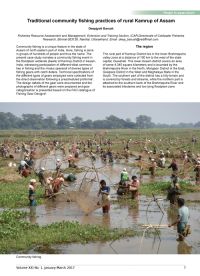
Traditional community fishing practices of rural Kamrup of Assam

Community fishing is a unique feature in the state of Assam, India. The present case study narrates a community fishing event in the floodplain wetlands (beels) of Kamrup District in Assam, India, witnessing participation of different tribal communities in fishing and the modus operandi of diverse types of fishing gears with catch details. The design details of the gear were documented. The communal fishing practices of local communities are described along with the respective roles of men and women.