Genetics and Biodiversity

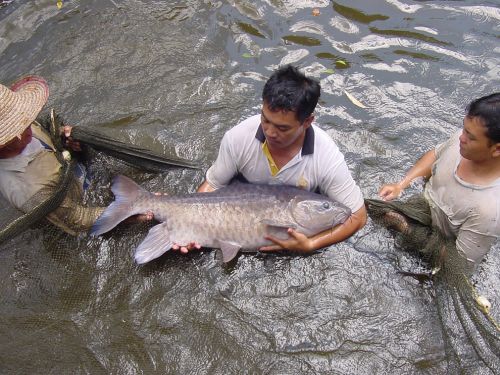
The Genetics and Biodiversity Programme supports member states to improve scientific knowledge of aquatic genetic resources and to guide strategic planning in their management. The programme addresses both the conservation aspects of genetic resources and their responsible usage in aquaculture to minimise impacts on biodiversity and wild strains and to assist members to meet their obligations under international treaties.

The programme promotes international linkages between member states, capacity building, research programs to develop improved strains of finfish and shellfish, genetic characterisation of existing strains, adoption of new genetic tools and technologies and consortia regional programmes to address common issues, species and strains of value from conservation and/or aquaculture perspectives.

Key activities

Key activities of the programme include:

  • Building capacity in aquatic genetic resource management and application of new molecular technologies, tools and strategies.
  • Characterising aquatic genetic resources to discover species, stocks and valuable genomic resources.
  • Facilitating national and regional programs for domestication, genetic improvement and conservation.
  • Applying conservation aquaculture models to support diversification, fishery enhancement and in-situ conservation of indigenous fish species.
  • Facilitating responsible exchange of germplasm, safe propagation and access-benefit sharing.

Creative Commons Attribution.
Related

Subject tags

A collection of subject tags relating to technical matters.

In this collection

Expert Consultation on Invasive Alien Fish Species, 19 December, New Delhi

An Expert Consultation on Invasive Alien Fish Species: Need for a Risk Benefit Assessment and Management Framework for Healthy Freshwater Systems will be organised on 19 December 2018 in New Delhi, India. The consultation will flag the need for an equilibrium between access to non-native germplasm and the minimisation of risk to ecosystems and native fish diversity from such introductions. As a major outcome, an objective tool is expected to be developed, which can be used to evaluate prospective introductions and support decision making.

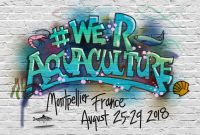
Aqua 2018 – #WeRAquaculture

Aquaculture has seen spectacular growth in recent years, and Aqua 2018 celebrated aquaculture’s role as one of the most important food industries worldwide. Held 25-29 August in Montpellier, France, Aqua 2018 brought together scientists, practitioners, students, industry and civil society to highlight the latest global developments in aquaculture research and innovation.

Invasive apple snails (Pomacea spp.) in Brunei Darussalam: Current status and management in irrigated transplanted rice fields

This short research note provides insights on the invasive apple snails (Pomacea spp.) and rice cultivation in Brunei Darussalam. This freshwater invasive snail was first detected in 2009, but it was never introduced intentionally. Since then their population has increased swiftly and spread to almost all the rice areas across the country, becoming a major pest of irrigated transplanted rice. Research and collaboration among infested countries is important for accurate species identification and better understanding of the invasion pathways.

Aquaculture Asia Magazine, July-September 2018

In this issue:

Rearing of spotted scat and pearlspot in coastal West Bengal, India; harvesting Eurayle ferox (makhana) from wetland fisheries of Assam; prospects of ornamental fish culture in seasonal water bodies in Assam; production of tubifex, a new dimention in aquaculture in feeding juvenile fish; invasive apple snails in Brunei Darussalam; aquaculture trends and opportunities in Sindh, Pakistan; NACA Newsletter.

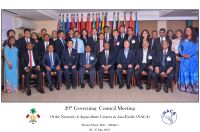
29th Governing Council Meeting held in Malé, Maldives

NACA’s 29th Governing Council Meeting was held in the Maldives capital, Malé, from 26-27 June, with attendance by fifteen member governments. This was the first official NACA meeting in the Maldives, since it became a member in 2014, and also the first time that most of the delegates had visited the country, affording participants a fascinating glimpse of a very different lifestyle in the archipelago, and a very different development context.

Aquaculture Asia Magazine, April-June 2018

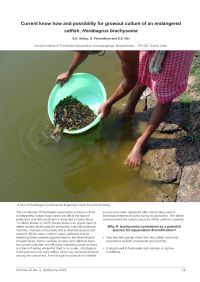
Mahseer in recreational fisheries and ecotourism in India; Small-scale aquaculture of wild fish in Myanmar: A preliminary report from the Bago Region; Current know how and possibility for growout culture of an endangered catfish, Horabagrus brachysoma; Accelerated poverty alleviation of tribal households - cage fish farming by displaced fishers in reservoirs of Jharkhand; Adaptive learning in sustainable aquaculture: Best practices for small-scale shrimp farmers in Thailand; NACA Newsletter.

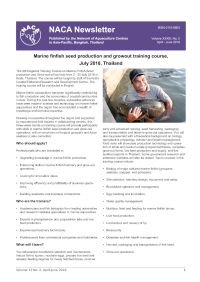
NACA Newsletter, Vol XXXIII, No. 2, April-June 2018

In this issue:

Marine finfish seed production and growout training course, Thailand; global fish passage forum to include first symposium on hydropower and fish; International Workshop on Rehabilitation, Propagation and Conservation of Mahseer, India; World Brackishwater Aquaculture Conference, January 2019, India; Offshore Mariculture Asia 2018, 15-17 May, Singapore; Video lectures: Regional Training Course on Culture-based Fisheries in Inland Waters; Youth and Fish Drawing Competition Art Book; Report of the Sixteenth Meeting of the Asia Regional Advisory Group on Aquatic Animal Health.

Current know-how and possibility for growout culture of an endangered catfish, Horabagrus brachysoma

Some varieties of freshwater fish have low growth potential but remain economically attractive due to market preferences. The endangered catfish Horabagrus brachysoma is one such fish, which has limited production but high market demand, and a number of favourable biological characteristics. This article provides guidelines for the culture of this catfish in captivity including for the breeding, nursery, stocking and growout, including advice on pre- and post-stocking practices, harvesting and health management.

Global fish passage forum to include first symposium on hydropower and fish, December, Australia

The American Fisheries Society and the Environmental and Water Resources Institute of the American Society of Civil Engineers are holding this year's annual Fish Passage conference in Australia in December in collaboration with hosts Charles Sturt University and the New South Wales Government. The International Conference on River Connectivity, to be held in Albury from December 10 to 14 includes the First International Symposium on Hydropower and Fish Management.

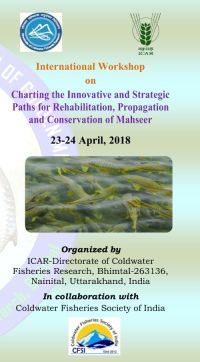
International Workshop on Rehabilitation, Propagation and Conservation of Mahseer, April, India

Despite their abundance at one time in India and other Asian nations, wild mahseer populations have been declining because of degradation of aquatic ecosystems, urbanisation and indiscriminate fishing. Wild mahseer are populations are presently struggling for their mere existence.

An international workshop on mahseer conservation, propagation and rehabilitation will be held in Bhimtal, India from 23-24 April 2018. The workshop is organised by the ICAR-Directorate of Coldwater Fisheries Research in collaboration with the Coldwater Fisheries Society of India.

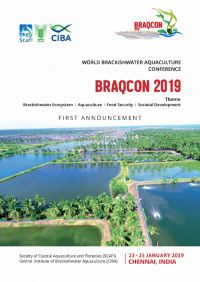
World Brackishwater Aquaculture Conference, 23-25 January 2019, Chennai, India

BRAQCON 2019 wil cover latest research and development in the broader themes of the conference in the form of special sessions, contributed papers, expert group discussions and brainstorming on issues facing aquaculturists and ecosystem managers in India and around the world. The conference themes include: Brackishwater ecosystems, estuarine biodiversity and conservation; aquaculture production systems; larviculture; fish and shellfish nutrition; environment and climate change; aquatic animal health; socio-economic and livelihood issues; and aquaculture genetics and biotechnology.

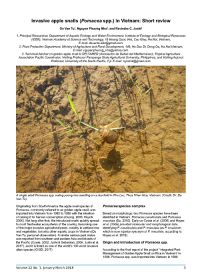
Invasive apple snails (Pomacea spp.) in Vietnam: Short review

Originating from South America the apple snail species of Pomacea, commonly referred to as golden apple snail, was imported into Vietnam from 1985 to 1988 with the intention of raising it for human consumption. Not long after that, the introduced snails quickly spread to most freshwater ecosystems of the country. This review examines the current status and history of apple snail introduction in Vietnam, and the various control and management measures used to cope with snail infestations. 

Aquaculture Asia Magazine, January-March 2018

In this issue:

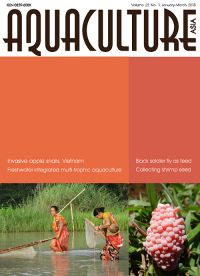
Invasive apple snails (Pomacea spp.) in Vietnam: Short review; A review of fresh water integrated multi-trophic aquaculture: Catching up on the dream of a blue revolution in India; Pre-pupae (larvae) of black soldier fly - a potential alternate protein source for aquaculture feeds; Penaeid shrimp and giant prawn seed collection from Rupnarayan River in Purba Medinipur, West Bengal, India; NACA Newsletter; First training course on culture-based fisheries held in Nha Trang, Vietnam.

NACA Newsletter, Vol. XXXIII, No. 1, January-March 2018

In this issue:

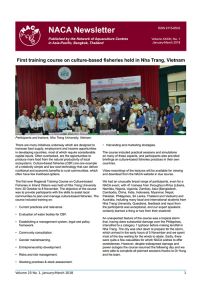
First training course on culture-based fisheries held in Nha Trang, Vietnam; GAF7: Gender in Aquaculture and Fisheries; 3rd International Symposium on Aquaculture and Fisheries Education, India; International Fishing Industry Safety and Health Conference, Canada; WHO: Stop using antibiotics in healthy animals to prevent the spread of antibiotic resistance; Register for the 8th International Symposium on Aquatic Animal Health; Quarterly Aquatic Animal Disease Report, July-September 2017; Biology and Management of Invasive Apple Snails; Antimicrobial use in the aquaculture sector.

Video lectures: Regional Training Course on Culture-based Fisheries in Inland Waters

This collection contains video recordings of the lectures from the Regional Training Course on Culture-based Fisheries in Inland Waters, held at Nha Trang University, Vietnam. The objective of the course was to provide participants with the skills to assist local communities to plan and manage culture-based fisheries; a relatively simple and low cost technology that can deliver nutritional and economic benefits to rural communities with few livelihood options. The course was sponsored by the United Nations University Fisheries Training Programme.

First training course on culture-based fisheries held in Nha Trang, Vietnam

The first ever Regional Training Course on Culture-based Fisheries in Inland Waters was held at Nha Trang University from 30 October to 8 November. The objective of the course was to provide participants with the skills to assist local communities to plan and manage culture-based fisheries. These practices are an example of a relatively simple and low cost technology that can deliver nutritional and economic benefits to rural communities, which often have few livelihood options.

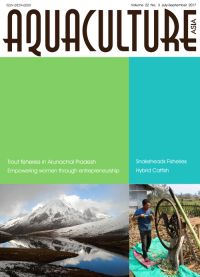
Aquaculture Asia Magazine, July-September 2017

In this issue:

Regional network on culture-based fisheries and stock enhancement; trout fisheries in the uplands of Arunachal Pradesh - resources and opportunities; empowering young Indian women through entrepreneurship development - opportunities and constraints; a view on murrel (snakehead) fisheries in India; hybrid catfish Clarias batrachus x Heteropneustes fossilis produced by farmers in West Bengal, India; Backyard fish based pig farming using low-cost feed in Arunachal Pradesh - a success story; NACA Newsletter.

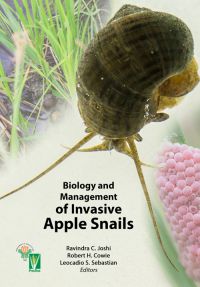
Biology and Management of Invasive Apple Snails

Apple snails have become a major pest of wetland rice in much of Southeast Asia. Two species are involved, Pomacea canaliculata and P. maculata. One or both of these species have become widely established not only in many parts of Southeast Asia but also in other parts of the world. This book provides an update on research into the biology, management and use of apple snails and highlights the need to prevent further spread of these species.

Giant Prawn 2017

The fourth major international event on giant freshwater prawns was organised by the Asian Institute of Technology from 20-24 March 2007. The conference, organised by Salin Krishna and Michael New, built on a series of highly successful events that trace back to the very beginnings of the industry. The first conference, Giant Prawn 1980 brought together all those involved in freshwater prawn research and farming for the first time and set many priorities for future research and development.

Development of regional code of practice for movement of aquatic organisms in the lower Mekong basin

The objective of this project was to develop an agreed code of practice for the transboundary movement of aquatic organisms that feeds into the fisheries management strategy for the lower Mekong basin. The code of practice provides guidance on risk management and mitigation measures be taken into account for live aquatic animal imports or other transfers that are part of the established commercial practice, or those related to scientific study at research facilities.