22 October 2007 | Antoine Teitelbaum | 3711 Downloads | .pdf | 914.46 KB
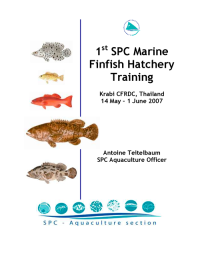
This report describes a training course on marine finfish hatchery protocols, which was convened at the Karabi Coastal Fisheries Research and Development Center, Thailand at the request of the Secretariat of the Pacific Community. The main goal of the training was to carry out hands-on practical work in finfish hatchery techniques, with an emphasis on grouper. This work involved spawning induction, incubation and larval rearing until day 12.
A different form of dumping: The need for a precautionary approach for yet another new species for shrimp farming in Asia. Sustainable livelihoods of pangus farming in Bangladesh. Business approach to national broodstock centres in Vietnam. Freshwater aquaculture in Myanmar. Traditional carp culture in Central Europe. Egg and larval quality in sand bass Psammoperca weigiensis. Effect of protein and lipid level of growth performance of tiger grouper Epinephelus fuscoguttatus.
19 September 2007 | Sih Yang Sim | 2799 Downloads | .pdf | 2.19 MB
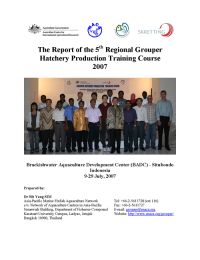
The 5th Regional Grouper Hatchery Training Course was another success with all participants is pleased with the overall training activities and field trips. A total of 17 participants from eight countries attended the training course which was hosted by the Brackishwater Aquaculture Development Centre, Situbondo, Indonesia. Participants were able to involve in the broodstock activities for giant grouper, in additional to the tiger and humpback groupers, and attended field trips to backyard hatcheries and export facilities.
This practical manual provides better management practices for the farming of shrimp in tambak systems in Aceh, Indonesia. The manual addresses the formation of farmer groups, crop planning, and specifies better management practices. These include: Location of tambaks, design and construction of tambaks, pond preparation practices, shrimp seed selection and stocking practices, feed management practices, water management practices, health management practices, harvest and post-harvest handling practices, keeping records and improved marketing practices.
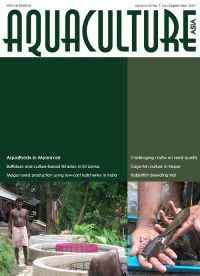
Buffaloes in favour of culture-based fisheries in Sri Lanka. Aquafeeds in Myanmar: A change from farm-made to factory-made feeds. Challenging myths about seed quality and potential benfits to the rural poor. Catfish Clarius batrachus production using low cost hatcheries. Cage fish culture and livelihoods in the mid-hill lakes of Pokhara, Nepal. Marine fish hatchery training. Rabbitfish Siganus guttatus breeding and larval rearing. Vietnamese extension manual on culture-based fisheries.
The National Aquaculture Development Authority of Sri Lanka (NAQDA) took several steps to regularise collectors of Penaeus monodon under the restructuring programme of the shrimp aquaculture industry in Sri Lanka. Regularisation of broodstock collectors is very imperative mitigate transmission of white spot disease. NAQDA developed these practices in consultation with the Department of Fisheries and Aquatic Resources, shrimp hatchery owners, broodstock suppliers, NARA, Wayamba environmental authority, Sri Lanka aquaculture development alliance and the consortium for shrimp aquaculture development.
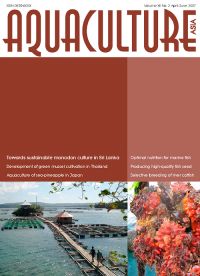
Sustainable black tiger shrimp farming in Sri Lanka. An economic analysis of Persian sturgeon stock enhancement. Aquaculture and environmental sustainability in Thailand: Food or financial security? Cage fish culture - successful income generation in manmade reservoir Kulekhani, Nepal. Diversification of rice farming alleviates poverty in a Bangladesh village. Sea-pineapple aquaculture in Japan. Green mussel cultivation in Thailand. Selective breeding for growh and fillet yield in Vietnamese catfish. Producing quality fish seed in rural Asia.
9 March 2007 | Thuy Nguyen, David Hurwood, Peter Mather, Uthairat Na-Nakorn, Wongpathom Kamonrat and Devin Bartley | 8029 views | .zip | 3.09 MB
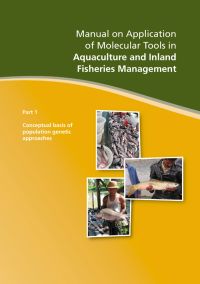
This manual provides a comprehensive practical tool for the generation and analysis of genetic data for subsequent application in aquatic resources management in relation to genetic stock identification in inland fisheries and aquaculture. The material only covers general background on genetics in relation to aquaculture and fisheries resource management, the techniques and relevant methods of data analysis that are commonly used to address questions relating to genetic resource characterisation and population genetic analyses.
30 January 2007 | Sih Yang Sim | 1855 Downloads | .pdf | 3.52 MB
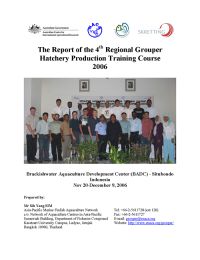
This report describes a training course on grouper hatchery protocols that was held in Indonesia in 2006. A total of 20 participants from 13 countries attended the training course which was hosted by the Brackishwater Aquaculture Development Centre, Situbondo. Participants came from Australia, Hong Kong, Indonesia, India, Malaysia, Maldives, Myanmar, Philippines, Qatar, Saudi Arabia, Singapore, Thailand and Vietnam.
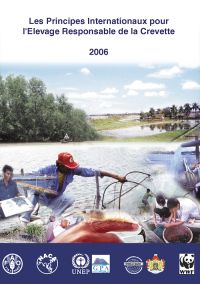
L'élevage de la crevette est l’un des secteurs d'aquaculture le plus en essor dans beaucoup de régions du monde, il est également l’un des plus controversés. L'expansion rapide de ce secteur a généré, certes, des sources de revenus pour plusieurs pays, mais elle a été accompagnée par une préoccupation croissante sur les impacts environnemental et social. Les Principes Internationaux pour l'Elevage Responsable de la Crevette fournissent la base sur laquelle les parties prenantes peuvent collaborer pour un développement plus durable de l'élevage de crevette.
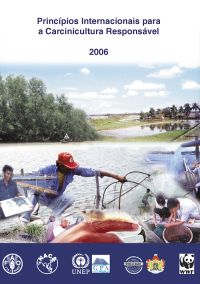
O Cultivo de Camarão é um dos setores de mais rápido crescimento na aqüicultura em várias partes do mundo e também o mais controverso. A rápida expansão deste setor possibilitou a geração de renda para muitos países, entretanto, ela tem sido acompanhada por crescentes preocupações sobre seus impactos ambientais e sociais. Os Princípios Internacionais para a Carcinicultura Responsável provêm a base sobre a qual todas as partes interessadas poderão colaborar para um desenvolvimento mais sustentável do cultivo de camarão.
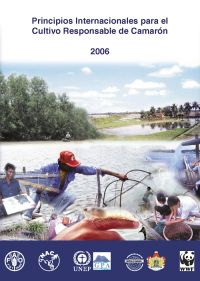
El cultivo de camarón es uno de los sectores de la acuicultura de más rápido crecimiento y también uno de los más polémicos en muchas partes del mundo. La rápida expansión de este sector generó ingresos para muchos países, pero ha estado acompañada por preocupaciones crecientes relacionadas con sus impactos ambientales y sociales. Los Principios Internacionales para el Cultivo Responsable de Camarón proporcionan las bases sobre las cuales los diversos participantes pueden colaborar en pro de un desarrollo más sostenible de la camaronicultura.
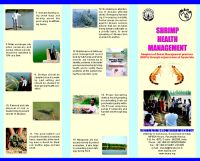
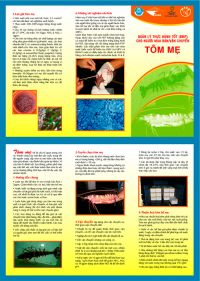
Shrimp Health Management brochures provide better management practices in a reader friendly format. These brochures were prepared as extension materials through the village based demonstration programme by the Marine Products Export Development Authority of India and NACA. The programme continues building success and involved a total of 29 villages and 29 Aquaclubs in five Indian states (Andhra Pradesh, Tamilnadu, Orissa, Gujarat, and Karnataka) in 2006.
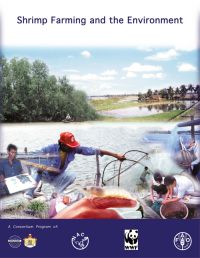
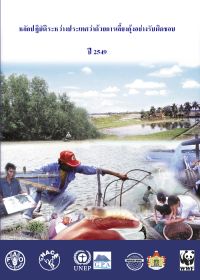
Shrimp farming is one of the fastest growing aquaculture sectors in many parts of the world and also one of the most controversial. Rapid expansion of this sector generated income fo many countries, but has been accompanied by rising concerns over environmental and social impacts. The International Principles for Responsible Shrimp Farming provide the basis upon which stakeholders can collaborate for a more sustainable development of shrimp farming.
Shrimp farming is one of the fastest growing aquaculture sectors in many parts of the world and also one of the most controversial. Rapid expansion of this sector generated income fo many countries, but has been accompanied by rising concerns over environmental and social impacts. The International Principles for Responsible Shrimp Farming provide the basis upon which stakeholders can collaborate for a more sustainable development of shrimp farming.
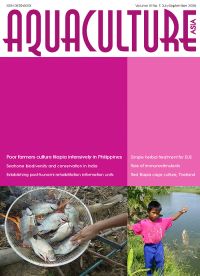
Resources and biodiversity of seahorses and their need for conservation in India. Captive breeding of pangasid catfish Pangasius pangasius. Establishment of post-tsunami rehabilitation information units in Thailand. Poor farmers culture tilapia intensively in ponds in Central Luzon, Philippines. Simple herbal treatment for treatment of EUS in snakehead. DNA vaccination in health management. The role of immunostimulants. Red tilapia cage culture in central Thailand. Quality improvement of farmed fish in Iranian markets.
A series of leaflets on better management practices for Penaeus monodon shrimp aquaculture in Vietnam. The leaflets are available in both Vietnamese and English and cover: Broodstock management for suppliers, postlarvae selection and transportation for seed traders, shrimp seed quality, pond preparation, good pond management, shrimp health management.
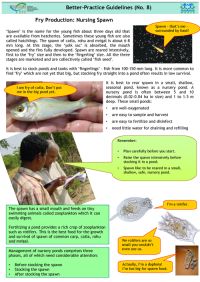
‘Spawn’ is the name for the young fish about three days old that are available from hatcheries. Sometimes these young fish are also called hatchlings. The spawn of catla, rohu and mrigal is about 6-8 mm long. At this stage, the ‘yolk sac’ is absorbed, the mouth opened and the fins fully developed. Spawn are reared intensively, first to the ‘fry’ size and then to the ‘fingerling’ size. All the three stages are marketed and collectively called ‘seed’.