29 April 2008 | Mohammad R. Hasan (ed.) | 2534 Downloads | .pdf | 5.17 MB
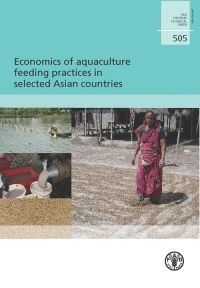
This technical paper provides an analysis of the economic implications of, and the reasons for, adopting various feeding practices for different fish species and aquaculture systems in Asia. The systems studied include extensive/traditional, semi-intensive and intensive farms for a number of different species including sutchi and pangasiid catfishes (Bangladesh and Viet Nam), hybrid catfish (Thailand), carp polyculture (India and China), prawn and milkfish polyculture (the Philippines).
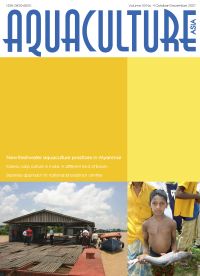
From integrated carp polyculture to intensive monoculture in the Pearl River Delta, China. Better management practices for Vietnamese catfish. Ipomoea aquatica - an aquaculture friendly macrophyte. Status of fisheries and aquaculture development in Pakistan. The changing face of post-grad education in aquaculture: Contributing to soaring production and sustainable practices. Hatchery management in Bangladesh. Production of Cirrhinus molitorella and Labeo chrysophekadion for culture-based fisheries in Lao PDR and much more.
19th Governing Council meeting held in Kathmandu, Nepal. OIE/NACA Regional Workshop on Aquatic Animal Health. Vietnam catfish BMP project kicks off. Planning meeting, Regional Project on Reservoir Fisheries Development and Management. NACA to document 'Aquaculture Success Stories'. 6th Regional Grouper Hatchery Training Course 5-25 May 2008. Establishing a Working Party on Aquaculture Statistics. Implementing the ASEAN Roadmap for Integration of Fisheries Sector. London Expert Workshop on Aquaculture Certification.
The Asia Regional Advisory Group on Aquatic Animal Health meets annually to discuss regional health issues including emerging disease threats. This report includes a review of regional disease status circa 2007, global and regional disease reporting arrangements, global issues and standards, progress in implementation of the the Regional Technical Guidelines on Health management for the Responsible Movement of Live Aquatic Animals, identification and designation of regional aquatic animal health resources and regional and international cooperation.
IDRC and NACA convened a workshop to identify the main research issues and needs to sustain Asian aquaculture into the first quarter of the 21st century, and also to bring them to the notice of relevant planners, managers and policy makers, and potential donors. The workshop was held in Rayong, Thailand from 4-7 June 2007. This report contains the issues papers drafted in preparation for the meeting and a summary of the discussions.
Developing guidelines for sustainable freshwater aquaculture planning in Vietnam. Aquaculture production, certification and trade for small-scale farmers. Backyard hatcheries for crustaceans in Thailand. Alternative carp species for diversification in India. Genetic and reproduction technologies for aquaculture and fisheries management of Murray cod. Status of sahar domestication in Nepal. Comparative advantage analysis of shrimp production in Asia. Strategies to improve the livelihoods of the rural poor, Vietnam, and more.
Better management practices for catfish aquaculture in the Mekong Delta, Vietnam. Developing better management practices for marine finfish aquaculture. Workshop on modelling carrying capacity for tropical finfish cage culture: Towards a consensus view. First comprehensive genetic management plan for Asian fish species: Mahseer. NACA and World Fisheries Trust sign agreement on collaboration. Fish Health Master Class. Second Workshop on Application of Molecular Genetic Techniques in Inland Fisheries and Aquaculture Management. Two new species of spiny eels described from Myanmar. Importance of species identification in conservation. Koh Yao Noi mangrove replanting in celebration of 80th birthday of His Majesty the King of Thailand. Responsible movement of live food finfish within ASEAN: Implementation workshop. Consultation on aquaculture certification guidelines. Strengthening regional mechanisms to maximise benefits to small-holder shrimp farmer groups adopting better management practices.
22 October 2007 | Antoine Teitelbaum | 3709 Downloads | .pdf | 914.46 KB
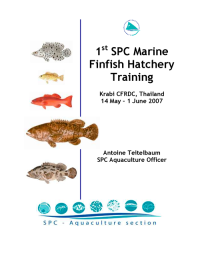
This report describes a training course on marine finfish hatchery protocols, which was convened at the Karabi Coastal Fisheries Research and Development Center, Thailand at the request of the Secretariat of the Pacific Community. The main goal of the training was to carry out hands-on practical work in finfish hatchery techniques, with an emphasis on grouper. This work involved spawning induction, incubation and larval rearing until day 12.
A different form of dumping: The need for a precautionary approach for yet another new species for shrimp farming in Asia. Sustainable livelihoods of pangus farming in Bangladesh. Business approach to national broodstock centres in Vietnam. Freshwater aquaculture in Myanmar. Traditional carp culture in Central Europe. Egg and larval quality in sand bass Psammoperca weigiensis. Effect of protein and lipid level of growth performance of tiger grouper Epinephelus fuscoguttatus.
19 September 2007 | Sih Yang Sim | 2797 Downloads | .pdf | 2.19 MB
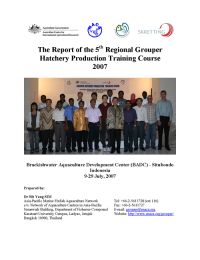
The 5th Regional Grouper Hatchery Training Course was another success with all participants is pleased with the overall training activities and field trips. A total of 17 participants from eight countries attended the training course which was hosted by the Brackishwater Aquaculture Development Centre, Situbondo, Indonesia. Participants were able to involve in the broodstock activities for giant grouper, in additional to the tiger and humpback groupers, and attended field trips to backyard hatcheries and export facilities.
These standard operating procedures were developed to reduce the risk of spread of trans-boundary disease of aquatic animals through the movement of live food fish. The procedures are a set of documents for health certification and quarantine measures to be used by competent authorities in trade among ASEAN member countries. The procedures recognise the existing variation in capacity between ASEAN members and have been designed so that they can be implemented across varying policy and legal frameworks.
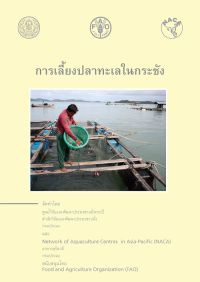
This training manual (in Thai language) provides guidance in marine finfish cage aquacutlure techniques. It is geared towards giving small-scale farmers a solid technical grounding that will enable them to improve their farm productivity and reduce losses through understanding of markets and economic factors, better farm siting. and improved feeding, handling and stock management practices. This knowledge will help the trainees and other fish farmers to improve their productivity and profitability while also reducing their risk profile.
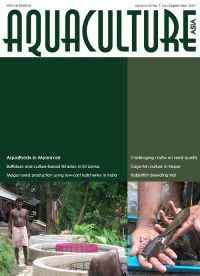
Buffaloes in favour of culture-based fisheries in Sri Lanka. Aquafeeds in Myanmar: A change from farm-made to factory-made feeds. Challenging myths about seed quality and potential benfits to the rural poor. Catfish Clarius batrachus production using low cost hatcheries. Cage fish culture and livelihoods in the mid-hill lakes of Pokhara, Nepal. Marine fish hatchery training. Rabbitfish Siganus guttatus breeding and larval rearing. Vietnamese extension manual on culture-based fisheries.
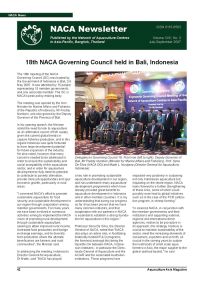
18th NACA Governing Council held in Bali, Indonesia. Strengthening aquatic animal health capacity and biosecurity in ASEAN - final workshop. Aquatic animal pathology master class. Vietnamese extension manual on culture-based fisheries. New project: Culture-based fisheries development in Lao PDR. Guidelines on digital publishing: a practical approach for small organizations with limited resources. Workshop on understanding and applying risk analysis in aquaculture. GISFish: Remote sensing and mapping for aquaculture and inland fisheries. Online encyclopeadia to list 1.8 m known species. DELTA 2007. NACA/FAO partnership working to establish guidelines for certification of farmed fish. Asia-Pacific Aquaculture 2007, 5-8 August 2007, Vietnam. Skretting sponsorship & scholarships for the Marine Finfish Aquaculture Network. The eleventh regular session on genetic resources for food and agriculture.
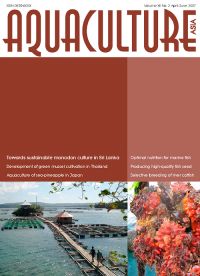
Sustainable black tiger shrimp farming in Sri Lanka. An economic analysis of Persian sturgeon stock enhancement. Aquaculture and environmental sustainability in Thailand: Food or financial security? Cage fish culture - successful income generation in manmade reservoir Kulekhani, Nepal. Diversification of rice farming alleviates poverty in a Bangladesh village. Sea-pineapple aquaculture in Japan. Green mussel cultivation in Thailand. Selective breeding for growh and fillet yield in Vietnamese catfish. Producing quality fish seed in rural Asia.
30 January 2007 | Sih Yang Sim | 1854 Downloads | .pdf | 3.52 MB
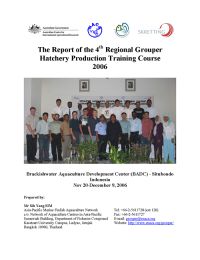
This report describes a training course on grouper hatchery protocols that was held in Indonesia in 2006. A total of 20 participants from 13 countries attended the training course which was hosted by the Brackishwater Aquaculture Development Centre, Situbondo. Participants came from Australia, Hong Kong, Indonesia, India, Malaysia, Maldives, Myanmar, Philippines, Qatar, Saudi Arabia, Singapore, Thailand and Vietnam.
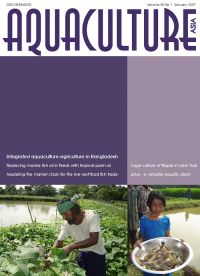
Cage aquaculture of tilapia in Lake Taal, Philippines. Development and adoption of BMPs by farmer groups. Lotus - an aquatic plant of versatile qualities. Integrated aquaculture-agriculture systems in Bangladesh: Potential for sustainable livelihoods and nutrititional security of the rural poor. Spreadsheet model of the market chain for the live reef food fish trade. Regional Grouper Hatchery Production Training Course. Replacing marine fish oil in aquafeeds with tropical palm oil products. NACA Newsletter.
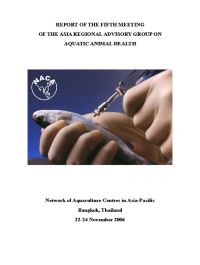
The Asia Regional Advisory Group on Aquatic Animal Health meets annually to discuss regional health issues including emerging disease threats. This report includes a review of regional disease status circa 2006, global and regional disease reporting arrangements, global issues and standards, progress in implementation of the the Regional Technical Guidelines on Health management for the Responsible Movement of Live Aquatic Animals, identification and designation of regional aquatic animal health resources and regional and international cooperation.
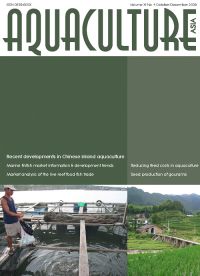
Peter Edwards writes on rural aquaculture: Recent developments in Chinese inland aquaculture. Reducing feed costs in aquaculture: Is the use of mixed feeding schedules the answer for semi-intensive practices? Seed production technology of ornamental gouramis Colisa fasciata and C. lalia under captive conditions. Marine finfish market information and aquaculture development trends in selected locations in Indonesia and Malaysia. Market analysis of the live reef food fish trade.
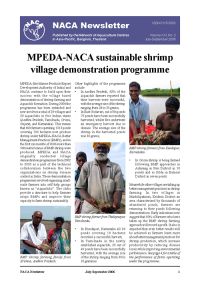
MPEDA-NACA sustainable shrimp village demonstration programme. Inter-calibration of white spot syndrome virus (WSSV) PCR laboratories in India. Shrimp health management training. Rotary International/NACA meeting facility up at Koh Yao Noi. Tsunami-affected farmers train in marine cage aquaculture. Marine finfish aquaculture network at the APAN meeting in Singapore. Aquatic animal health policy workshops build consensus in ASEAN nations. Aquaculture Compendium released. Developments in establishing a conservation plan for the Mekong giant catfish. ROUNDTABLE: Exploring south-south cooperation opportunities in sustainable shrimp farming in West Africa, Conakry (Guinea). Technical missions to Cambodia and Lao PDR.