Aquatic plants

Information relating to the aquaculture and mangroves, seaweeds and aquatic plants.

Creative Commons Attribution.

Related

Species / commodity tags

Major farmed commodity or species groups.

In this collection

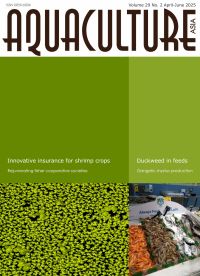
Aquaculture Asia Magazine, April-June 2025

In this issue:

  • From risk to resilience: Innovative crop insurance solutions for securing shrimp aquaculture in India
  • Efforts to rejuvenate primary fisher cooperative societies in South 24 Parganas District, West Bengal
  • Captive production of Gangetic mystus (Mystus cavasius): A guide for farmers
  • Shrimp farm biosecurity in Saudi Arabia: A journey from past practices to future vision
  • Wolffia globosa (duckweed) in aquafeeds for profitability and eco-friendly sustainable aquaculture
  • NACA Newsletter

Wolffia globosa (duckweed) in aquafeeds for profitability and ecofriendly sustainable aquaculture

The increasing demand for cost-effective and sustainable aquafeeds has prompted interest in alternative protein sources to replace fishmeal. Wolffia globosa (duckweed), is a fast-growing, rootless duckweed with high protein content and favorable nutrient composition, offers significant potential as a feed ingredient in aquaculture. Studies conducted at the College of Fisheries, Central Agricultural University in Tripura, India, demonstrated the feasibility of using Wolffia as a primary feed for rohu fry, yielding promising growth and health outcomes comparable to those achieved with conventional formulated feeds.

Beyond its nutritional value, Wolffia contributes to environmental sustainability through phytoremediation, improving water quality in aquaculture systems, and reducing the reliance on fishmeal and chemical fertilisers. Challenges remain, particularly due to anti-nutritional factors common in plant-based feeds, but these can be mitigated through thermal and enzymatic treatments. With proper processing, Wolffia globosa emerges as a viable, eco-friendly protein source for aquaculture, supporting both profitability and environmental stewardship.

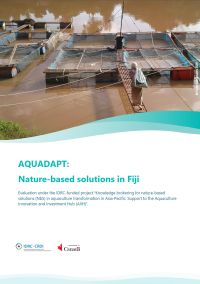
AQUADAPT: Nature-based solutions in Fiji

The project evaluated the effectiveness of various types of nature-based solution (NbS) in Fiji that contribute to climate change resilience by enabling off-grid farm operations and reducing reliance on costly fossil fuels. Aquaculture enterprises were assessed for this project based on the NbS they utilised and the potential benefits they offer in mitigating climate change impacts and enhancing production systems in Fiji. Four enterprises were selected, and their descriptions are provided within.

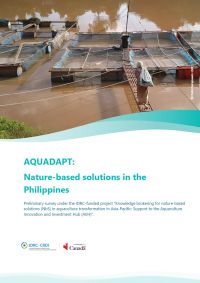
AQUADAPT: Nature-based solutions in Philippines

The project conducted a preliminary survey of the effectiveness of various types of nature-based solution (NbS) in use in the Philippines that contribute to climate change resilience by enabling off-grid farm operations and reducing reliance on costly fossil fuels, renewable materials and improved designs that enhance efficiency. Aquaculture enterprises were assessed for this project based on the NbS they utilised and the potential benefits they offer in mitigating climate change impacts and enhancing production systems.

Based on BFAR Regional Field Office Submissions, 50 aquaculture innovations nationwide have been identified to date. The list will be extended and screened as further regions report, in cooperation with the BFAR National Research Centers.

NACA Newsletter, Vol. XXXX, January-March 2025

In this issue:

  • FAO programme supports national innovation and investment plans for aquaculture transformation.
  • 14th Asian Fisheries Forum, 12-15 February 2025 register now!
  • Saudi International Marine Exhibition (SIMEC) 3-5 February 2025, Riyadh.
  • Workshop on Sustainable Brine Shrimp Artemia Cultivation, 17 February, Tashkent.
  • Status, technological innovations, and industry development needs of mud crab (Scylla spp.) aquaculture.
  • Global Seaweed: New and Emerging Markets Report 2023.

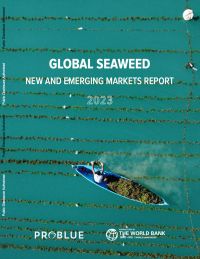
Global Seaweed: New and Emerging Markets Report 2023

With its ability to sink carbon, sustain marine biodiversity, employ women, and unlock value chains, seaweed farming demonstrates how development, climate, and nature work together to generate value and uplift communities. Seaweed farming can help build a world free of poverty on a livable planet and has enormous growth potential. This report has identified ten global seaweed markets with the potential to grow by an additional USD 11.8 billion by 2030. Yet, much of the seaweed sector’s value remains untapped - it has clear growth potential beyond its current markets. Today, most farmed seaweed is used for direct human consumption, as fresh feed in aquaculture, or as hydrocolloids. However, seaweed-farmed products may be able to displace fossil fuels in sectors such as fabrics and plastics; can provide ecosystem services, such as carbon sequestration and nitrogen cycling; and can generate socioeconomic benefits in fragile coastal communities.

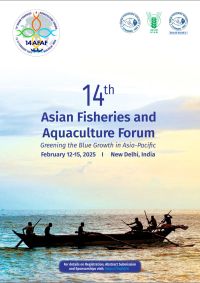
14th Asian fisheries and Aquaculture Forum: Early bird closes 10 November

The 14th Asian Fisheries and Aquaculture Forum (14AFAF) will be held from 12-15 February 2025 in New Delhi, India. Submission of abstracts has been extended until 5 November, and early bird registration closes on 10 November, so get in quick!

The forum is a scientific meeting organised by the Asian Fisheries Society (AFS) once every three years to understand the global trends and address issues and challenges faced by the fisheries and aquaculture sector. The main purpose of this Forum is to provide an international platform for eminent scientists, young researchers, and other stakeholders across the globe to share their research experiences and innovative ideas. By facilitating the exchange of diverse range of knowledge and expertise, the Forum with the Theme ‘Greening the Blue Growth in Asia-Pacific’ aims to address key issues towards developing sustainable fisheries and aquaculture.

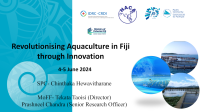
Revolutionising Aquaculture in Fiji through Innovation

Presentation on opportunities to transform Fijian aquaculture: Challenges, innovative technologies, and nature-based solutions, by Chinthaka Hewavitharane (Pacific Community), Tekata Taoisi and Prashneel Chandra (Ministry of Fisheries, Fiji). Presented at the Inception Workshop for the project "Knowledge brokering for nature-based solutions in aquaculture transformation in Asia-Pacific: Support to the Aquaculture Innovation and Investment Hub", 4-5 June 2024, Bangkok.

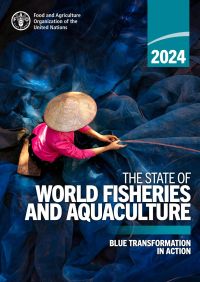
The State of World Fisheries and Aquaculture 2024: Blue Transformation in action

The 2024 edition of The State of World Fisheries and Aquaculture provides updated global production statistics for fisheries and aquaculture, and an outlook on future trends up to 2032 based on projections. It also highlights key policy issues, scientific and technical insights, challenges, opportunities and innovations shaping the present and future of the sector. This issue features Blue Transformation in action, illustrated by activities and initiatives, led by FAO in collaboration with Members, partners and key stakeholders, to integrate aquatic foods into global food security and sustainability, enhance policy advocacy, scientific research and capacity building, disseminate sustainable practices and technological innovations, and support community involvement. 

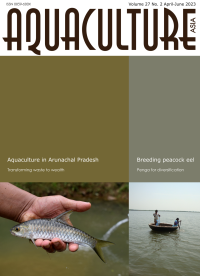
Aquaculture Asia Magazine, April-June 2023

In this issue:

Aquaculture and fisheries perspectives in Arunachal Pradesh; Present status of medium saline ‘bheri’ fishery and integrated mangrove-aquaculture in West Bengal, India: A short study: Part 2; Transforming waste to wealth: An onsite demonstration of transforming fish waste into fish fertiliser to tribal communities of Jharkhand; Innovative fish sale improved livelihoods at Jurala dam in Telangana, India; Pengba, Osteobrama belangeri – a candidate species for diversification in aquaculture; First report on successful captive breeding of peacock eel, Macrognathus aral; NACA Newsletter.

13th Asia-Pacific Marine Biotechnology Conference, 2-6 October 2023, Australia

The 13th APMBC and 5th ANZMBS conference are combining to engage marine biotechnologists, industry, investors, and policy makers in current marine biotechnology research, and industry development in the Asia-Pacific region. The conference will be held from 2-6 October 2023 in Adelaide, Australia. This provides a great opportunity to participate in the growth and future development of the marine biotechnology industry in the region and globally. A key objective of the joint Conference is to encourage academic-industry partnerships across the region. Abstract submissions and early bird registrations are now open!

Global Seafood Trade Fair 28-30 June, Guangzhou, China

In June, China will open its doors to the world through the Global Seafood Fair. With over 50,000 visitors and a strong buyer presence, the fair is an excellent opportunity for businesses to showcase their products. The event will feature over 1,000 exhibitors and more than 10,000 products for buyers to choose from. Attendees can also participate in several industry-focused events, including the Global Shrimp Industry Development Summit Forum, the Overseas Seafood Products Digital Trade Forum, the Tilapia Industry Chain Summit, and the China Aquatic Prepared Dishes Development Summit.

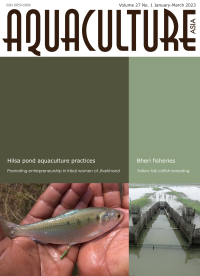
Aquaculture Asia Magazine, January-March 2023

In this issue:

Augmenting entrepreneurial attitude among tribal women of Jharkhand through a skill development programme in fish value added products; Culture of hilsa, Tenualosa ilisha in freshwater ponds: Progress and prospects in farming practice; Present status of medium-saline ‘bheri’ fishery and integrated mangrove aquaculture in West Bengal, India: A short study, Part I; Information for farmers on yellow tail catfish, Pangasius pangasius, for easier captive production; Captive breeding and larval rearing of Cirrhinus reba, a small indigenous fish of aquaculture importance; NACA Newsletter.

A new progressive management pathway for improving seaweed biosecurity

A new paper in Nature Communications by Cottier Cook et al. describes the need for a new progressive management pathway to improve seaweed biosecurity. The seaweed aquaculture industry has rapidly expanded to 35 million tonnes per annum, a production that represents 51% of global coastal aquaculture by volume. Rising seawater temperatures and coastal eutrophication have led to an increase in infectious diseases and pest outbreaks. The paper describes a process for developing and implementing locally-adapted progressive management pathways to address seaweed disease and pest issues.

Update: 2022 Global Forum on Sustainable Development of Fisheries to be held on 13 December

Update: The forum will now be held on 13 December and and updated conference agenda is available below. Please register your attendance using the form linked below. A Zoom link will be sent to all registered participants before the meeting, thank you.

A free online forum will be organised by the Agriculture Trade Promotion Center, Ministry of Agriculture and Rural Affairs of the People’s Republic of China, and Yellow Sea Fisheries Research Institute, Chinese Academy of Fishery Sciences, and NACA. The forum aims to strengthen international exchange and cooperation in aquatic trade, promote high-quality development of fisheries, disseminate advanced concepts, technologies, and models of aquaculture in the Asia-Pacific region and Silk Road countries, and promote the health and sustainable development of global fisheries. Participation is free but registration is required.

FAO/NACA workshop to developing a regional strategy for aquatic organism health using progressive management pathways

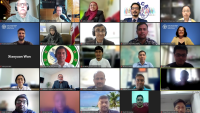
On 28-29 November FAO and NACA collaborated on a virtual workshop to develop a regional strategy for aquatic organism health, using a progressive management pathway for improving aquaculture biosecurity. The workshop was held under the auspices of the project “Responsible use of fisheries and aquaculture resources for sustainable development component 3: Biosecurity and health management”. The workshop involved 31 experts from 16 countries, including national focal points, FAO and NACA. The objectives of the workshop were to: Present and analyse country responses to a self-assessment survey on biosecurity and health management capacity and performance; to provide guuidance to country participants on conducting a SWOT analysis; and to prepare a detailed plan for Phase II of the initiative.

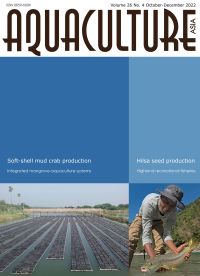
Aquaculture Asia Magazine, October-December 2022

In this issue:

Sustainable livelihood model for coastal families through seabass fingerling production: A success story; A pilot of integrated mangrove-aquaculture as a nature-based solution to mitigate climate change in West Bengal, India; Recreational fisheries in Uttarakhand; Soft-shell mud crab production for export in Purba Medinipur, West Bengal, India; Conducting artificial fertilisation, hatching and spawn development of Indian shad, Tenualosa ilisha: Pathfinding hilsa domestication; NACA Newsletter.

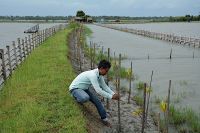
A pilot of integrated mangrove-aquaculture as a nature-based solution to mitigate climate change in West Bengal, India

Nature-based solutions are interventions that aim to protect, restore and sustainably manage natural and modified ecosystems to benefit human well-being and biodiversity and address societal concerns. Integrated mangrove-shrimp farming or simply aquaculture is the coexistence of mangroves and shrimp aquaculture in a tide-fed environment. In comparison to other shrimp farming systems, integrated mangrove-shrimp farming can additionally produce timber and supports biodiversity. To understand the possible benefits of mangrove integration, our consortium compared three integrated mangrove-aquaculture systems together with three local farmers in North 24 Parganas. This article describes our findings, and important factors to consider before deploying integrated mangrove-aquaculture systems.

NACA Newsletter, Vol. XXXVII, October-December 2022

In this issue:

Training Course on Mariculture Technologies in Asia-Pacific; FAO/NACA Virtual Workshop on Aquaculture Transformation in Asia and the Pacific Region; Belt & Road Forum for International Freshwater Fishery Industry Innovation; 8th Global Conference on Gender in Aquaculture and Fisheries, 21-23 November; Reported Aquatic Animal Diseases in the Asia-Pacific Region during the First Quarter of 2022; International Training Course on Biology and Pathology of the Penaeid Shrimp 2022; Angkasa Putra inaugurated as first President of the South-East Asian Fisheries and Aquaculture Student Association; Artemia webinars: Video recordings of technical presentations available.

NACA Newsletter, Vol. XXXVII, January-March 2022

In this issue:

  • 31st NACA Governing Council held online.
  • SDG-aligned Artemia Aquaculture Workshop held in China / online.
  • Policy brief on sustaining the future of the global seaweed industry.
  • Quarterly Aquatic Animal Disease Report
  • Training Course on Mariculture Technology in Asia-Pacific.