Environment and Sustainability

Global population is forecast to reach around 9 billion by 2050. To feed the world, global agricultural output must increase by around 60% from present levels. This must be achieved against a background of increasing competition for natural resources such as water, feed ingredients and farming sites.

Maintaining environmental integrity while massively increasing food production will require farming systems to reduce their unit production environmental footprint. Many farming practices that are regarded as sustainable today will not be acceptable when scaled up. Sustainable intensification of aquaculture means doing more with less. The Environment and Sustainability Programme aims to help aquaculture become a more efficient user of natural resources, both in terms of farm productivity and environmental efficiency.

The programme develops better management practices for major aquaculture farming systems, and promotes aquaculture as a secondary or additional use of water resources. The programme focusses on practical interventions that can be directly achieved by small-scale farmers in a developing country context.

Key activities

Key activities of the programme are:

  • Development of better management practices for key aquaculture production systems.
  • Organising small-scale farmers into associations to facilitate cluster-based approaches to extension.
  • Development of culture-based fisheries as a secondary use of water bodies.
  • Development of strategic policy frameworks to guide governments and development agencies in promoting sustainable intensification of aquaculture.

Creative Commons Attribution.
Related

Subject tags

A collection of subject tags relating to technical matters.

In this collection

Final Draft Code of Practice for Trans-boundary Movement of Aquatic Organisms in the Lower Mekong Basin

This Code of Practice is prepared to promote or ensure compliance to World Trade Organisation-Sanitary and Phytosanitary measures for the movement of live aquatic organisms in the Lower Mekong Basin. The goals of the Code are to achieve environmental protection and management, biodiversity conservation as well as prevention of spread of disease epizootics. Most of the points listed in this Code are based on the inputs of MRC Member Countries.

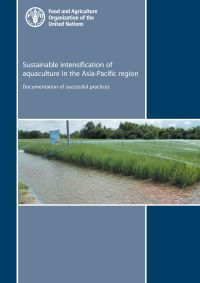
Sustainable intensification of aquaculture in the Asia-Pacific region: Documentation of successful practices

This publication is the major output of a regional programme jointly implemented by FAO and NACA in 2015 to document and disseminate successful practices that contribute to the sustainable intensification of aquaculture in the Asia-Pacific region. Twelve practices are described that contribute to at least one of the following: Improved production and resource use efficiency (land, water, feed, energy); improved environmental benefits; strengthened economic viability and farmers' resilience; and improved social acceptance and equity.

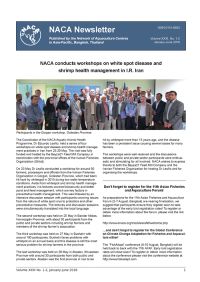
NACA Newsletter, Volume XXXI, No. 1-2, January-June 2016

In this issue:

NACA conducts workshops on white spot disease and shrimp health management in I.R. Iran. Don’t forget to register for the 11th Asian Fisheries and Aquaculture Forum! NACA pays tribute to Professor H.P.C. Shetty – Patron of the Pillay Aquaculture Foundation. EHP: Shrimp industry survey. 3rd International Conference on Fisheries and Aquaculture, 24-25 August, Negombo, Sri Lanka. Special Session on the Status of Aquatic Genetic Resources for Food and Agriculture. Second International Technical Workshop on Acute Hepatopancreatic Necrosis Disease (AHPND). Guidebook on Farmer-to-Farmer Extension Approach for Small-Scale Freshwater Aquaculture. Sustainable intensification of aquaculture in the Asia-Pacific region.

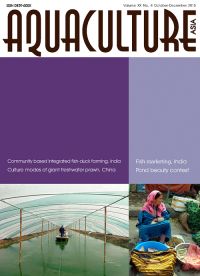
Aquaculture Asia Magazine, October-December 2015

In this issue:

Aquaculture feed supply chain attracting scrutiny. Pond beauty contest, Ram Kumar and social development. Culture modes of giant freshwater prawn in Yangtze River Delta for early harvest. Fish marketing in Kashmir, India - a case study of Srinagar. Community-based integrated fish-duck farming: A boon for rural development in agro-climatic conditions of Assam, India. Gastropod and bivalve fishery of Kakinada Bay, Andhra Pradesh, India: Management and conservation issues.

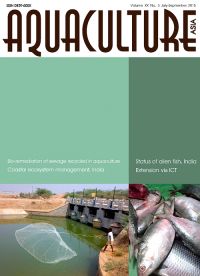
Aquaculture Asia Magazine, July-September 2015

In this issue:

Changes to the magazine and website. Status of alien fish species farming and it's implications for Andhra Pradesh, India. Bridging the research-extension-farmer-input and market linkage gap in coastal aquaculture through application of ICT. Bio-remediation of domestic sewerage recycled in aquaculture: A Central Institute of Freshwater Aquaculture model. Role of family farming in marine and coastal ecosystem management in India. Conservation of fish genetic resources: An introduction to the state fishes of India.

Future considerations for the domestication and breeding of penaeid shrimp

Domestication in livestock industries is the process in which animal populations change in response to the artificial environments of farming production systems. Significant and widespread economic gains have been achieved through genetic improvements made through domestication and selective breeding of commercially farmed shrimp species, particularly Litopenaeus vannamei. Different policies on the translocation of shrimp genetic resources have influenced the approaches to shrimp domestication in different countries. The present paper examines the different approaches.

12th Technical Advisory Committee held in Cha-am, Thailand

The twelfth meeting of NACA’s Technical Advisory Committee (TAC) was held in the coastal town of Cha-am, Thailand from 9-12 March. The TAC meets every two years to review NACA’s rolling work programme and propose amendments to realign it with the current needs of member governments and to account for new and emerging issues. In proposing changes, the TAC prioritises issues of common concern to member governments where there are prospects for regional collaboration.

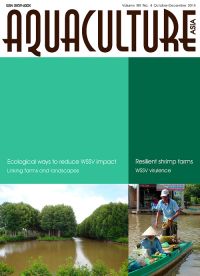
Aquaculture Asia Magazine, October-December 2014

Promising aquaculture practices for sustainable intensification. Culture and breeding of Archcentrus spilurum at Tuticorin District of Tamil Nadu, India. Searching for ecological ways to reduce WSSV impact. Fisheries and aquaculture-based livelihoods prospects in East Kalimantan, Indonesia. Linking farms and landscapes in the governance of sustainable Vietnamese shrimp aquaculture. Resilience of shrimp farming based livelihoods in the Mekong Delta, Vietnam. Farming system affects the virulence of white spot syndrome virus (WSSV) in penaeid shrimp.

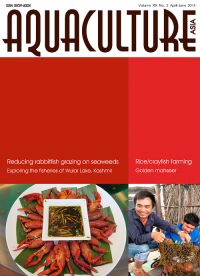
Aquaculture Asia Magazine, April-June 2014

In this issue:

Integrated rice/crayfish farming in Hubei Province, China. Improvement of seaweed Kappaphycus alvarezii culture production by reducing grazing by rabbit fish (Siganus spp.). Exploring the fisheries of Wular Lake, Kashmir, India. Golden mahseer Tor putitora - a possible candidate species for hill aquaculture. Free primers for specific detection of bacterial isolates that cause acute hepatopancreatic necrosis disease. Special session on regional cooperation for improved biosecurity. AHPND detection discussion group established.

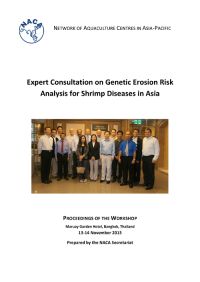
Expert consultation on genetic erosion risk analysis for shrimp diseases in Asia

Shrimp aquaculture in tropical regions is facing a disease-induced catastrophe of lost production. There is reason to believe that current broodstock management practices may induce genetic erosion that increases susceptibility to disease and vulnerability to epizootics. The basic tenet for this Expert Consultation is that an important aggravating factor in the disease crisis is an agro-economic system that locks shrimp breeders, hatcheries and farmers into behaviour that induces high levels of inbreeding.

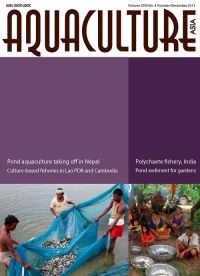
Aquaculture Asia Magazine, October-December 2013

In this issue:

Special session on regional cooperation for improved biosecurity. Pond aquaculture taking off in Nepal. Introduction of culture-based fishery practices in small water bodies in Cambodia: Issues and strategies. A case study on polychaete fishery by the Irular tribal fishing community on the Tamil Nadu coast. Use of pangasius pond sediment for rooftop bag gardening: Potential for rural-urban integrated agriculture-horticulture. Culture-based fisheries exchanges between Lao PDR and Cambodia.

NACA implements World Bank funded training program on good aquaculture practices

NACA was selected by the World Bank to implement a 6 day training program on "Good Aquaculture Practices" in Surabaya, Indonesia from 17-22 June 2013 under the on-going World Bank Global Food Safety Partnership initiative. The objective of this training was to deliver a certificate level food safety and supply chain management training program on design and implementation of good aquaculture practices through the supply chain including food safety management systems and HACCP.

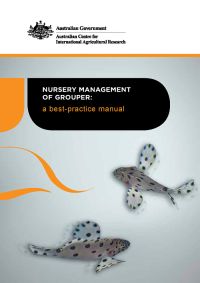
Nursery management of grouper: A best-practice manual

This manual provides practical guidelines for those engaged in the nursery culture of groupers in Indonesia as well as elsewhere in the tropics. It provides information on husbandry of groupers in the nursery phase, to reduce losses due to disease and cannibalism, and thus to increase the profitability of grouper nursing. The guidelines are derived from outcomes of ACIAR-funded research as well as other published information on grouper nursery management.

Public Sector Regulatory Systems for Ecosystems Based Management of Aquaculture - a GAP Analysis Tool

This document presents a tool in the form of an audit table that can be used to broadly screen and identify gaps in the management systems of government agencies responsible for regulating aquaculture. These gaps, once identified, can be a first step toward building regulatory frameworks that can better deliver on jurisdictional ecologically sustainable development and ecosystems approach to aquaculture objectives. The end product of an assessment is a report for consideration by decision makers.

Aquaculture sustainability: Towards 2030

To provide food to the world’s population in 2050, it has been estimated that agricultural output, primarily from crops, livestock and fisheries, including aquaculture, must increase by 60 percent. Intensification of aquaculture is inevitable in the face of increasing demand, limited land areas, and improved technology. Whether we are able to accomplish this in a sustainable manner will depend on global governance and stewardship as much as on technological progress.

Feeds and feeding: Problems and plausible approaches in intensification and attaining sustainability

Improved feed management represents a critical component in the sustainability equation, and the industry’s responses, particularly in respect to the use of fish meal and fish oil, will determine whether feeds are likely to become a limiting factor in attaining sustainability. In order to continue to contribute to global food fish supply, the sector will have to intensify. The presentation discusses plausible means of reducing dependence on these commodities as well.

Marine capture fisheries as a source of food for aquaculture in the Asian region

Asian aquaculture is the world’s major user of fishmeal, and 86 percent of fishmeal used in Asia (excluding China) now goes to aquaculture. With no new sources of fish, many argue that we have already reached the limit in coastal trawl fisheries. There is a shift away from using fresh fish directly as feed, towards pelleted feeds. The Asian aquaculture industry will be affected as supplies tighten and costs rise.

Sustainable intensification in aquaculture production: Role of domestication and Selective Breeding

The Atlantic salmon, tilapia and whiteleg shrimp are the most successful aquaculture species. Fundamental to this success has been the success of genetic improvement of the broodstock. Selective breeding has taken a sustained long-term effort. Genetic gains in shrimp have contributed to annual gains in pond efficiency, translating into lower costs of energy, labour, capital and feed costs, combined with higher annual yields.