NACA member governments are: Australia, Bangladesh, Cambodia, China, Hong Kong SAR, India, Indonesia, I.R. Iran, Kingdom of Saudi Arabia, Korea (DPR), Lao PDR, Malaysia, Maldives, Myanmar, Nepal, Pakistan, Philippines, Sri Lanka, Thailand and Vietnam.
This report, the 30th in the series, contains information about the aquatic animal health status of sixteen states in the Asia-Pacific region. The foreword discusses capacity building and harmonisation in aquatic animal health within ASEAN.
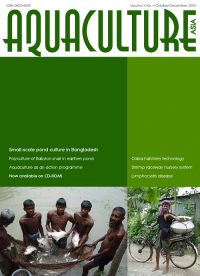
Small-scale pond culture in Bangladesh. Issues and challenges in community-based aquaculture. Aquaculture as an action programme building confidence and self-worth. Transforming policy recommendations into pro-poor service provision. Grow out of spotted Babylon to marketable size in polyculture with seabass. Influence of economic conditions and global shocks on grouper markets. Status of cobia hatchery technology in Vietnam. Organic shrimp raceway system. Macrobrachium rosenbergii in Vembanad Lake. Management of monogenean parasites.
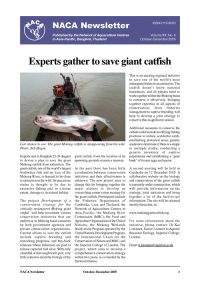
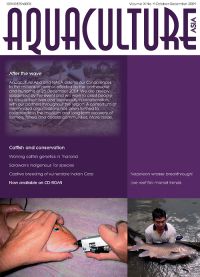
Experts gather to save giant catfish. Workshops on dissemination of better practice models for culture-based fisheries. Dr Chris Baldock, 1947-2005. MAHSEER 2006. MOU signing on conservation of Mahseer in Malaysia and Indonesia. Application of molecular genetics in aquaculture and inland fisheries management. New president of Iran Fisheries Organization. Workshop on the fishery management tool 'EnhanceFish'. Regional Mariculture Development Workshop in China, March 2006. Invitation to apply for position of Director General of NACA. MPEDA expands program on shrimp farmer clubs.
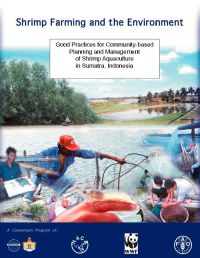
15 August 2005 | James Tobey, Hermawati Poespitasari and Budy Wiryawan | 2195 Downloads | .pdf | 954.39 KB
The case study for this report was conducted in the coastal village Pematang Pasir, Sumatra, Indonesia. Pematang Pasir hosts a pilot project promoting environmentally and responsible shrimp aquaculture implemented by the Indonesian Coastal Resources Management Project. This paper describes the lessons learned to date and offers strategies for community-based coastal resource management, which can be used in a broader perspective as more general guidelines for community-based and participatory development of shrimp aquaculture in marginalised coastal areas.
31 July 2005 | Sih Yang Sim | 2188 Downloads | .pdf | 1.75 MB
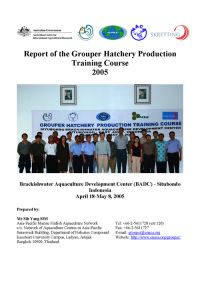
This is the report of the 3rd Regional Grouper Hatchery Production Training Course, which was conducted at the Brackishwater Aquaculture Development Center, Situbondo, East Java, Indonesia from April 18-May 8, 2005. There were a total of 17 participants coming from Australia, Brunei Darussalam, Indonesia, Malaysia, Maldives, Marshall Islands, Singapore, and Vietnam. The training consisted of a mixture of theory, practical and field trips for the participants.
This report, the 29th in the series, contains information about the aquatic animal health status of fourteen states in the Asia-Pacific region. The foreword discusses the outcomes of the fourth meeting of the Asia Regional Advisory Group on Aquatic Animal Health.
Asian Development Bank study on aquaculture and poverty. The consequences of converting to organic shrimp farming. Recycling water and making money with Artemia. Advances in the seed production of cobia Rachycentron canadum in Vietnam. Australian success with barramundi cod Cromileptes altivelis. Recent grouper breeding developments in Thailand. Application of probiotics in rotifer production systems. Contract hatchery systems. Rainbow trout culture in Iran. Spotted babylon Babylonia areolata growout in earthern ponds.
Sustainable aquaculture rehabilitation workshop in Aceh, Indonesia. STREAM policy briefs and better practice guidelines. 25 years of training in integrated fish farming. The Responsibilities of Leadership. A helping hand for those who needed it after the tsunami. An introduction to Mirza Koochek Khan Higher Fisheries Education & Training Centre, Iran. ACIAR funded regional project on shrimp health. Impact of aquatic animal health strategies. Farewell Sih Yang Sim. Welcome Koji Yamamoto.
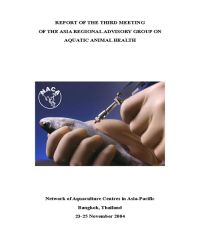
The Asia Regional Advisory Group on Aquatic Animal Health meets annually to discuss regional health issues including emerging disease threats. This report includes a review of regional disease status circa 2004, global and regional disease reporting arrangements, global issues and standards, progress in implementation of the the Regional Technical Guidelines on Health management for the Responsible Movement of Live Aquatic Animals, identification and designation of regional aquatic animal health resources and regional and international cooperation.
In this issue: Changes in Jabarrah. Palu Hijau in the Banggai Islands - using knowledge for change. Three stories from Nepal. Me and my work. Livelihoods approaches - skills learned, applied and shared. About the STREAM Journal. About STREAM. This edition is also available in Ilonggo and Vietnamese.
This report, the 28th in the series, contains information about the aquatic animal health status of seventeen states in the Asia-Pacific region. The foreword discusses the need for improved surveillance and transparent reporting of aquatic animal disease.
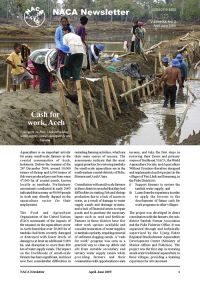
Cash for work, Aceh. HRH Chulabhorn opens new molecular genetics laboratory, Thailand. Aquatic epidemiology training. STREAM Regional Conference and BMP Workshop. Dr Modadugu V. Gupta awarded the 2005 World Food Prize. Study program on marine aquaculture and seafood markets in southern China, 2005. The third Regional Grouper Hatchery Production Training Course.
In this issue: Young people taking bolder steps. Providing a venue for voices to be heard. Rehabilitation of a bundu pond - STREAM's initiative and DOF's action. Coastal resources utilisation and conservation issues in Cox's Bazar, Bangladesh. People, fish and reefs - a livelihoods learning curve. Understanding the marine ornamental trade and its impact on the livelihoods of poor stakeholders in the Philippines. About the STREAM Journal. About STREAM. This edition is also available in Ilonggo and Vietnamese.
This report, the 27th in the series, contains information about the aquatic animal health status of fifteen states in the Asia-Pacific region. The foreword discusses identification of regional expertise in aquatic animal health, in terms of experts, resource centres and reference laboratories.
Freshwater prawn culture in China and its market prospects. Demise of wastewater-fed duckweed-based aquaculture in Bangladesh. Freshwater finfish biodiversity - an Asian perspective. Her farm is destroyed, how can we help? Women oyster vendors in Eastern Thailand. Farm-level feeds and feeding practices for marine finfish. ACIAR grouper grow-out feeds and CSIRO research. Feed development and application for juvenile grouper. Grouper growout feeds. Silver pomfret culture technology.
Tsunami: The long road to recovery. Special Program in Response to the Tsunami. Rebuilding cage aquaculture and eco-tourism at Koh Yao Noi, Thailand. Cash for work, Aceh Indonesia. Assessment of tsunami impacts in Thailand and Indonesia. Consortium to Restore Shattered Livelihoods in Tsunami-devastated Nations. Regional Workshop on Rehabilitation of Fisheries and Aquaculture in Coastal Communities of tsunami affected countries in Asia. Outcomes of Governing Council 16. New grouper feed and marine finfish hatchery guides. Towards a framework for a pro-poor regional strategy for sustainable aquatic resources management in Asia-Pacific. Artificial propagation of indigenous fish species in Sarawak, Malaysia. Inauguration of the National Advisory Committee on Aquatic Animal Health of Viet Nam. Supporting Viet Nam to make an informed decision towards Penaeus vannamei farming. Health group calls for improved surveillance and reporting. Training and study tours in Q1 2005-05-25. TVR 'Ramu' Pillay (1921-2005).
In this issue: Pasoso Project - local livelihoods and turtle conservation in a small island MPA in central Sulawesi, Indonesia. Fisheries development in Lao PDR. The jankar system for sustainable livelihoods: Lessons from the BRFP. Alternative livelihoods for landlocked areas in BFAR Region 6. Lessons learned and future replication from Trao Reef locally managed marine reserve. About the STREAM Journal. About STREAM. This edition is also available in Ilonggo.
This report, the 26th in the series, contains information about the aquatic animal health status of fifteen states in the Asia-Pacific region. The foreword discusses responsible movement of live aquatic animals in the context of health and quarantine issues.
Captive breeding of vulnerable Indian carp Cirrhinus reba for conservation. Conservation of the Asiatic catfish Clarias batrachus through artificial propagation. A perspective on breeding and genetics of walking catfish in Thailand. Decline of wastewater-fed aquaculture in Hanoi. Artificial propagation of indigenous Tor species in Malaysia. Aquaculture of spotted babylon Babylonia areolata. First successful hatchery production of Napoleon wrasse Cheilinus undulatus. Trade and market trends in the live reef fish trade.
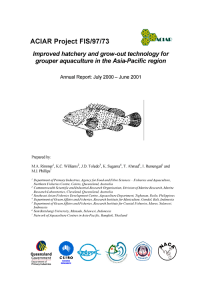
26 July 2004 | M.A. Rimmer, K.C. Williams, J.D. Toledo, K. Sugama, T. Ahmad, I. Rumengan and M.J. Phillips | 1507 Downloads | .pdf | 396.92 KB
This is the annual report 2000-2001 of the ACIAR Project FIS/97/73 Improved hatchery and grow-out technolgy for grouper aquaculture in the Asia-Pacific region. The report describes progress by research partners in development of larval rearing, grow-out diet development, and collaboration via the Asia-Pacific Marine Finfish Aquaculture Network. It also provides an indicative research workplan for the year ahead and future plans for the network.