NACA member governments are: Australia, Bangladesh, Cambodia, China, Hong Kong SAR, India, Indonesia, I.R. Iran, Kingdom of Saudi Arabia, Korea (DPR), Lao PDR, Malaysia, Maldives, Myanmar, Nepal, Pakistan, Philippines, Sri Lanka, Thailand and Vietnam.
The 15th meeting of the Asia Regional Advisory Group on Aquatic Animal Health; a regional consultation on responsible production and use of feed in aquaculture; a report on the Giant Prawn 2017 conference; a preview of the new NACA website; and new initiatives on a very serious emerging issue - reducing the human and animal health risks from development of anti-microbial resistance in the aquaculture industry.
The development of resistant strains of disease-causing microorganisms is an important health issue of global concern. When microbes such as bacteria, fungi, parasites, and viruses become resistant to antimicrobial substances, the diseases they may cause become more difficult or impossible to treat. Resistance is developed by the indiscriminate use of antimicrobials and places human health at risk. The discovery of antibiotics revolutionised medicine, creating a belief that a 'magic bullet' had finally been found to control bacterial diseases. Antibiotics, a class of antimicrobial agents, kill or inhibit the growth of bacteria, but they have no significant effect on other types of microorganisms such as viruses.
7 March 2017 | Roger Edward Mamauag | 9784 views | .mp3 | 3.83 MB
It is estimated that around 1,061,173. tonnes of commercial aquaculture feeds were consumed on 2016. The aquaculture feed milling industry in the Philippines is presently over capacity, based on the above-estimated feed requirement. The current primary law on animal feeds, which also covers aquaculture feeds, is under legislative review. Animal feeds ingredients standards are defined under administrative orders. Quality standards for finished aquaculture feeds are specified under the Philippine National Standards on Aquaculture Feeds (PNS/BAFPS 84: 2010).
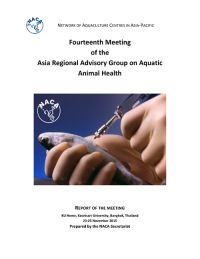
The Asia Regional Advisory Group on Aquatic Animal Health meets annually to discuss regional health issues including emerging disease threats. This report includes a review of regional disease status circa 2016, global and regional disease reporting arrangements, global issues and standards, progress in implementation of the the Regional Technical Guidelines on Health management for the Responsible Movement of Live Aquatic Animals, identification and designation of regional aquatic animal health resources and regional and international cooperation.
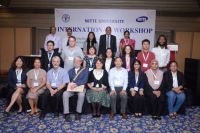
The 15th meeting was held from 21-23 November 2016, in Bangkok, Thailand. A special session was held on addressing the use of anti-microbial substances in aquaculture and the development of anti-microbial resistance. This is an issue of global concern for both human and animal health, and it had been addressed by a resolution at FAO’s Thirty-ninth Conference in June 2015. The meeting reviewed in detail the status of aquatic animal disease in the region.
The 71st edition of the Quarterly Aquatic Animal Disease Report contains information from 15 governments. The foreword provides information about the 10th Symposium on Diseases in Asian Aquaculture.
The Asia Regional Advisory Group on Aquatic Animal Health meets annually to discuss regional health issues including emerging disease threats. This report includes a review of regional disease status circa 2015, global and regional disease reporting arrangements, global issues and standards, progress in implementation of the the Regional Technical Guidelines on Health management for the Responsible Movement of Live Aquatic Animals, identification and designation of regional aquatic animal health resources and regional and international cooperation.
1 January 2016 | Miao, W. and Lal, K.K. (Eds.) | 7110 Downloads | .pdf | 1.5 MB
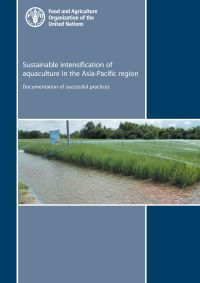
This publication is the major output of a regional programme jointly implemented by FAO and NACA in 2015 to document and disseminate successful practices that contribute to the sustainable intensification of aquaculture in the Asia-Pacific region. Twelve practices are described that contribute to at least one of the following: Improved production and resource use efficiency (land, water, feed, energy); improved environmental benefits; strengthened economic viability and farmers' resilience; and improved social acceptance and equity.
This report, the 71st in the series, contains information about the aquatic animal health status of sixteen states in the Asia-Pacific region. The foreword discusses changes to the Quarterly Aquatic Animal Disease Report, including a move to electronic-only distribution.
This report, the 70th in the series, contains information about the aquatic animal health status of nine states in the Asia-Pacific region. The foreword discusses tilapia lake virus, a new viral disease of farmed tilapia.
A Regional Proficiency Testing Program for Aquatic Animal Disease Diagnostic Laboratories in Asia-Pacific was developed to strengthen diagnostic capability across Asia. This capability was identified as a requirement to facilitate the sanitary safety of trade in aquatic animal products. The program provided 41 laboratories across the Asia-Pacific with the opportunity to assess their diagnostic performance for 10 regionally significant aquatic animal pathogens, and to adapt or modify practices where necessary to improve.
Due to the world’s rapidly growing population, which is expected to peak somewhere around 9.5 billion, food production will need to be massively increased over the next few decades. This increase must be achieved without further degrading the environment. The unit environmental footprint of food production must be significantly reduced from where it is today. This concept, termed sustainable intensification, applies as much to aquaculture as it does to other agricultural sectors.
This report, the 69th in the series, contains information about the aquatic animal health status of nine states in the Asia-Pacific region. The foreword discusses the outcomes of the 14th meeting on the Asia Regional Advisory Group on Aquatic Animal Health.
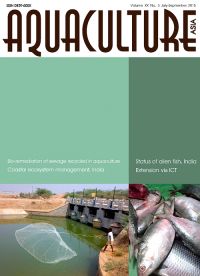
Changes to the magazine and website. Status of alien fish species farming and it's implications for Andhra Pradesh, India. Bridging the research-extension-farmer-input and market linkage gap in coastal aquaculture through application of ICT. Bio-remediation of domestic sewerage recycled in aquaculture: A Central Institute of Freshwater Aquaculture model. Role of family farming in marine and coastal ecosystem management in India. Conservation of fish genetic resources: An introduction to the state fishes of India.
The Asia Regional Advisory Group on Aquatic Animal Health meets annually to discuss regional health issues including emerging disease threats. This report includes a review of regional disease status circa 2014, global and regional disease reporting arrangements, global issues and standards, progress in implementation of the the Regional Technical Guidelines on Health management for the Responsible Movement of Live Aquatic Animals, identification and designation of regional aquatic animal health resources and regional and international cooperation.
This report, the 68th in the series, contains information about the aquatic animal health status of thirteen states in the Asia-Pacific region. The foreword discusses harmonisation in ASEAN aquaculture certification.
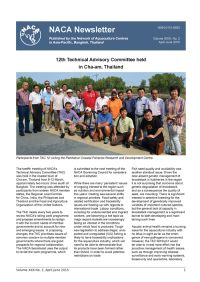
12th Technical Advisory Committee held in Cha-am, Thailand. Audio recordings: WAS special session on regional cooperation for improved biosecurity. AFSPAN Final Technical Report now available! Pillay Aquaculture Foundation Awards for Scientists in Least Developed Countries. Gender seminar conducted and ASEAN Gender Network launched. A two-tube, nested PCR detection method for AHPND bacteria. 9th Regional Grouper Hatchery Production Training Course. Developing an environmental monitoring system to strengthen fisheries and aquaculture in the Lower Mekong Basin. Asia-Pacific Regional Workshop on the Status of Aquatic Genetic Resources for Food and Agriculture.
The objectives of the Aquaculture for Food Security, Poverty Alleviation and Nutrition (AFSPAN) project were to strengthen the knowledge base and develop new and more rigorous methodologies of quantifying the contribution of aquaculture to combat hunger and poverty, thus providing the evidence upon which sound strategies, policies and research programs can be developed to support the sustainable expansion of aquaculture to maximise its impact on food and nutrition security and poverty alleviation.
This report, the 67th in the series, contains information about the aquatic animal health status of fourteen states in the Asia-Pacific region. The foreword discusses the OIE Regional Workshop on Safe International Trade in Aquatic Animals and Aquatic Animal Products.