Vietnam

Vietnam's involvement in NACA.

Creative Commons Attribution.

Related

NACA member governments

NACA member governments are: Australia, Bangladesh, Cambodia, China, Hong Kong SAR, India, Indonesia, I.R. Iran, Kingdom of Saudi Arabia, Korea (DPR), Lao PDR, Malaysia, Maldives, Myanmar, Nepal, Pakistan, Philippines, Sri Lanka, Thailand and Vietnam.

In this collection

Mixed shrimp-mangrove farming practices: A manual for farmers

This manual has been prepared to assist farmers with techniques for improving yields and farm income in mixed shrimp farming-mangrove forestry farming systems in the Mekong Delta, Vietnam. It focuses mainly on simple, common sense techniques that will allow farmers to make step-by-step improvements to production without taking unnecessary risks. The techniques and recommendations covered in this manual are based on the experience of a 6-year collaborative research and development project between Vietnam and Australia.

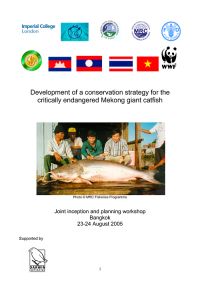
Development of a conservation strategy for the critically endangered Mekong giant catfish: Joint inception and planning workshop

This is the report of an inception workshop for the Mekong Giant Catfish Working Group. The Mekong giant catfish Pangasianodon gigas is listed as critically endangered in the 2003 IUCN Red List. The purpose of the workshop was to exchange information on the current state of the Mekong giant catfish and the relevant conservation and research activities of key organisations, and to establish a joint planning process aimed at developing an overarching conservation strategy for the Mekong giant catfish.

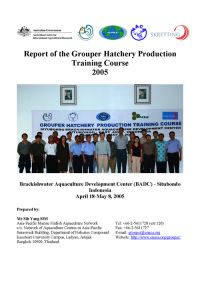
Report of the Grouper Hatchery Production Training Course 2005

This is the report of the 3rd Regional Grouper Hatchery Production Training Course, which was conducted at the Brackishwater Aquaculture Development Center, Situbondo, East Java, Indonesia from April 18-May 8, 2005. There were a total of 17 participants coming from Australia, Brunei Darussalam, Indonesia, Malaysia, Maldives, Marshall Islands, Singapore, and Vietnam. The training consisted of a  mixture of theory, practical and field trips for the participants.

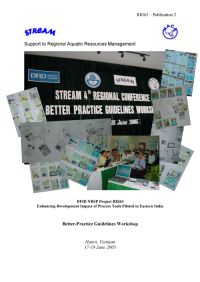
Report of the Better-Practice Guidelines Workshop, Hanoi, Vietnam, 17-18 June 2005

This workshop report is an output from an additional uptake and promotion activity of the DFID NRSP Project R8363 “Enhancing Development Impact of Process Tools Piloted in Eastern India”, which was extended to the end of August 2005. It describes a Better-Practice Guidelines (BPG) Workshop which was the latest project activity to share process tools for Building Social Capital (Self-Help Groups), Consensus-Building and Information Access Surveys. Since the project began, the BPG genre has expanded from the original three concepts shared, to currently twenty-five BPGs prepared not only by STREAM but also by farmers and fish producers. The genre has also been adopted by other organisations, including the DFID-funded Western Orissa Rural Livelihoods Project to share rural aquaculture techniques, and Stirling University to support the uptake and promotion of their work on Self-Recruiting Species and Local Resource User Groups.

The workshop was attended by STREAM National Coordinators and Communications Hub Managers from Cambodia, India, Indonesia, Myanmar, Nepal, Pakistan, Philippines, Sri Lanka and Vietnam, and STREAM Regional Office colleagues based in Thailand, Australia and India. The participants reviewed and assessed the BPGs and Policy Briefs in Bahasa Indonesia, Bengali, English, Hindi, Ilongo, Khmer, Myanmar, Nepali, Oriya, Sinhala, Urdu and Vietnamese. They also began to plan how the uptake and promotion of these tools may be specifically supported in each national context as well as planning the development of further BPG and PB topics.

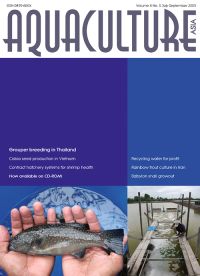
Aquaculture Asia Magazine, July-September 2005

In this issue:

Asian Development Bank study on aquaculture and poverty. The consequences of converting to organic shrimp farming. Recycling water and making money with Artemia. Advances in the seed production of cobia Rachycentron canadum in Vietnam. Australian success with barramundi cod Cromileptes altivelis. Recent grouper breeding developments in Thailand. Application of probiotics in rotifer production systems. Contract hatchery systems. Rainbow trout culture in Iran. Spotted babylon Babylonia areolata growout in earthern ponds.

Primary aquatic animal health care in rural, small-scale aquaculture development

This document is the technical proceedings of the Asia Regional Scoping Workshop on “Primary Aquatic Animal Health Care in Rural, Small-scale, Aquaculture Development,” held in Dhaka, Bangladesh from 27 - 30 September 1999. The objectives of the workshop were  to review information on socio-economic impacts, risks of disease incursions and health management strategies in rural, small-scale aquaculture and enhanced fisheries programmes; and to identify potential interventions for their better health management and appropriate followup actions.

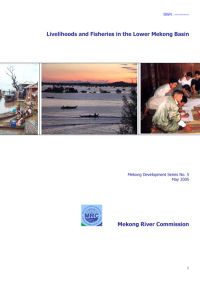
Livelihoods and fisheries in the lower Mekong basin

People who manage fisheries in the lower Mekong are beginning to think of themselves as a community within a common river basin. This is a different way of thinking; managing fisheries is no longer seen as an isolated activity but as a part of the life of people who live along the river. Previously, fisheries managers might have thought of their job as safeguarding or increasing fish production, but now they must share in the effort to alleviate poverty.

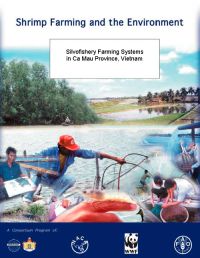
Silvofishery farming systems in Ca Mau Province, Vietnam

This case study provides (1) a description of the farming systems and management practices for mixed shrimp aquaculture-mangrove farming systems in the Mekong delta of Vietnam and (2) the findings from a detailed socio-economic study of these systems. The findings provide insight into the social and economic status of farmers involved in mixed aquaculture-mangrove farming, and the constraints associated with the adoption of management recommendations, with special consideration of the problems faced by poor farmers.

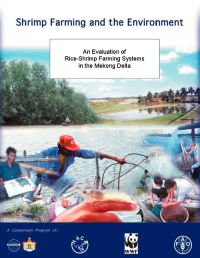
An evaluation of rice-shrimp farming systems in the Mekong Delta

The integration of dry season shrimp farming into rice fields has raised incomes over several consecutive seasons for many farmers in the region. However, our study has revealed some key constraints that need to be addressed in order improve environmental and economic sustainability. The results of our study show that the traditional practice of recruiting native shrimp species through water exchange is not sustainable because of the attendant build-up of sedimentation on the farm.

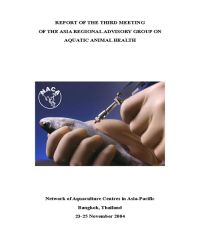
Report of the third meeting of the Asia Regional Advisory Group on Aquatic Animal Health, 23-25 November 2004

The Asia Regional Advisory Group on Aquatic Animal Health meets annually to discuss regional health issues including emerging disease threats. This report includes a review of regional disease status circa 2004, global and regional disease reporting arrangements, global issues and standards, progress in implementation of the the Regional Technical Guidelines on Health management for the Responsible Movement of Live Aquatic Animals, identification and designation of regional aquatic animal health resources and regional and international cooperation.

Quarterly Aquatic Animal Disease Report, April-June 2005

This report, the 28th in the series, contains information about the aquatic animal health status of seventeen states in the Asia-Pacific region. The foreword discusses the need for improved surveillance and transparent reporting of aquatic animal disease.

NACA Newsletter Volume XX, No. 1, January-March 2005

In this issue:

Tsunami: The long road to recovery. Special Program in Response to the Tsunami. Rebuilding cage aquaculture and eco-tourism at Koh Yao Noi, Thailand. Cash for work, Aceh Indonesia. Assessment of tsunami impacts in Thailand and Indonesia. Consortium to Restore Shattered Livelihoods in Tsunami-devastated Nations. Regional Workshop on Rehabilitation of Fisheries and Aquaculture in Coastal Communities of tsunami affected countries in Asia. Outcomes of Governing Council 16. New grouper feed and marine finfish hatchery guides. Towards a framework for a pro-poor regional strategy for sustainable aquatic resources management in Asia-Pacific. Artificial propagation of indigenous fish species in Sarawak, Malaysia. Inauguration of the National Advisory Committee on Aquatic Animal Health of Viet Nam. Supporting Viet Nam to make an informed decision towards Penaeus vannamei farming. Health group calls for improved surveillance and reporting. Training and study tours in Q1 2005-05-25. TVR 'Ramu' Pillay (1921-2005).

STREAM Journal Volume 3, No. 4, October-December 2004

In this issue: Pasoso Project - local livelihoods and turtle conservation in a small island MPA in central Sulawesi, Indonesia. Fisheries development in Lao PDR. The jankar system for sustainable livelihoods: Lessons from the BRFP. Alternative livelihoods for landlocked areas in BFAR Region 6. Lessons learned and future replication from Trao Reef locally managed marine reserve. About the STREAM Journal. About STREAM. This edition is also available in Ilonggo.

Aquaculture Asia Magazine, October-December 2004

In this issue:

Captive breeding of vulnerable Indian carp Cirrhinus reba for conservation. Conservation of the Asiatic catfish Clarias batrachus through artificial propagation. A perspective on breeding and genetics of walking catfish in Thailand. Decline of wastewater-fed aquaculture in Hanoi. Artificial propagation of indigenous Tor species in Malaysia. Aquaculture of spotted babylon Babylonia areolata. First successful hatchery production of Napoleon wrasse Cheilinus undulatus. Trade and market trends in the live reef fish trade.

NACA Newsletter Volume XIX, No. 4, October-December 2004

In this issue:

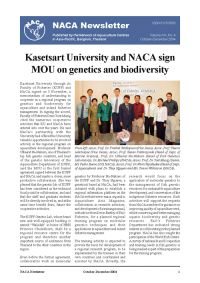
Kasetsart University and NACA sign MOU on genetics. Village shrimp health management project in Andhra Pradesh. A committee to manage fish health in Viet Nam. China to promote healthy shrimp farming. Father of China's shrimp aquaculture. NACA collaboration can extend to west and central Asia, Iran mission suggests. STREAM conducts monitoring & evaluation workshop. STREAM to support aquaculture in western Orissa.

Presentation on STREAM Vietnam's experience

Established in early 2002, STREAM Vietnam has so far attained a number of good experiences and lessons in using participatory approaches for its work. The Country Office has been able to link to a wide range of stakeholders, and is working hard to build close relationships amongst them, so that institutional entities can better support the livelihoods of poor aquatic resources users, and support disadvantaged groups of people to improve their living standards by themselves.

Quarterly Aquatic Animal Disease Report, July-September 2004

This report, the 25th in the series, contains information about the aquatic animal health status of fifteen states in the Asia-Pacific region. The foreword discusses the outcomes of the third meeting of the Asia Regional Advisory Group on Aquatic Animal Health.

NACA Newsletter Volume XIX, No. 3, July-September 2004

In this issue:

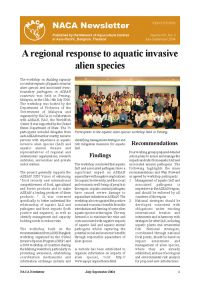
A regional response to aquatic invasive alien species. 6th Symposium on Diseases in Asian Aquaculture. Indonesia plan EC PREP seafood trade study. NACA Website: Guide to member services. Preparing and responding to health emergencies. New publication: Marine Finfish Aquaculture Magazine. STREAM Agreement with MOF Vietnam on Communications. STREAM Agreement with NAFEC Vietnam on Livelihoods Approaches. NACA-NACEE Cooperation. Training and study tours.

Development of a Regional Research Programme on Grouper Virus Transmission and Vaccine Development

These are the proceedings of a workshop, funded by the APEC Fisheries Working Group Project 02/2000. The project developed a framework with nine major research components: Health and production at hatcheries, regional collaborative disease resource centers, regional disease monitoring and surveillance, improving regional diagnostic capabilities, responsible trans-boundary movement, farm health management, vaccines and vaccination, funding mechanisms and establishment of an ad-hoc working group.

Vietnam country strategy paper

Although Vietnam has long been listed among the poorest countries of the world, it has recently made large strides in reducing poverty and improving food security. However, the dramatic gains in poverty reduction in Vietnam still remain quite fragile. There is growing evidence to indicate that dependence on aquatic resources is correlated to poverty, and that aquatic resources constitute an important component of wider livelihoods strategies (largely from the Mekong Delta, Central Coast and the Northern Mountains).