Technical publications

NACA publishes technical papers and manuals for a wide variety of farming systems and related environmental and social issues. Many of these provide guidance on better management practices with a view to improving crop outcomes and on-farm resource utilisation efficiency. By using inputs such as feed and power more efficiently, farmers can simultaneously improve their profitability and environmental performance.

Creative Commons Attribution.
Related

Publications

NACA publishes a wide range of aquaculture publications including technical manuals, workshop proceedings, better practice guidelines and several serials including Aquaculture Asia Magazine, the NACA Newsletter and the Quarterly Aquatic Animal Disease Report. To keep up to date with developments you could consider subscribing to our RSS feed

In this collection

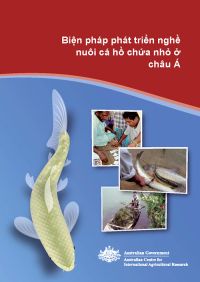
Biện pháp phát triển nghề nuôi cá hồ chứa nhỏ ở châu Á

Chúng tôi xin trân trọng được giới thiệu với bạn đọc cuốn sách Biện pháp phát triển nghề nuôi cá hồ chứa nhỏ ở châu Á. Mục tiêu của cuốn sách không nhằm hướng dẫn thực hành như tài liệu khuyến ngư, mà thực sự là công trình tổng kết kinh nghiệm từ kết quả thực tế của nhiều địa phương, kết quả nghiên cứu khoa học, và những cơ sở lý thuyết liên quan đến lĩnh vực này.

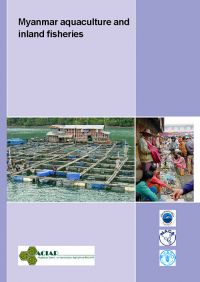
Myanmar aquaculture and inland fisheries

Fish and fish products are crucial in the nutrition and livelihoods of the Myanmar people. However, little information is available on their patterns of consumption, inter-regional differences, availability and types of fish consumed. This report is the outcome of two concurrent missions, one to coastal areas and one to inland areas. The report includes the findings of the missions as well as conclusions and recommendations in support of the long-term sustainability of fishery resources in Myanmar.

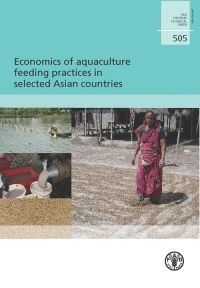
Economics of aquaculture feeding practices in selected Asian countries

This technical paper provides an analysis of the economic implications of, and the reasons for, adopting various feeding practices for different fish species and aquaculture systems in Asia. The systems studied include extensive/traditional, semi-intensive and intensive farms for a number of different species including sutchi and pangasiid catfishes (Bangladesh and Viet Nam), hybrid catfish (Thailand), carp polyculture (India and China), prawn and milkfish polyculture (the Philippines).

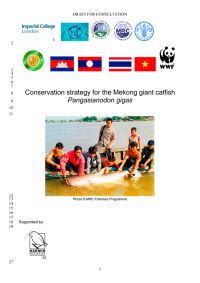
Conservation strategy for the Mekong giant catfish Pangasianodon gigas: Draft for consultation

This is a draft conservation strategy for the Mekong giant catfish prepared under the project Development of a conservation strategy for the critically endangered Mekong giant catfish, released for public consultation. The strategy considers the population and legal status, conservation vision and goals, factors affecting the wild population and outlines a conservation strategy. The document also considers monitoring, research and adaptive management and implementation issues given the transboundary and multi-institutional nature requirements for effective implementation.

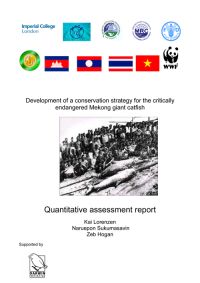
Development of a conservation strategy for the critically endangered Mekong giant catfish: Quantitative assessment report

This report provides a quantitative assessment of the conservation of the Mekong giant catfish, Pangasianodon gigas, and an evaluation of the likely effectiveness of different conservation options. The report conisders the history of fisheries exploitation and environmental change, the estimated wild population size of P. gigas, the role of captive populations held by the Thailand Department of Fisheries and interactions with cultured fish. It makes a series of recommendations for conservation of this species.

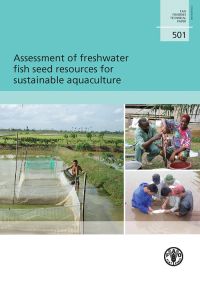
Assessment of freshwater fish seed resources for sustainable aquaculture

This publication contains the proceedings and major recommendations of the expert workshop which tackled three major themes: Seed quality, genetics, technology and certification; seed networking, distribution, entrepreneurship and certification; and how rural fish farmers can benefit from the seed sector. It also contains the outcomes of a desk study consisting of three regional syntheses, twenty-one country case studies and five thematic reviews (seed quality, genetics and breeding, seed networks, role of seed supply, farmer innovations and womens' involvement).

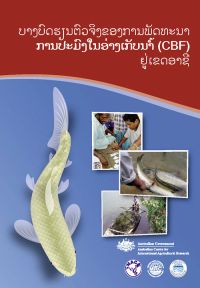
Better-practice approaches for culture-based fisheries development in Asia (Lao translation)

The primary objective of this manual is to provide guidelines for attaining better practices in culture-based fisheries, an emerging practice in rural areas in the Asian region. It deals will the principles of culture-based fishery practices, primarily based on relatively long-term experiences in Sri Lanka and Vietnam. It is not only targeted at researchers per se, but also at stakeholders at the grass root levels, as well as planners and policy developers.

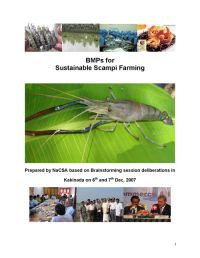
Better management practices for sustainable scampi (freshwater prawn) farming

This manual provides practical advice on good management practices for sustainable freshwater prawn (scampi) farming in India. The manual covers general principles of sustainable farming, relevant legal issues including for hatcheries, land and water use, impact on natural habitats, hatchery, nursery and growout management, and environmental and social responsibility. The manual was developed via a multi-stakeholder consultation held at the Head Office of the National Centre for Sustainable Aquaculture (NaCSA), Kakinada, 6-7 December 2007.

Guidelines for broodstock management, propagation and culture of semah, Tor douronensis and empurau, Tor tambroides

The Project 'Artificial propagation of empurau, Tor tambroides and semah, Tor douronensis, two species of commercial and conservation value to Sarawak, Malaysia' successfully achieved captive breeding and larval to fingerling rearing. An enhancement strategy for the long-term management of semah and empurau broodstock, and conservation of wild stocks, based on genetic findings is discussed. Guidelines on best husbandry management practices to ensure a supply of physically and genetically healthy quality seed are provided.

Guidelines for genetic management and conservation of empurau, Tor tambroides and semah, Tor douronensis

This document presents current status on genetic diversity of empurau and semah in Sarawak, Malaysia, including taxonomic status and a management guideline based on genetic data. Inadvertent mixing of the two species, especially during breeding, may lead to hybridisation, a threat to the genetic integrity of wild populations. Surveys on current status of genetic variability of empurau and semah are reported herein, and the results from which are used as baseline data for development of a genetic management plan.

Strengthening Aquatic Animal Health Capacity and Biosecurity in ASEAN

This final report of the project “Strengthening Aquatic Animal Health Capacity and Biosecurity in ASEAN” contains two parts: A. Recommended Minimum Operational Requirements for Implementing National Aquatic Animal Health Strategies within ASEAN and B. ASEAN progress in the implementation of National Aquatic Animal Health Strategies. The report provides guidance for countries in ASEAN to implement key elements of national aquatic animal health strategies, and for monitoring progress of national strategy implementation in ASEAN member countries.

Practical Manual on Better Management Practices for Tambak Farming in Aceh

This practical manual provides better management practices for the farming of shrimp in tambak systems in Aceh, Indonesia. The manual addresses the formation of farmer groups, crop planning, and specifies better management practices. These include: Location of tambaks, design and construction of tambaks, pond preparation practices, shrimp seed selection and stocking practices, feed management practices, water management practices, health management practices, harvest and post-harvest handling practices, keeping records and improved marketing practices.

Standard operating procedures for health certification and quarantine measures for the responsible movement of live food finfish within ASEAN

These standard operating procedures were developed to reduce the risk of spread of trans-boundary disease of aquatic animals through the movement of live food fish. The procedures are a set of documents for health certification and quarantine measures to be used by competent authorities in trade among ASEAN member countries. The procedures recognise the existing variation in capacity between ASEAN members and have been designed so that they can be implemented across varying policy and legal frameworks.

การเลี้ยงปลาทะเลในกระชัง (Training manual on marine finfish cage culture)

This training manual (in Thai language) provides guidance in marine finfish cage aquacutlure techniques. It is geared towards giving small-scale farmers a solid technical grounding that will enable them to improve their farm productivity and reduce losses through understanding of markets and economic factors, better farm siting. and improved feeding, handling and stock management practices. This knowledge will help the trainees and other fish farmers to improve their productivity and profitability while also reducing their risk profile.

Quy trình nuôi cá hồ chứa nhỏ

Mục tiêu của cuốn sách nhằm cung cấp những chỉ dẫn cơ bản của CBF, một hình thức nuôi cá hiệu quả, đang được quan tâm nhiều ở các vùng nông thôn miền núi châu.

Guidelines on digital publishing: A practical approach for small organisations with limited resources

These guidelines on digital publishing are targeted primarily at small organisations with limited resources in developing countries, in order to facilitate decision-making on how to publish and disseminate their information, with emphasis on the internet. The Guidelines are based on the years of experience of the Network of Aquaculture Centres in Asia-Pacific and its partners. The approach is practical in orientation, covering topics including planning, maintenance, making content accessible and suggested tools.

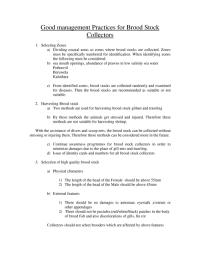
Good management practices for broodstock collectors

The National Aquaculture Development Authority of Sri Lanka (NAQDA) took several steps to regularise collectors of Penaeus monodon under the restructuring programme of the shrimp aquaculture industry in Sri Lanka. Regularisation of broodstock collectors is very imperative mitigate transmission of white spot disease. NAQDA developed these practices in consultation with the Department of Fisheries and Aquatic Resources, shrimp hatchery owners, broodstock suppliers, NARA, Wayamba environmental authority, Sri Lanka aquaculture development alliance and the consortium for shrimp aquaculture development.

Strengthening Aquatic Animal Health Capacity and Biosecurity in ASEAN: Technical mission to Myanmar

A technical mission to Myanmar was undertaken to support development and implementation of national aquatic animal health strategies from 3 - 9 September 2006. The mission was part of the AADCP-RPS project "Strengthening Aquatic Animal Health Capacity and Biosecurity in ASEAN". The mission was coordinated by NACA and worked with stakeholders to develop simple and practical approaches to implement national aquatic animal health strategies in Myanmar.

Strengthening Aquatic Animal Health Capacity and Biosecurity in ASEAN: Technical mission to Vietnam

This is the report of a technical mission to Vietnam from 3 - 9 December 2006, as a part of the project “Strengthening Aquatic Animal Health Capacity and Biosecurity in ASEAN” to assist national authorities in the development and implementation of simple and practical national aquatic animal health management strategies. The objective of the mission was to assist the government to support development of national strategies on aquatic animal health management and develop short and long term plans.

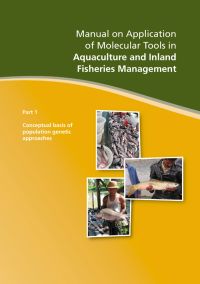
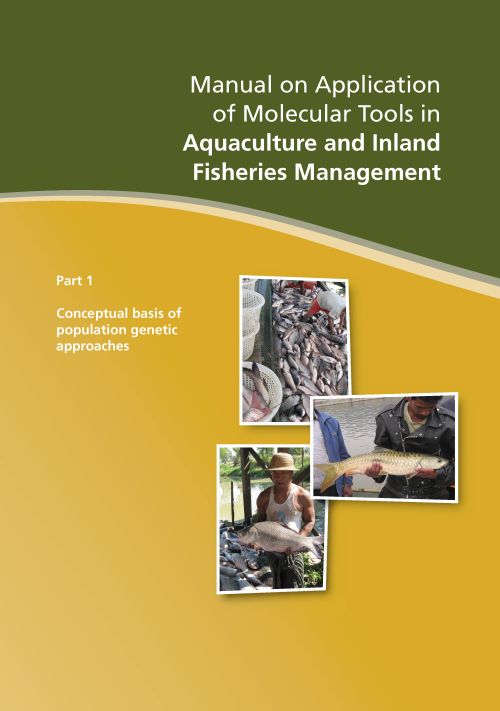
Manual on Application of Molecular Tools in Aquaculture and Inland Fisheries Management

This manual provides a comprehensive practical tool for the generation and analysis of genetic data for subsequent application in aquatic resources management in relation to genetic stock identification in inland fisheries and aquaculture. The material only covers general background on genetics in relation to aquaculture and fisheries resource management, the techniques and relevant methods of data analysis that are commonly used to address questions relating to genetic resource characterisation and population genetic analyses.