In February 2002 the shrimp fry collection ban was placed into abeyance pending further review of how biodiversity could be conserved at the same time as protecting the livelihoods of 400,000 fry collectors. A Shrimp Action Plan for the period April - September 2002 was drawn up to identify trends impacting on distribution and growth in the shrimp sector, and to explore alternative models for the management of fry resource and to assess their social, institutional and economic implications.
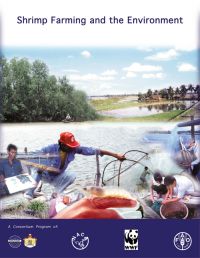
This article compares the use of chemical and biological amendments in shrimp farming in Asia and the Americas. The information comes mainly from the author’s experience in Thailand and Ecuador, as well as from the literature. The amendments are discussed according to three major categories: (1) water and soil quality management products, (2) biocides, and (3) feed additives. Certain agents, while necessary to successful shrimp farming, should be used only when needed and in a safe and responsible manner.
This report presents a précis of the regulatory procedures for authorisation of veterinary medicines in Europe and the USA. In particular it concentrates upon the requirements for consumer safety in regard to presence of residues of veterinary medicines in the edible tissues of food animal species. In both Europe and the USA the regulations in regard to veterinary residues and consumer safety require that countries wishing to export into those markets demonstrate equivalent standards to the domestic requirements.
A scoping Meeting on “Sustainable Aquaculture for Poverty Alleviation” was held in Hanoi , 23-25 May 2000. The meeting was held to review the role of aquaculture development (freshwater, brackish water and marine environments) in poverty alleviation and hunger eradication in Vietnam, to identify strategies for the more effective application of aquaculture and aquatic resources management to poverty alleviation, to review a draft framework for a programme on sustainable aquaculture for poverty alleviation and to prepare an appropriate action plan.
This report presents an overview of the state of aquatic resources in the Philippines, its performance and importance in the Philippine economy, and explores the situation of poverty in the "aquatic resources sector." The report describes the policy environment that guides the action of key actors in the sector. A general analysis of some trends in relation to factors that keep the poor from participating and benefiting from aquatic resource management is also provided.