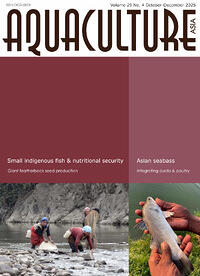
In this issue:
- Integrating fish farming with ducks and poultry in Meghalaya
- Small indigenous fish species: A source of nutritional security
- A short note on two new instances of aquaculture species and system diversification in Purba Medinipur, West Bengal, India
- Adding knowledge to the seed production process of giant featherback in captivity
- Local knowledge and practices in Asian seabass nursery to grow-out culture in Andhra Pradesh
- NACA Newsletter
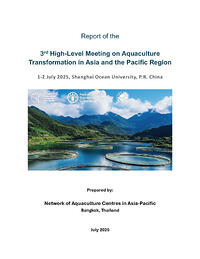
The third High-Level Meeting on Aquaculture Transformation assessed progress towards 2030 transformation goals and identified priority actions for the Asia-Pacific region. The meeting report, covering discussions held 1-2 July 2025 in Shanghai, documents findings from representatives of NACA member governments, FAO and regional organisations.
Participants identified multiple barriers to sustainable intensification: farmer scepticism about unfamiliar technologies, limited access to expertise, and misaligned incentives that prioritise profit over environmental responsibility. Investment remains concentrated at higher levels rather than reaching small-scale producers. The discussions emphasised collaborative approaches, knowledge-based farming systems, and the need to document aquaculture's positive social impacts.
NACA and FAO will continue supporting National Innovation and Investment Plans in India, the Philippines, Thailand and Vietnam. Future work includes establishing an Aquaculture Innovation and Investment Hub and developing monitoring systems to track transformation progress across the region.
A discussion on how creative partnerships build markets for nature-based seafood from farm to fork. Topics include rigorous sustainability and certification, smallholder capacity building, traceability and water-quality sensing, decarbonising supply chains, short supply chains and consumer trust, plus species literacy and whole-fish utilisation in Thai cuisine. Panelists:
- Special Guest Chef Black (Blackitch Artisan Kitchen).
- Panu Boonsong, Thai Union Group.
- Duangchai Paungkaew, Aquaculture Stewardship Council.
- Gun Jinnawat, Vice-President, Boonsawang Farm.
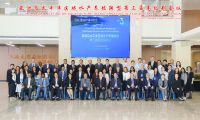
The 3rd High‑Level Meeting on Aquaculture Transformation in Asia and the Pacific, held 1–2 July in Shanghai, brought together governments, industry leaders and development partners to drive innovation, investment and sustainability in the region’s aquaculture sector. Discussions focused on scaling low‑cost fish production, making technology adoption easier for small farmers, improving access to finance, and strengthening regional cooperation. The meeting set clear priorities for accelerating transformation by 2030, with resources and key presentations now available online. Videos of the presentations are available for viewing on YouTube.
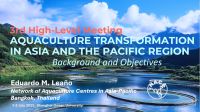
This presentation by Eduardo Leaño, Director General of NACA, provides a background and introduction to the 3rd High-Level Meeting on Aquaculture Transformation in the Asia-Pacific Region (HLM-3).
The region accounts for around 90% of global aquaculture production but faces mounting challenges including resource scarcity, environmental pressures, climate change, and shifting global dynamics. Addressing these requires a strategic shift driven by innovation, investment, and stronger partnerships to build more efficient, inclusive, resilient, and sustainable aquatic food systems.
HLM-3 builds on the outcomes of previous high-level meetings and the Aquaculture Transformation White Paper, with a focus on national innovation and investment plans, regional collaboration, and implementation efforts to achieve transformation by 2030.


