This Learning Workshop on Livelihoods Analysis was held in Long An Province, Vietnam from 19-20 November 2002. It was part of an ongoing series of activities that will inform the implementation of the Ministry of Fisheries Strategy on Sustainable Aquaculture for Poverty Alleviation under the Vietnamese Government’s Hunger Eradication and Poverty Reduction (HEPR) Program. The recruitment in October of Nguyen Song Ha, STREAM Vietnam Communications Hub Manager, improved preparations within the Vietnamese national context.
A scoping Meeting on “Sustainable Aquaculture for Poverty Alleviation” was held in Hanoi , 23-25 May 2000. The meeting was held to review the role of aquaculture development (freshwater, brackish water and marine environments) in poverty alleviation and hunger eradication in Vietnam, to identify strategies for the more effective application of aquaculture and aquatic resources management to poverty alleviation, to review a draft framework for a programme on sustainable aquaculture for poverty alleviation and to prepare an appropriate action plan.
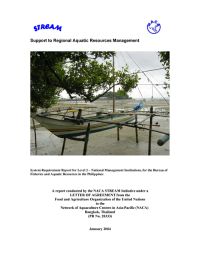
This System Requirement Report describes national level requirements for data collection and sharing mechanisms for fisheries co-management in the Philippines. It also provides a broad picture of the following for the national fisheries management level in the Philippines.
This report presents an overview of the state of aquatic resources in the Philippines, its performance and importance in the Philippine economy, and explores the situation of poverty in the "aquatic resources sector." The report describes the policy environment that guides the action of key actors in the sector. A general analysis of some trends in relation to factors that keep the poor from participating and benefiting from aquatic resource management is also provided.
30 January 2004Susana V. Siar, William Lee Johnston and Sih Yang Sim | 2166 Downloads | .pdf | 2.16 MB
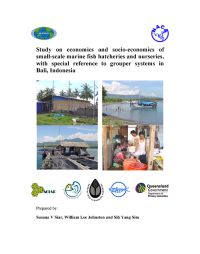
The main objectives of the study were to describe the development of the small-scale or back yard multispecies hatcheries and their economic structure and benefits to the farmers and local community in Bali, Indonesia. The social and economic impact of the back yard multi-species hatchery systems were analysed and details of the benefit of this system to the community described. The strengths and weaknesses of the back yard multi-species hatchery system are described.