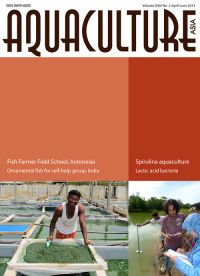
In this issue:
Workshop on mainstreaming gender in NACA. Fish Farmer Field School: Towards healthier milkfish / shrimp polyculture and fish farmer empowerment in South Sulawesi. A success story of Maa Tarini Self Help Group Ornamental Fish Unity, India. Use of lactic acid bacteria in fish farming. AFSPAN field surveys underway. Anti-viral treatment for healthier black tiger prawns. Jungle perch on the comeback trail. Nursery management of grouper manual. Hatchery management of tiger group manual.
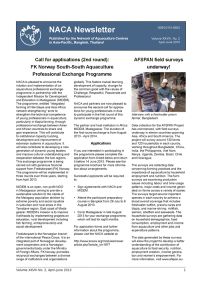
In this issue:
Call for applications (2nd round): FK Norway South-South Aquaculture Professional Exchange Programme. AFSPAN field surveys underway! 4th Global Symposium on Gender in Aquaculture and Fisheries. An anti-viral treatment for healthier black tiger prawns. Jungle perch on the comeback trail. Nursery management of grouper: A best-practice manual (Indonesian translation). Hatchery management of tiger grouper (Epinephelus fuscoguttatus): A best-practice manual (Indonesian translation). Priority adaptations to climate change for Pacific fisheries and aquaculture: Reducing risks and capitalising on opportunities. Improving biosecurity through prudent and responsible use of veterinary medicines in aquatic food production.
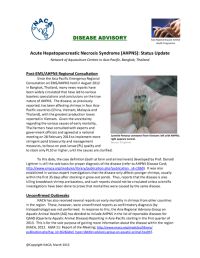
Since the Asia Pacific Emergency Regional Consultation on EMS/AHPNS held in August 2012 in Bangkok, Thailand, many news reports have been widely circulated that have led to various baseless speculations and conclusions on the true nature of AHPNS. This disease update/advisory has been issued to address the many circulating false and baseless speculations on the effects and spread of AHPNS in the region.
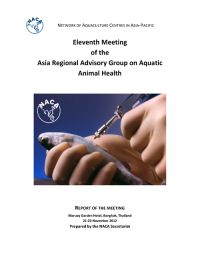
The Asia Regional Advisory Group on Aquatic Animal Health meets annually to discuss regional health issues including emerging disease threats. This report includes a review of regional disease status circa 2012, global and regional disease reporting arrangements, global issues and standards, progress in implementation of the the Regional Technical Guidelines on Health management for the Responsible Movement of Live Aquatic Animals, identification and designation of regional aquatic animal health resources and regional and international cooperation.
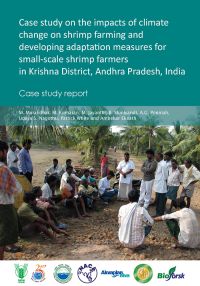
Shrimp aquaculture is threatened by climatic changes that affect infrastructure and livelihoods of farmers. Ecological changes, inundation of low-lying lands and saline intrusions into freshwater regions are likely to cause substantial dislocation of communities and disruption of farming systems. The focus of the present study report is on mapping the small scale farmer’s perceptions and attitudes towards climate change impacts and their adaptive capacities to address the impacts in Krishna District, Andhra Pradesh, India.