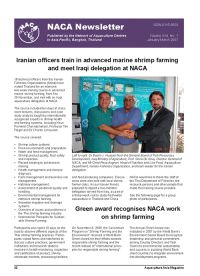
In this issue:
Iranian officers train in advanced marine shrimp farming and meet Iraqi delegation at NACA. Green award recognises NACA work on sustainable shrimp farming. International Principles for Responsible Shrimp Farming now available in Spanish. Building capacity on aquatic animal epidemiology in I.R. Iran. NACA Fisheries Team meets with new Governor of Aceh. Aquaculture Certification: Programme to implement the COFI Sub-Committee on Aquaculture recommendation. Recent Developments in the Aquaculture Feed Industry. Global Advances in the Ecology and Management of Golden Apple Snails. NACA mission to Myanmar. Workshop on Insurance in Aquaculture to be held in Bali, May 2007. Catfish 2007 Vietnam. Tilapia 2007 Kuala Lumpur.
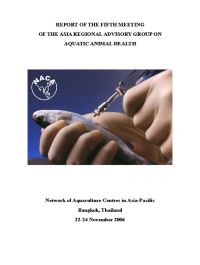
The Asia Regional Advisory Group on Aquatic Animal Health meets annually to discuss regional health issues including emerging disease threats. This report includes a review of regional disease status circa 2006, global and regional disease reporting arrangements, global issues and standards, progress in implementation of the the Regional Technical Guidelines on Health management for the Responsible Movement of Live Aquatic Animals, identification and designation of regional aquatic animal health resources and regional and international cooperation.
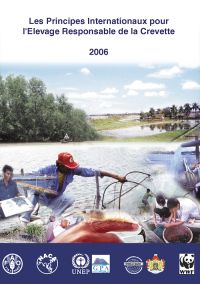
L'élevage de la crevette est l’un des secteurs d'aquaculture le plus en essor dans beaucoup de régions du monde, il est également l’un des plus controversés. L'expansion rapide de ce secteur a généré, certes, des sources de revenus pour plusieurs pays, mais elle a été accompagnée par une préoccupation croissante sur les impacts environnemental et social. Les Principes Internationaux pour l'Elevage Responsable de la Crevette fournissent la base sur laquelle les parties prenantes peuvent collaborer pour un développement plus durable de l'élevage de crevette.
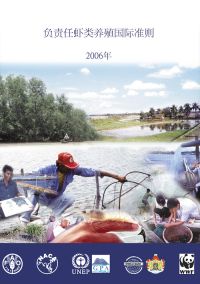
在世界许多地方,虾类养殖是水产养殖业增长最快,而且也是最具争 议的部门之一。这一部门的快速发展为许多国家创造了收入,但也伴随着 对环境和社会影响的忧虑。《负责任虾类养殖国际准则》在以更可持续的 方式发展虾类养殖方面为利益相关者之间开展合作提供了基础。《国际准 则》由虾类养殖与环境协作计划制定。该协作包括联合国粮食及农业组织 (粮农组织)、亚太水产养殖中心网、联合国环境规划署保护海洋环境免 受陆上活动污染全球行动纲领协调办公室、世界银行和世界自然基金会。
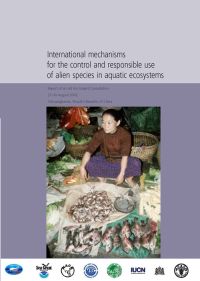
The use of alien species is a proven means to increase production and value from aquatic ecosystems. However, alien species are now recognised as one of the most significant threats to aquatic biodiversity. There are a range of international mechanisms that have been established to assist countries in meeting international obligations and responsibilities. Implementation is often difficult due to lack of awareness and problems with enforcement. Regional coordination of policies is needed for effective national management.